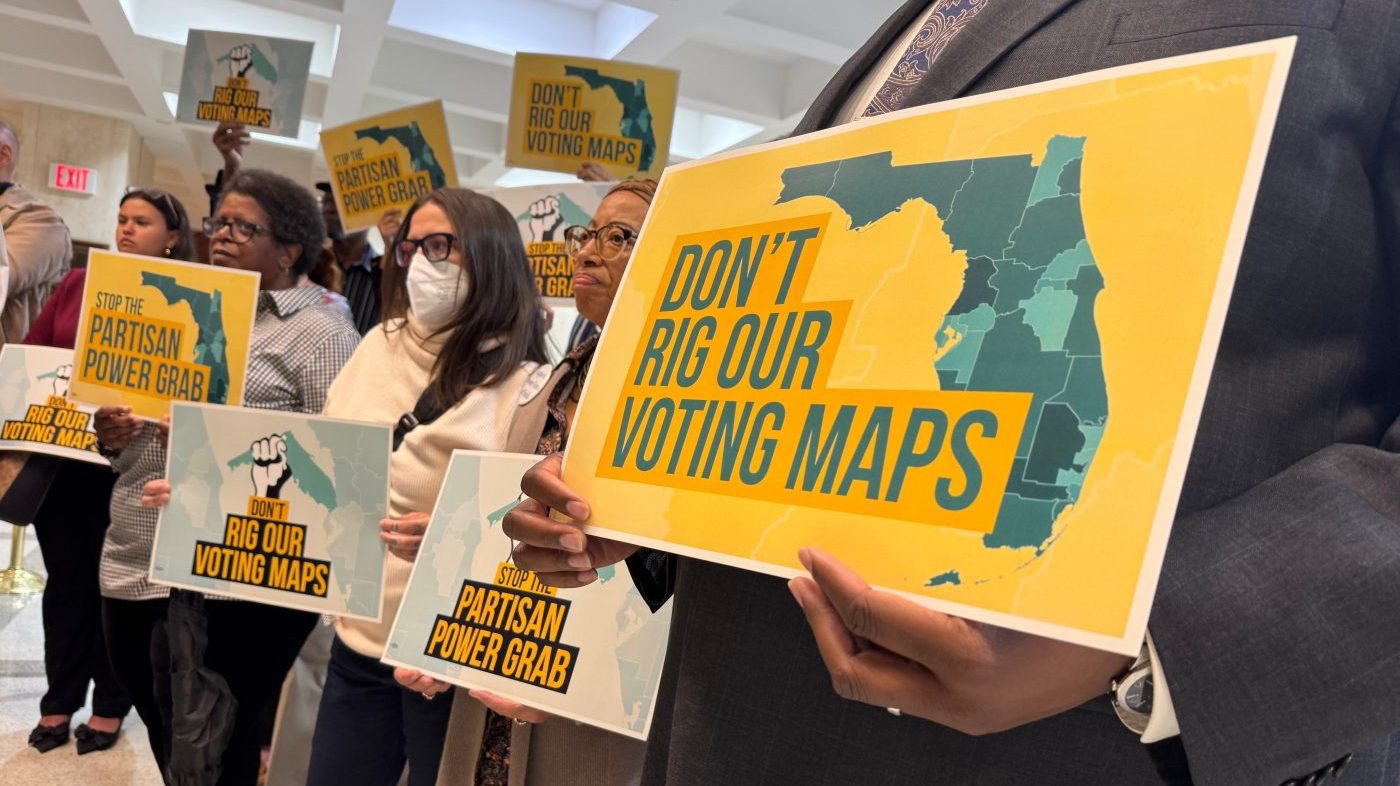
Florida Republican lawmakers are preparing for a politically charged special session next week, aiming to redraw congressional maps in a high-stakes maneuver that has exposed significant divisions within the party. Governor Ron DeSantis is pushing the effort as a counterweight to recent Democratic redistricting victories elsewhere, but many in his own party are urging caution, warning the move is legally precarious and could inadvertently weaken the GOP's position in November.
Internal Warnings of Political Peril
Several Republican operatives and consultants with close ties to the governor and legislature have expressed deep reservations about the push. "I think if you ask most Republican consultants, they're hoping and praying that they don't go for many seats. The less, the better," one GOP consultant told The World Signal. Another Florida Republican operative was more blunt, stating, "Redistricting is fraught with peril. You're going to be diluting strong Republican districts to try and create other potential Republican districts. And in doing so, if the atmospherics are bad going into the November election, you risk losing those seats."
These concerns are amplified by recent Democratic successes in Florida special elections, where the party flipped two GOP-held state legislative seats, including one encompassing former President Donald Trump's Mar-a-Lago resort. The state's constitution also contains explicit anti-gerrymandering provisions that prohibit drawing maps for partisan gain, setting up a likely legal battle that some Republicans fear they could lose.
DeSantis's Rationale and Practical Hurdles
Governor DeSantis has framed the special session as necessary to account for Florida's significant population growth since 2020 and to preempt a pending Supreme Court decision that could alter interpretations of the Voting Rights Act regarding race in redistricting. "Our population has changed so much in the last four or five years. We need to get apportioned properly and people deserve equal representation," DeSantis argued in January.
However, the practical execution of this plan faces immediate obstacles. Lawmakers will only have 2020 Census data available for the redraw, and no proposed congressional lines have been made public. State Representative Kevin Chambliss, a Democrat on the House Select Redistricting Committee, suggested the lack of a public map stems from the absence of "accurate Census data or accurate population data... to even start to draw a map." He confirmed that Democratic lawmakers have not seen any proposal.
National Context and Democratic Warnings
The Florida push comes directly after Virginia voters approved a Democratic-backed redistricting plan, a move that could deliver several House seats to Democrats and reshape the national battlefield. This has intensified the political stakes for Republicans seeking to offset losses. In response, national Democratic leaders have issued stark warnings. House Minority Leader Hakeem Jeffries told reporters, "Our message to Florida Republicans is, 'F around and find out,'" a sentiment he elaborated on by warning the plan could cost Republicans House control.
Florida Democrats are equally combative, citing the state constitution. "No matter what happened in Virginia, or any other state, partisan gerrymandering is unconstitutional in Florida. Governor DeSantis has no good excuse," said Florida House Democratic Leader Fentrice Driskell. "Any attempt to redraw congressional districts right now is a direct response to President Trump's call for partisan gerrymandering and that is illegal in Florida."
Legal and Political Uncertainty
Even with a Florida Supreme Court whose majority was appointed by DeSantis, some Republicans are anxious about defending a new map against legal challenges. The combination of the constitutional language, the use of outdated data, and the overtly political timing creates a vulnerable position. This internal GOP dissent is not limited to consultants; it extends to elected officials. Republican Congresswoman María Elvira Salazar told reporters she would have "left the lines the way they were," but deferred to the governor and legislature.
As the session convenes, the ultimate goal remains unclear even to some within the party. "It's still kind of unknown what the ultimate goal is," the Republican consultant admitted. With the midterms approaching, DeSantis's redistricting gamble is shaping up to be a defining test of his political influence, one that could either secure a stronger GOP foothold or trigger unexpected losses in a crucial battleground state.