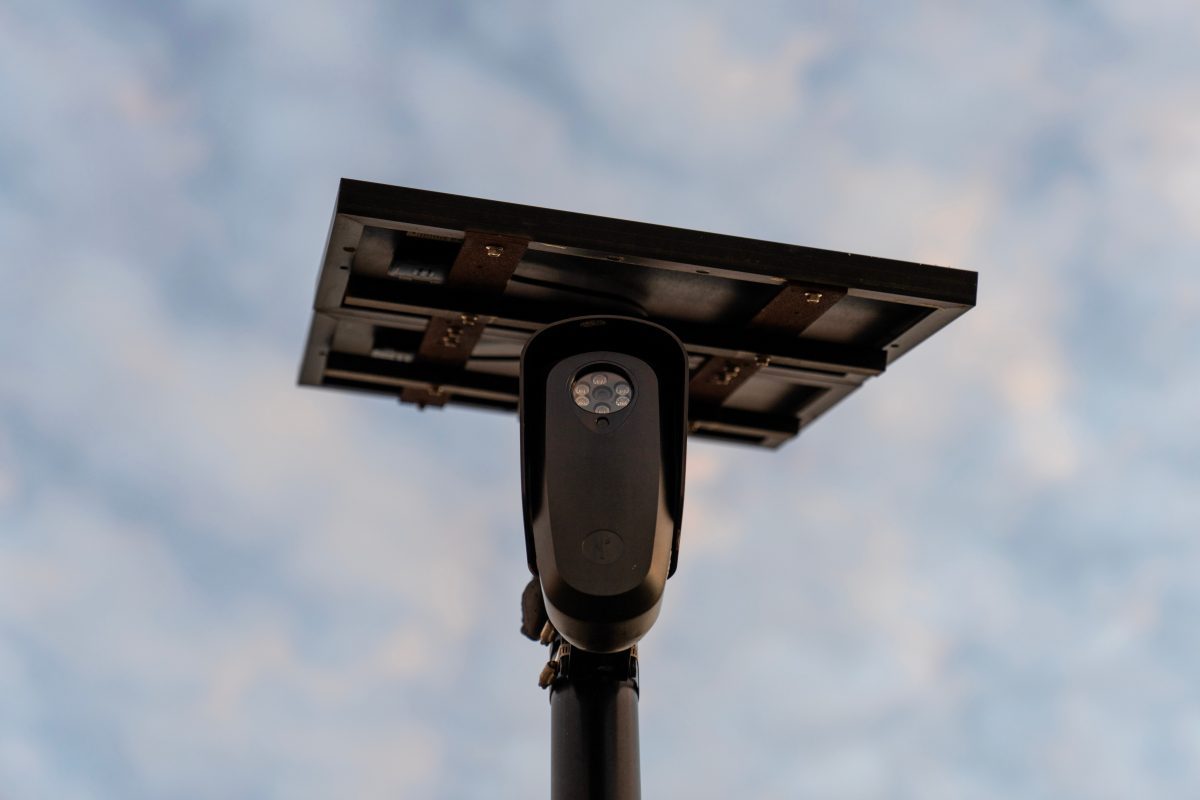
Automated license plate readers (ALPRs) have become a ubiquitous presence on American roads, with Flock cameras leading the market. These devices, mounted on poles, streetlights, and overpasses, capture images of vehicle license plates along with make, model, and color. Flock claims its cameras can operate day and night, capturing vehicles traveling up to 100 mph from as far as 75 feet away. The technology can also flag whether a vehicle is registered locally, has a temporary plate, or shows signs of damage or alteration, such as a broken taillight.
While Flock may be the most recognizable name, it is far from the only player. Genetec's ALPR system can estimate a vehicle's speed, and Motorola Solutions—which accounts for about 5 percent of ALPR locations tracked by the crowdsourced mapping project DeFlock—says its technology can identify accessories and unique features like bumper stickers. Unlike speed cameras, Flock devices do not determine if a vehicle is speeding; they simply take point-in-time images of the rear of vehicles on public roads.
The proliferation of ALPRs has not gone unchallenged. Communities in North Carolina, Indiana, Colorado, Wisconsin, and elsewhere have moved to discontinue their use. The Florida Department of Transportation has begun removing cameras from state highways, and Texas has pulled state funding for its program, citing privacy concerns, misuse accusations, and what Florida officials called "surveillance schemes." The backlash has been fueled by fears of mass surveillance and data sharing among law enforcement agencies.
Despite the pushback, President Trump recently expressed support for the technology. "No, I sort of like them because of that, because of law enforcement. But some people don't. They think it's an infringement," Trump told reporters on Air Force One earlier this month when asked about Flock cameras. He added, "I like them."
For those concerned about local surveillance, DeFlock offers a crowd-sourced map of ALPR locations across the U.S. The project relies on volunteers and the OpenStreetMap community rather than private companies or government agencies. Users can zoom in to see reported camera locations in their neighborhoods, though Nexstar could not independently verify the data.
ALPRs have been in use for more than two decades, according to a Department of Homeland Security report. They scan license plates and compare them against databases, alerting law enforcement to sought-after vehicles. Agencies can also review past captures and share information with other departments. As the debate over privacy and public safety intensifies, the future of ALPRs may hinge on political will and community resistance.
In Congress, some lawmakers are pushing back. Representative Thomas Massie has introduced the "Flock Off" bill, which would target federal funds for license plate surveillance. The bill reflects growing unease among both libertarian-leaning Republicans and progressive Democrats about the expansion of surveillance infrastructure. Meanwhile, the technology continues to evolve, with companies like Motorola and Genetec offering increasingly sophisticated features.
As the 2024 election approaches, the issue could become a flashpoint. Trump's endorsement of Flock cameras may rally law-and-order conservatives, but it also risks alienating voters concerned about government overreach. For now, the cameras remain, quietly logging the movement of millions of vehicles every day.