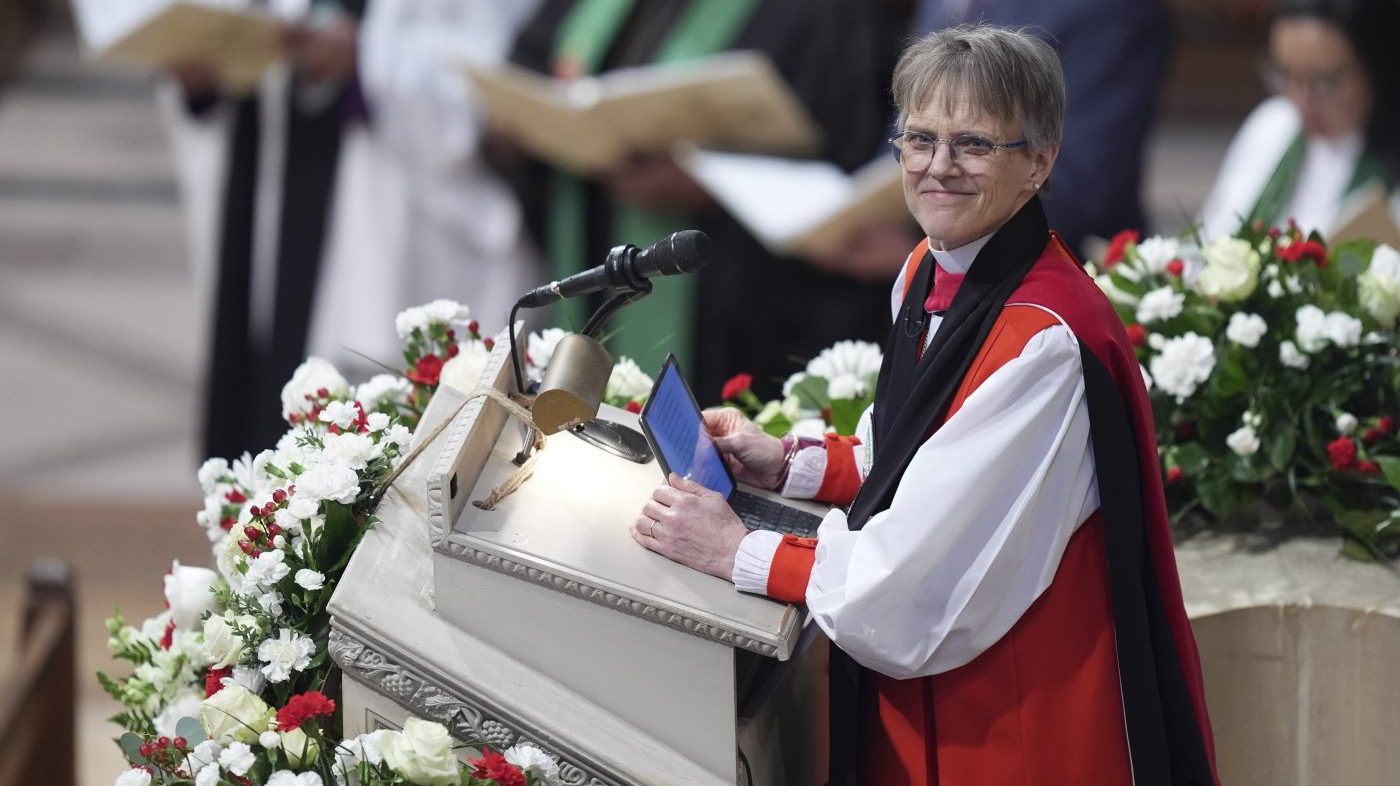
The Episcopal Bishop of Washington, Mariann Edgar Budde, has sharply criticized former President Donald Trump for sharing an artificial intelligence-generated image that depicted him in the likeness of Jesus Christ, labeling the act as part of a concerning pattern of claiming spiritual and divine authority.
In an interview on CNN, Bishop Budde described the image as "alarming," arguing it represents one of "many images and associations claiming spiritual mantles" that have sought to link Trump and his political agenda directly with Christian teachings and the perceived will of God. "When these claims reach wider audiences, both domestically and internationally, they become all the more alarming," Budde stated, emphasizing the danger in a political figure "identifying with Jesus in a particularly alarming way."
Image and Immediate Backlash
The controversial post appeared on Trump's Truth Social platform, showing the former president rendered in an AI-created scene. He was portrayed wearing garments resembling the traditional white robe and red shawl associated with artistic depictions of Jesus, appearing to heal a sick individual. The background incorporated American patriotic symbols, including the flag and the Statue of Liberty.
The image prompted swift criticism from various Christian voices across the political spectrum. Notably, even some conservative allies, including Georgia Republican Marjorie Taylor Greene, expressed disapproval. Facing this backlash, Trump subsequently deleted the post from his social media account.
Conflicting Explanations from Trump
In the aftermath, Trump offered contradictory reasons for the post's removal. Initially, he told reporters outside the Oval Office that he believed the image portrayed him "as a doctor" or a Red Cross worker, not as a religious figure. However, in a separate statement to CBS News, he denied that criticism from conservatives was the reason he took it down, leaving his motivation unclear.
This incident is not the first friction between Bishop Budde and the former president. During a prayer service at the Washington National Cathedral following Trump's last inauguration, Budde publicly urged him to show mercy to LGBTQ+ youth and immigrant families—a sermon Trump later dismissed.
Broader Context of Religious Critique
Budde connected the AI image controversy to Trump's recent adversarial remarks toward Pope Leo XIV, the first American pontiff. The pope has voiced concerns about the Trump administration's immigration policies and aspects of U.S. foreign policy, leading Trump to attack him on social media as "weak on crime" and "terrible for foreign policy."
"The pope's actions are consistent with religious leaders across the country and the world," Budde said, noting widespread apprehension among faith communities about current international events. She suggested Trump's reaction to the pope demonstrates a pattern where he "doesn't like to be criticized by anyone and takes out that criticism in very personal ways."
The episode highlights ongoing tensions at the intersection of politics, technology, and religion. The use of AI to create politically charged religious imagery presents a new frontier in campaign messaging and propaganda, raising ethical questions. Furthermore, it exposes growing rifts within conservative circles over the blending of partisan identity with religious iconography.
This controversy also intersects with broader policy debates where religious institutions have challenged administration stances. For instance, a Trump border adviser recently told the Catholic Church to 'stay out of immigration' following papal criticism, illustrating the persistent conflict between political authority and religious moral critique.