The Democratic Socialists of America are back in the political spotlight after their candidates secured two high-profile mayoral primary victories in major U.S. cities this month, though strategists caution the wins may not signal a national leftward shift.
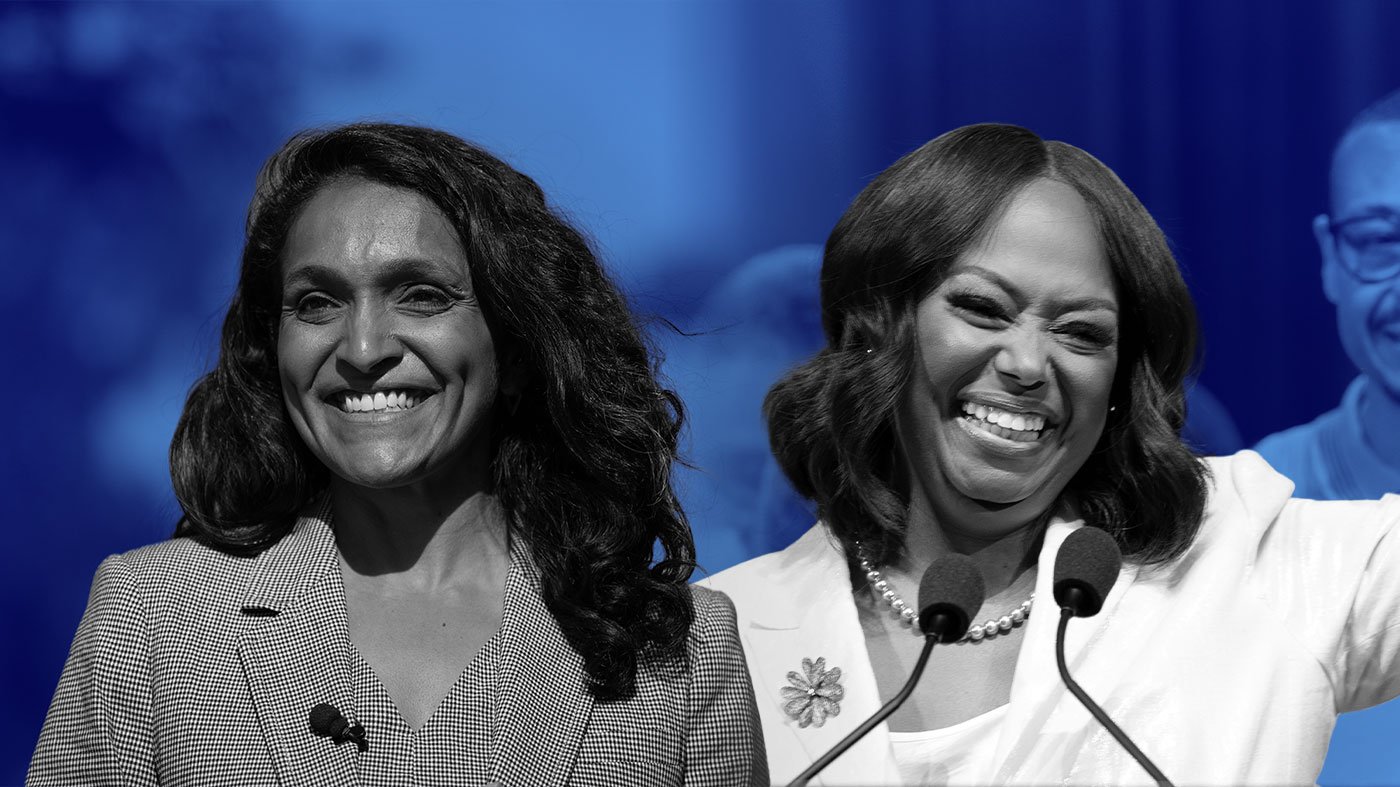
In Washington, D.C., progressive Democrat Janeese Lewis George defeated moderate Kenyan McDuffie in the primary last Tuesday, all but guaranteeing she will succeed term-limited Mayor Muriel Bowser. The week prior in Los Angeles, DSA member Nithya Raman advanced to a November runoff against incumbent Mayor Karen Bass, after surging past Republican Spencer Pratt in the primary.
These successes follow what many consider the DSA's most prominent recent victory: New York City Mayor Zohran Mamdani, who last summer beat establishment Democrat Andrew Cuomo in the primary and then defeated Cuomo again in the general election after the former governor ran as an independent. Mamdani’s campaign centered on affordability, proposing rent freezes, city-owned grocery stores, universal childcare, and free public transit.
Some observers see these results as evidence that DSA candidates and their economic populist message are gaining traction within the Democratic Party. But others urge caution, arguing the races primarily reflect voters’ desire for political change as the 2026 midterms and 2028 presidential election approach.
“There are some lessons that can be learned from the election results in New York and Washington, but I think that there are limits to how much this will tell you about voting in the rest of the country,” said veteran political strategist Doug Sosnik, a former senior adviser to President Bill Clinton. “What happened in those two cities that does apply is that voters want change. They are tired of the same old politicians defending the status quo. Voters want people to blow up the system.”
Sosnik noted the same anti-establishment trend is visible in the Republican Party, pointing to Donald Trump’s elections in 2016 and 2024. “People not only want change, but they also want their elected officials to focus on the middle class and break up a system that currently favors the rich and powerful,” he added.
In D.C., Lewis George has pitched a progressive platform and promised aggressive resistance to federal overreach during President Trump’s second term. Trump has warned that the federal government could “take back” D.C. if a “crazy socialist” wins the mayor’s office. Jim Kessler, executive vice president for policy at the center-left think tank Third Way, described Lewis George as “definitely the change candidate” in a race where voters sought something different after 12 years under Bowser.
But Kessler pointed out that trends vary by region. “In cities, you’re seeing trends that are going in both directions. Statewide, with a handful of exceptions, the moderate Democrats have done well,” he said, citing primary victories by James Talarico in Texas, Josh Turek in Iowa, Roy Cooper in North Carolina, and the popularity of former Rep. Mary Peltola in Alaska ahead of the U.S. Senate primary. He also noted that in San Francisco, moderate Daniel Lurie unseated a more progressive mayor in 2024 by promising change.
Democratic strategist Antjuan Seawright argued the primary results reflect “more of a generational conversation” than a surge of interest in DSA contenders. “I think these things are isolated to a large degree,” he said, cautioning against reading too much into the outcomes for national politics.
New York-based Democratic strategist Jon Reinish echoed that sentiment, noting that “the people who actively want to elect a DSA member, a socialist specifically, is a subset of a subset of a subset of people, even in the Democratic Party.” He added that the appeal lies more in the policy and energy—and the desire to overthrow business as usual—than in the DSA label itself. “If it happens to be a DSA or DSA-affiliated person who is going to make a case against the establishment, that person has a better chance of catching fire,” Reinish said.
The DSA, now the largest socialist organization in the country with over 100,000 members, was thrust into the mainstream when Sen. Bernie Sanders ran for president in 2016, though Sanders was not a member. As the group continues to grow its political machine, its recent successes in city races are being watched closely—especially as the party prepares for the upcoming midterms and the 2028 presidential contest. For more on how the Democratic establishment is grappling with these internal shifts, read our analysis on AOC's potential 2028 run and its implications for party power.