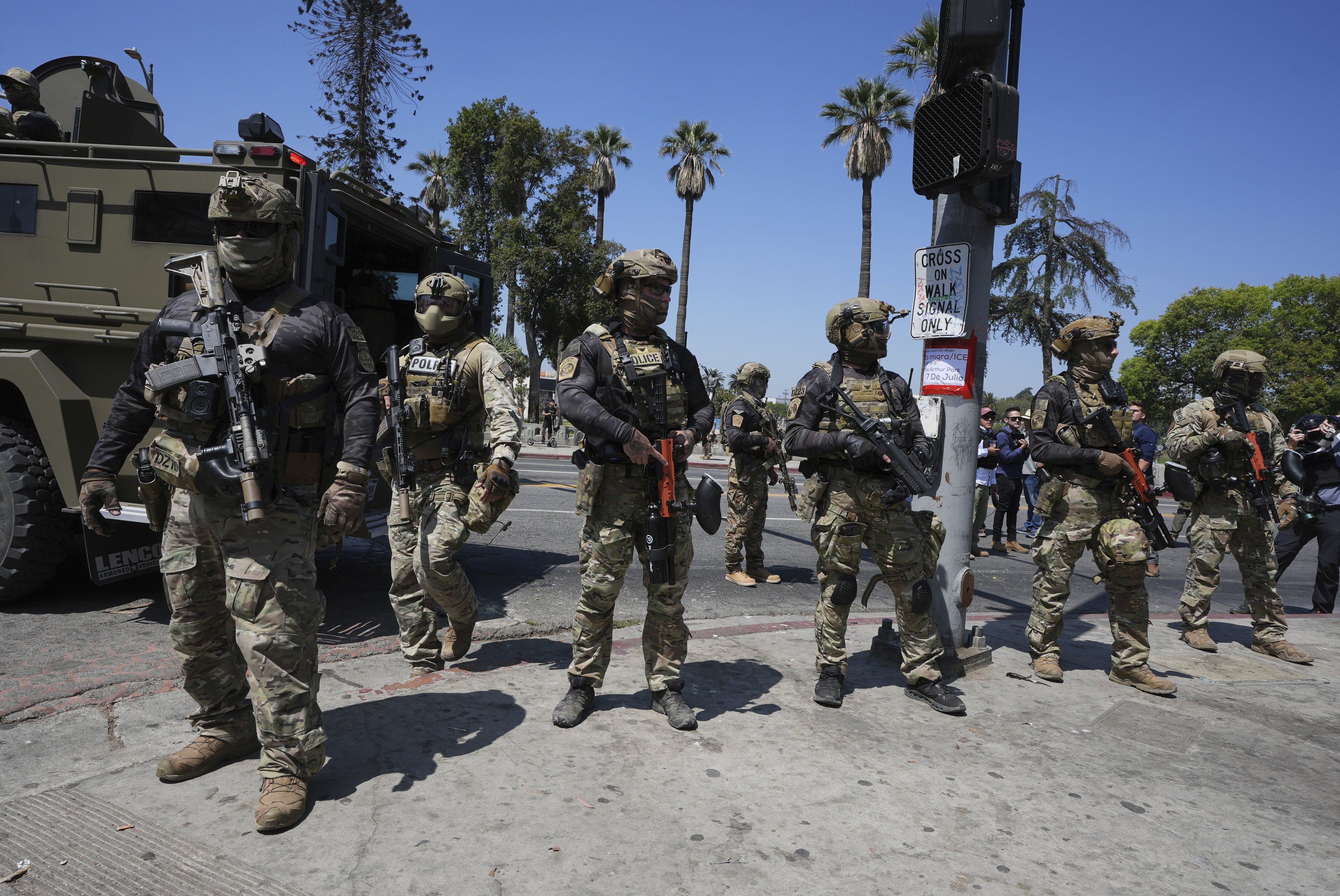
A federal judge has found the Department of Homeland Security in contempt for failing to comply with a court order to turn over digital copies of communications from the personal cellphones of more than 800 immigration agents. The ruling, unsealed Tuesday, stems from a lawsuit alleging racial profiling during immigration enforcement operations in Los Angeles last year.
U.S. District Judge Maame Ewusi-Mensah Frimpong, a Biden appointee, had ordered the department in January to provide imaging of the agents' phones. The plaintiffs—including the American Civil Liberties Union, Public Counsel, and other immigrant advocacy groups—argued that the communications could contain evidence of discriminatory conduct, including the use of racial slurs during encounters with the public.
But the agency's compliance was notoriously slow. In June, DHS told the court it was processing only three phones every two weeks for digital imaging, a pace that would have taken nearly four years to cover all devices. The ACLU accused the agency of deliberately stalling, saying DHS had “simply proceeded to thwart” the judge's order “by dragging their feet on imaging government-issued cell phones and by openly defying the order as to personal phones.”
In response, Frimpong imposed a $500 daily fine on DHS until it produces the phones for discovery, and ordered the agency to cover the plaintiffs' legal fees. The fine accumulated to $3,500 by Tuesday, when DHS paid it.
The agency had offered several justifications for its noncompliance. In December, DHS asserted that agents do not use personal phones for work-related communications, but testimony from five individuals contradicted that claim. In April, DHS argued it lacked jurisdiction over the phones, a position a magistrate judge rejected in July.
On July 28, Frimpong wrote that DHS had been given “plenty of time” to hand over the devices, and that the plaintiffs had shown “by clear and convincing evidence” that the agency violated a “specific and definite order.” She noted that the burden then shifted to DHS to demonstrate why it could not comply, but that the agency had “failed to do so.”
The contempt ruling is the latest chapter in a broader legal battle over immigration enforcement tactics. Earlier this year, a federal judge blocked New York's ban on ICE agents wearing masks, a measure that had been challenged by the federal government. The Los Angeles case, however, focuses on the conduct of agents themselves, with plaintiffs seeking to prove that enforcement actions were motivated by race.
The outcome could have implications for how federal agencies handle discovery in civil rights cases, particularly when personal devices are involved. As one legal analyst noted, the ruling sends a message that courts will not tolerate foot-dragging when evidence is central to allegations of misconduct.
DHS did not immediately respond to a request for comment. The agency has not indicated whether it will appeal the contempt order.