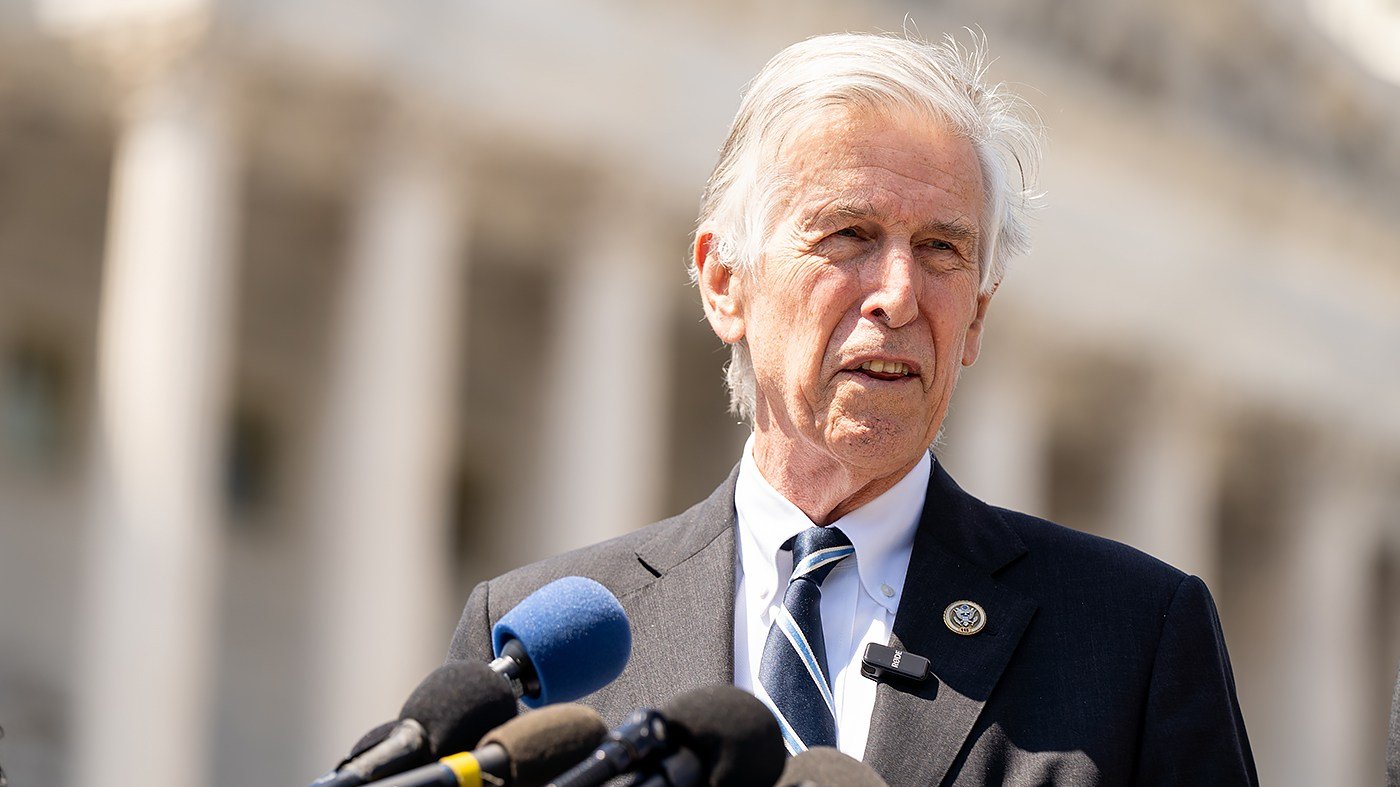
Rep. Don Beyer (D-Va.) is demanding the Federal Aviation Administration suspend its newly launched artificial intelligence system for managing air traffic around Washington, D.C., arguing that the technology is being deployed without adequate safety testing.
In a statement Monday, Beyer, whose district includes Reagan Washington National Airport (DCA), accused the agency of treating his constituents as test subjects. "The FAA should not use my constituents as guinea pigs for an unproven AI air traffic control system," he said. "The safety of the 24 million people traveling through DCA each year must be the top priority."

The system, called the Strategic Management of Airspace Routing Trajectories (SMART), went live Monday at DCA, Dulles International (IAD), and Baltimore/Washington International Thurgood Marshall (BWI). It is designed to process weather patterns, airport capacity, and real-time airspace conditions to reduce congestion and flight delays, with plans to expand nationwide.
Transportation Secretary Sean Duffy touted the rollout in a statement, saying SMART would "slash those frustrating delays, reduce stress on air traffic controllers, and lower travel prices" by reshaping airspace management and preventing problems before they occur.
But Beyer, a six-term lawmaker and co-chair of the Congressional AI Caucus, remains unconvinced. He said he was told Monday that air traffic controllers had no role in designing the system and have not been trained to use it. He added that controllers were informed SMART can adjust schedules and potentially even routes.
"Despite outward appearances, the airlines reportedly were privately 'panicking' about the hasty implementation of this system," Beyer said. He called for the FAA to suspend the rollout until human operators can thoroughly vet the tool, "at the very least until it is clearly established beyond doubt via air traffic controller feedback and independently verified stress testing that the technology is safe."
Beyer's concerns reflect broader anxiety on Capitol Hill about the rapid adoption of AI. This month, several leading industry voices warned about the potentially existential dangers of the technology, intensifying calls for oversight. The debate over AI safety has become a political flashpoint, with lawmakers on both sides grappling with how to regulate emerging tools without stifling innovation.
The FAA has not yet responded to Beyer's request. The agency has previously said SMART is part of a broader effort to modernize the nation's air traffic control system, which has long been criticized as outdated. But critics argue that deploying AI in safety-critical systems without rigorous testing is reckless.
For now, the system remains operational at the three airports, and Beyer's demand for a suspension sets up a potential clash with the Trump administration. As Congress continues to debate AI policy, the SMART system could become a test case for how the government balances technological advancement with public safety.
"Dangerously rushing a system that holds Americans' lives in its hands is not a good use case for artificial intelligence," Beyer said.