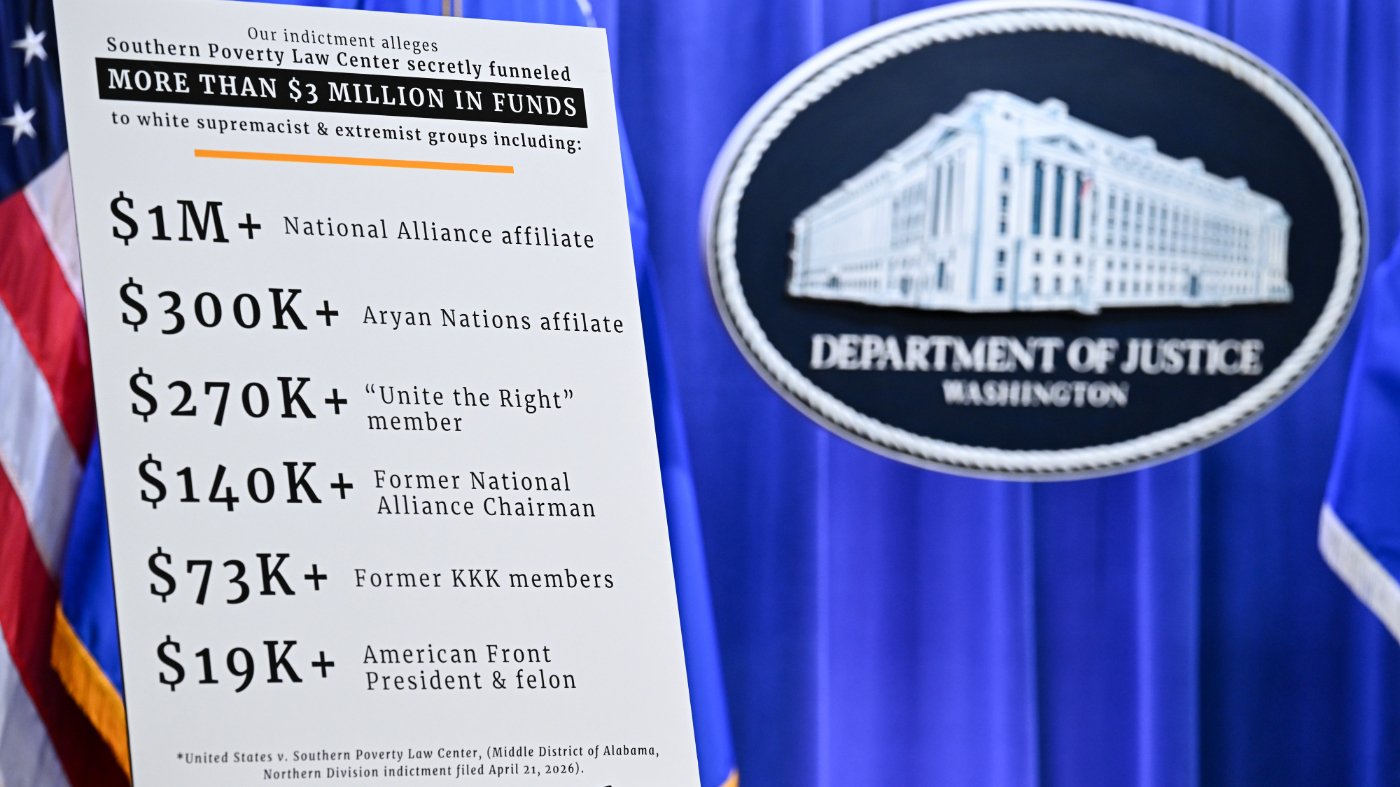
The U.S. government's indictment of the Southern Poverty Law Center last month represents a troubling shift in federal prosecutorial priorities. The venerable civil rights group, long a thorn in the side of white supremacist organizations, faces multiple federal charges that critics argue are politically motivated. The core of the case—that paying informants within extremist groups constitutes fraud—rests on a legal theory that has been rejected in court before.
The indictment centers on the SPLC's practice of compensating informants from hate groups for intelligence, including leaked documents about extremist activities. The organization has been transparent about this work, sharing findings with the FBI and other law enforcement agencies. This intelligence gathering was born of necessity: the SPLC's offices were firebombed in 1983, and its leaders have been targets of assassination plots. In 1995 and 1998, authorities foiled bomb plots against the center.
The government's argument is that by paying informants, the SPLC was effectively funding the extremism it claims to fight, thereby defrauding donors. As one legal expert put it, this is hogwash. The payments—totaling more than $3 million over a decade across eight or nine groups—amount to less than $50,000 per group per year. There is no allegation that the money went to the organizations themselves, only to individuals acting as confidential informants. Given the risks these informants face from violent groups, the payments seem reasonable.
The first six charges are for wire fraud, built on this theory. The eleventh charge, money laundering, depends entirely on the wire fraud allegations. Even if one accepts the prosecution's framing, the SPLC's work in combating hate groups far outweighs any indirect support. The remaining four charges involve false statements to banks, accusing employees of opening accounts in fictitious business names to facilitate payments. Several former federal prosecutors have expressed doubt that these actions violate the relevant statute.
This legal theory has a disturbing precedent. In 2016 and 2017, timber giant Resolute Forest Products and oil company Energy Transfer sued Greenpeace USA under the Racketeer Influenced and Corrupt Organizations Act, alleging that the environmental group misled donors. Energy Transfer argued that Greenpeace could not oppose pipelines because pipelines are supposedly safer than alternatives—an argument as absurd as saying the SPLC cannot pay informants while fighting hate. Federal judges dismissed those RICO claims in 2019, and the Resolute case ended with a settlement in 2024. The DOJ's version of this argument is unlikely to fare better.
The bank false statement charges are particularly alarming. Section 1014 has become a favorite tool in politicized prosecutions, as seen in the failed case against New York Attorney General Letitia James and in efforts to pressure Federal Reserve Governor Lisa Cook. This pattern—deciding who the criminals are and then finding a crime—mirrors repressive tactics abroad, where governments target advocates on technical violations.
The SPLC's real crime is its effectiveness in targeting hate groups. Like Greenpeace, which has not backed down from environmental advocacy, the SPLC continues its work. This case underscores the dangers of politicized prosecutions, especially as the DOJ dusts off a discredited legal theory. For more on how legal theories are being weaponized, see our analysis of the DOJ's case against James Comey and the Supreme Court's rejection of a bribery theory.