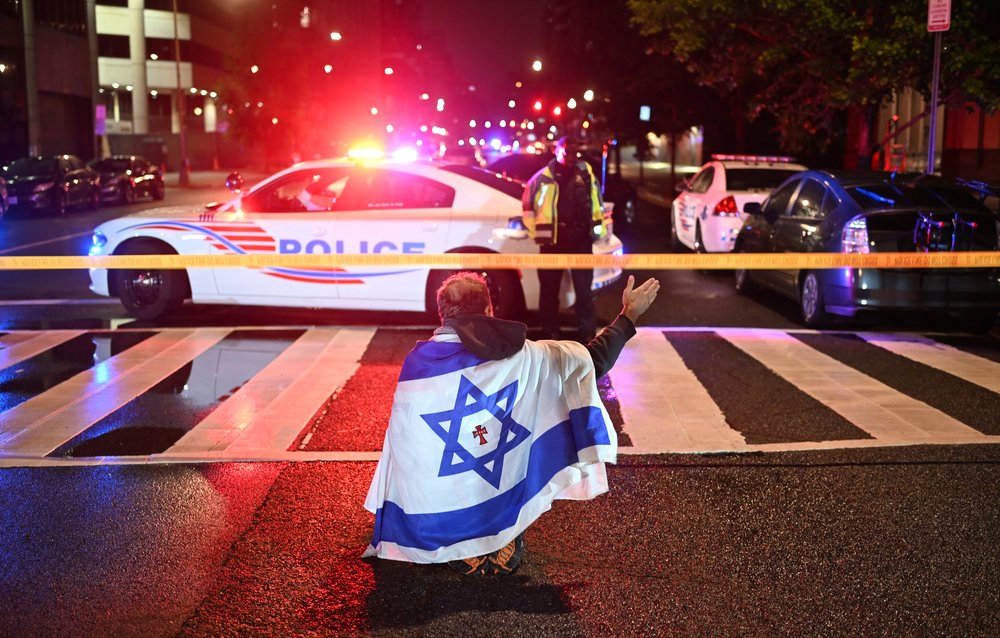
The Justice Department formally notified a federal judge on Friday that it will seek the death penalty against Elias Rodriguez, the man accused of fatally shooting two Israeli Embassy staffers outside the Capital Jewish Museum in Washington, D.C., nearly one year ago.
Federal prosecutors had long signaled they were considering capital punishment in the case. The new filing, submitted by the U.S. Attorney’s Office for D.C., marks the official notification required before trial. The decision required personal approval from the attorney general, currently Acting Attorney General Todd Blanche, who took over after Pam Bondi’s ouster last month.
Rodriguez is charged with 13 counts, including hate crime, murder, and terrorism charges. He has pleaded not guilty. Prosecutors allege he targeted a young couple—Yaron Lischinsky, 30, and Sarah Lynn Milgrim, 26—both employees of the Israeli Embassy, because they were attending an event for young Jewish professionals organized by the American Jewish Committee at the museum.
According to court documents, Rodriguez returned to the museum after the shooting, identified himself as the gunman, and stated, “I did it for Palestine. I did it for Gaza.” The Justice Department argued in its filing that the death penalty is justified due to substantial planning and a biased motive, among other factors. Prosecutors wrote that Rodriguez “targeted individuals whom he perceived to have attended an event for young Jewish professionals... to amplify the effect of his crimes.”
The move to seek capital punishment aligns with the Trump administration’s push to reinvigorate federal executions. President Trump has repeatedly criticized former President Biden’s moratorium on federal executions and his commutation of death sentences for most federal death row inmates. In February, then-Attorney General Pam Bondi told the Israeli-American Council’s National Summit, “We are prosecuting the monster, and we will seek the death penalty.”
The filing triggers special legal procedures to determine whether Rodriguez, if convicted, could be executed. U.S. District Judge Randolph Moss, an Obama appointee overseeing the case, has set the next court date for June 30. The case has drawn significant attention, echoing broader debates about capital punishment and hate crimes. In a related context, the Justice Department has also pursued death penalty cases in other high-profile incidents, such as the suspect in the WHCA dinner attack who pleaded not guilty to trying to kill Trump.
The Hill has reached out to Rodriguez’s lawyers for comment. The development comes as the U.S. sees a decline in overdose deaths nationwide, though some states buck the trend, according to recent CDC data. Meanwhile, the Justice Department’s aggressive stance on capital punishment continues to be a point of contention in political circles.