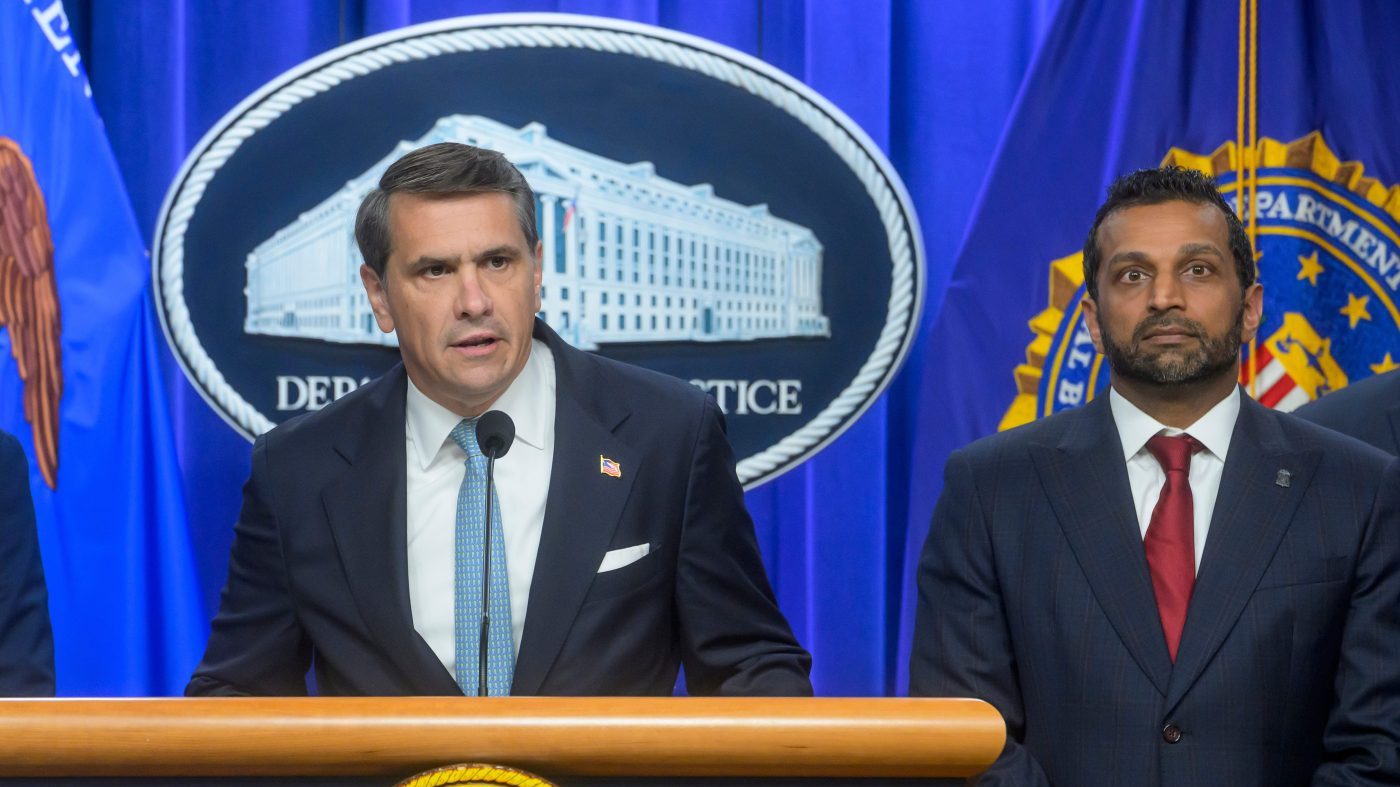
The Justice Department has finalized a rule that will allow certain individuals convicted of nonviolent felonies to have their firearm rights restored, Attorney General Todd Blanche announced Monday. The move is designed to ease tensions with gun rights advocates who have criticized the administration's continued defense of federal firearm restrictions.
In a statement, Blanche said, "The Second Amendment is not a second-class right, and the federal government should not permanently deprive Americans of a constitutional right without regard to whether they pose a danger to public safety." He added that the rule "establishes a rigorous, commonsense process that protects the public while giving deserving Americans a real path to restoration."

Federal law currently bars felons and several other categories of individuals from possessing firearms, a provision that is the most frequently prosecuted federal gun control measure. However, the legal landscape has shifted since the Supreme Court's conservative majority in 2022 established a new Second Amendment test, requiring gun laws to align with the nation's historical tradition of firearm regulation.
The Trump administration has continued to defend the constitutionality of many federal gun statutes, but those statutes also grant the attorney general authority to grant exemptions. The administration had long signaled it would activate this process, and Monday's announcement fulfills that promise.
Under the new rule, restoration of gun rights is not guaranteed and will be evaluated on a case-by-case basis. Applicants must demonstrate that they are not likely to pose a danger to public safety. The department has indicated that violent felons, sex offenders, and individuals in the country unlawfully will be presumptively ineligible for relief.
The move comes as the administration faces ongoing legal battles over gun policy, including challenges to restrictions on firearm ownership. The department's decision to implement a restoration process could be seen as an attempt to preempt further court rulings that might strike down broader restrictions. For more on how the administration is handling other legal challenges, see the ACLU's recent lawsuit.
Critics of the new rule argue that it could undermine public safety by allowing individuals with criminal histories to obtain firearms. Supporters, however, contend that the Second Amendment protects the rights of all Americans, including those who have paid their debt to society. The rule is likely to face legal scrutiny from both sides of the gun debate.
The department's announcement also coincides with broader efforts to reshape federal policy on firearms and other constitutional issues. As the administration continues to navigate these contentious topics, the restoration process will be closely watched by advocacy groups and lawmakers. For a related development, see the State Department's recent visa crackdown.
Blanche's statement emphasized that the rule is not a blanket amnesty but a measured approach. "This rule establishes a rigorous, commonsense process," he reiterated, "that protects the public while giving deserving Americans a real path to restoration." The department will now begin accepting applications from eligible individuals.