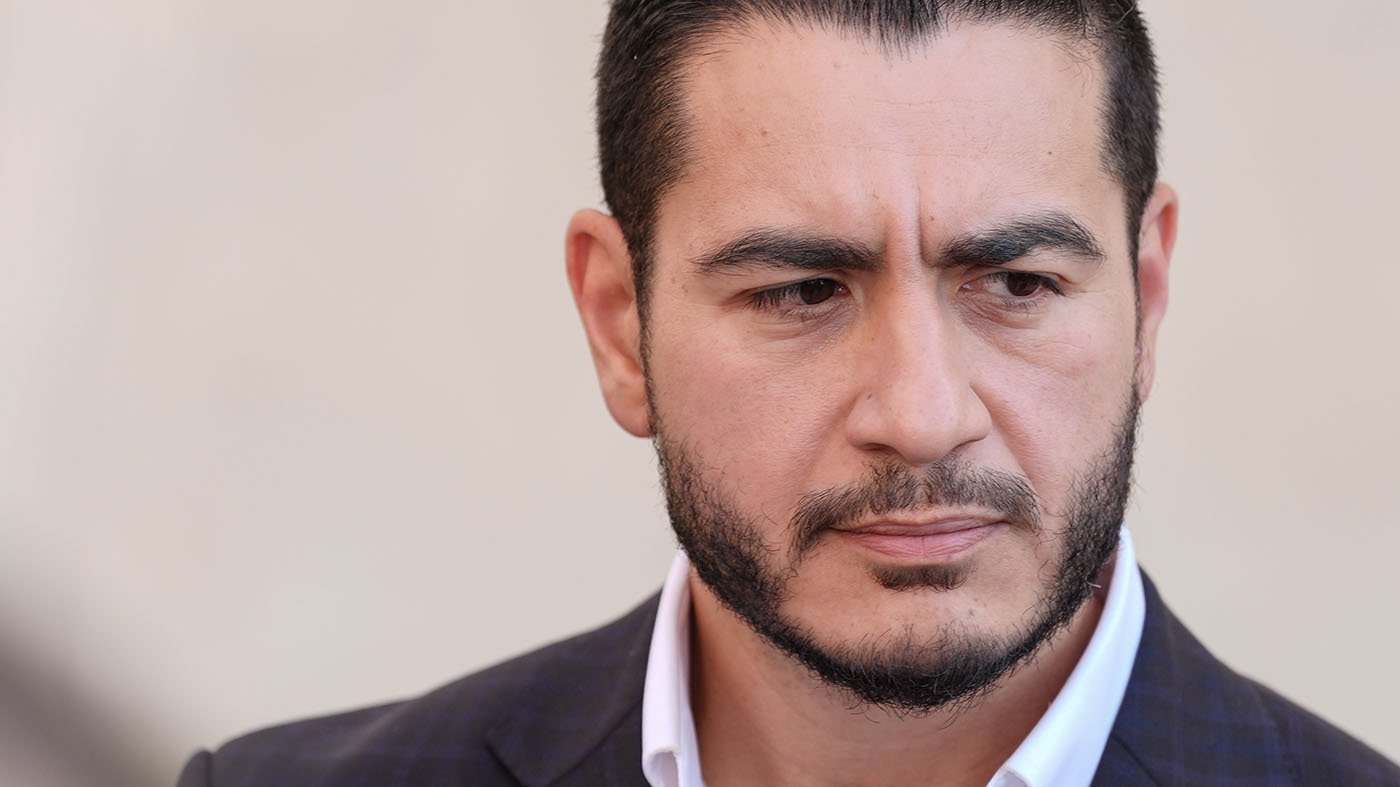
Michigan Democrats are moving quickly to consolidate behind Abdul El-Sayed after his razor-thin primary victory on Tuesday, setting aside internal divisions to focus on the general election battle against Republican Mike Rogers.
Several lawmakers who had previously supported his main rival, Rep. Haley Stevens, signaled a swift shift, urging unity behind the party's nominee. Sen. Gary Peters, who is not seeking reelection, emphasized the high stakes in a Wednesday post on X, saying, "Both candidates ran strong campaigns focused on improving the lives of all Michiganders. But now it's time to come together as a party and rally around our nominee, Abdul El-Sayed, to make sure Mike Rogers never sees the floor of the U.S. Senate."

Peters, who had endorsed Stevens, also warned of the consequences of a Rogers victory, describing him as a "rubber stamp for Donald Trump" who would support tax cuts for billionaires, raise healthcare costs, and prolong U.S. involvement in conflicts like the war with Iran. His comments reflect a broader urgency among Democrats to prevent a Republican pickup in a key battleground state.
Governor Gretchen Whitmer, another early supporter of Stevens, also threw her weight behind El-Sayed on Tuesday night. "They've got my support as we fight like hell together to win in November," she wrote on X, adding, "Together, let's stop MAGA Republicans so we can get to work and deliver results for the people of Michigan."
Stevens and fellow contender Mallory McMorrow formally conceded on Wednesday and pledged their full support to El-Sayed, helping to project an image of party cohesion after a competitive primary. The latest tally from Decision Desk HQ shows El-Sayed won by just one percentage point, underscoring the narrow margin and the need for reconciliation.
El-Sayed, a physician and former public health official, brings a notably different policy platform than his primary opponents. He is a vocal critic of the American Israel Public Affairs Committee (AIPAC), a stance that sharply contrasts with Stevens, and he advocates for "Medicare for All." His lack of prior elected experience has not deterred Democrats, who see 2026 as an opportunity for a fresh political start.
However, Peters cautioned that El-Sayed will need to build support beyond urban centers. "In order to win in Michigan, you have to have support in rural areas," he told Punchbowl News, noting that Stevens had drawn strength there. "The way to earn support in—Haley Stevens, that's where she got a lot of her support, in rural areas—is just talking about issues that they care about."
El-Sayed, who is Muslim, is expected to face significant opposition from AIPAC and Republican-aligned groups due to his pro-Palestinian stance. AIPAC has already vowed to work against him, stating that its "members remain determined to ensure that voters reject Dr. El-Sayed and his radical anti-Israel agenda in November."
As the general election approaches, El-Sayed's campaign will likely focus on mobilizing progressive voters while trying to expand his appeal in rural Michigan. The race is shaping up to be one of the most closely watched Senate contests, with national implications for control of the chamber. For more on the shifting dynamics, see how El-Sayed is framing Rogers as a corporate sellout and the toss-up nature of the general election.