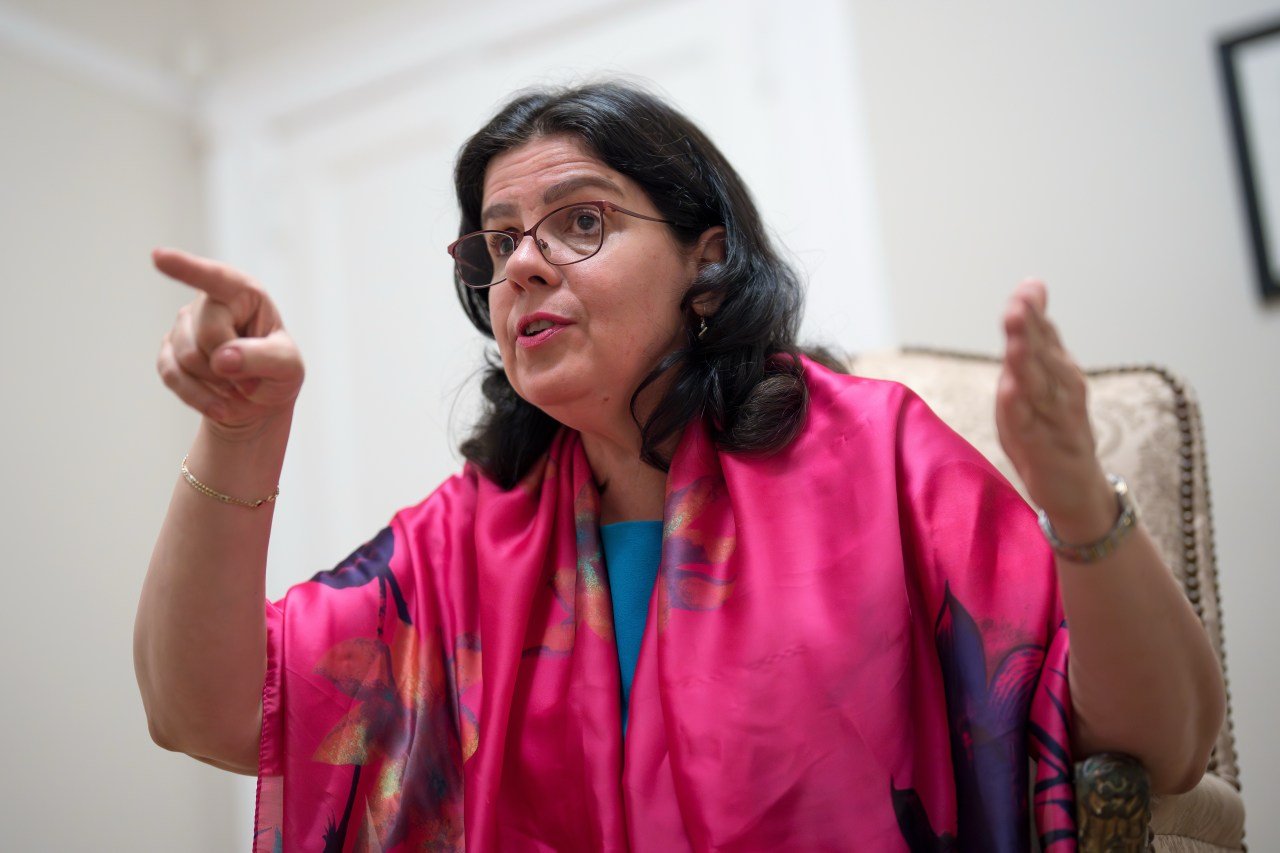
WASHINGTON — Cuba's top diplomat in the United States has accused the Trump administration of using economic sanctions and a criminal indictment against former President Raúl Castro as a cover to rally the American public behind a potential military intervention. Ambassador Lianys Torres Rivera, who holds the title of chargé d'affaires, made the charge in an interview with the Associated Press on Tuesday, echoing statements from other senior Cuban officials.
“The sanctions against our leaders, we see as a pretext to make the American people think we are a threat,” Torres Rivera said at Cuba's embassy in Washington. “We are not a threat to the U.S., and we don’t want confrontation.” She described the situation as “a war without bombs” and warned that any attempt to change Cuba's government by force would meet fierce resistance.
Torres Rivera specifically defended Castro, who was indicted last month by a federal grand jury on conspiracy and murder charges linked to the 1996 shootdown of two unarmed civilian planes operated by the Miami-based exile group Brothers to the Rescue. At the time, Castro was Cuba's defense minister. “Raúl is a sacred symbol of the revolution, and we will defend Raúl — as we will the country — until the end,” she said. “If we are attacked, we are going to respond, and we are prepared for that. But we don’t want it.”
Her remarks reflect a broader perception in Havana and among Cuba analysts that the charges and sanctions mirror the Trump administration's justification for the January military intervention in Venezuela that ousted Nicolás Maduro. On the same day the Treasury Department imposed sanctions on Cuban President Miguel Díaz-Canel, Castro's son, and his grandson, President Trump stated, “We’re going to handle that as soon as we’ve finished” military operations in Iran. Trump has long threatened action against Cuba, especially after the energy blockade that choked fuel shipments, triggering blackouts, food shortages, and economic collapse.
Torres Rivera described the humanitarian toll on ordinary Cubans, who face power cuts of up to 20 hours a day and soaring costs for gasoline, kerosene, food, and medicine. “What is happening now is tough,” she said. “It is heartbreaking.” Administration officials, including Secretary of State Marco Rubio, blame Cuba's socialist policies for the crisis and have not ruled out military action, though they say they are willing to give Havana time to reform.
According to Torres Rivera, recent talks between senior U.S. and Cuban officials in Havana and elsewhere have been “professional and respectful,” but she stressed that Cuba will only accept reforms that come from within, not under external pressure. She pointed to Vietnam's gradual, self-directed reforms over the past four decades, which ultimately led to normalized relations with Washington, as a model Cuba should be allowed to follow. “We want to make sure that the only changes to the system are done by us,” she said.
Rubio, however, has argued that Cuba's security and intelligence ties with China and Russia, along with its alliances with U.S. adversaries in Latin America, make it a serious national security threat. He told lawmakers at a recent hearing, “I really don’t believe this system is capable of reform unless new people take over or a new mindset takes hold.” The State Department did not immediately respond to a request for comment on Torres Rivera's remarks.
The escalating tensions come as Trump continues to threaten military action against Iran, raising concerns that a two-front confrontation could further destabilize the region. For now, Cuba's envoy insists her country wants peace but will not yield to coercion.