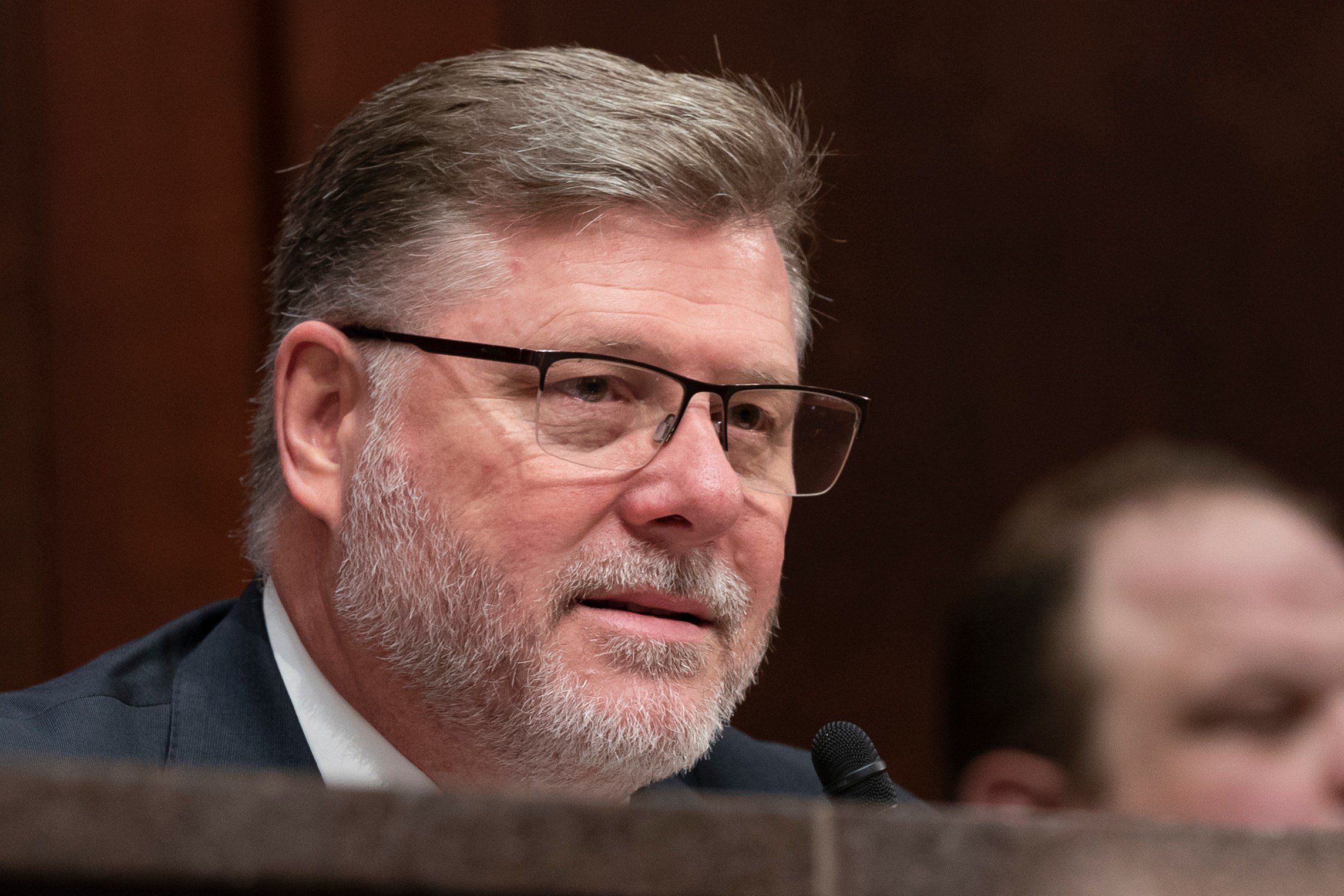
House Intelligence Committee Chair Rick Crawford (R-Ark.) on Wednesday called on the intelligence community to adopt a "joint service environment" that prioritizes open and fluid communication between agencies. Speaking on NewsNation's "Elizabeth Vargas Reports," Crawford argued that the current threat landscape—marked by drone proliferation and the rapid rise of artificial intelligence—demands a more integrated approach.
Crawford invoked the post-9/11 reforms as a model, noting that the 9/11 Commission identified a "failure of imagination" that allowed the attacks to happen. He warned that the U.S. is "behind the eight ball" on drone warfare and that AI represents "the big unknown."
"We don't know what we're unleashing as we create it," Crawford said, underscoring the uncertainty surrounding AI's implications for national security.
The Arkansas Republican emphasized that the military has long benefited from joint operations, with each branch contributing unique capabilities. He argued the intelligence community should follow suit, breaking down bureaucratic walls that hinder information sharing.
"I think what this calls for is recognizing what we did right, and what we did right was to sort of break down the walls that were preventing our agencies from communicating," he said, referencing the post-9/11 environment. "We need to foster a joint service environment, a culture in the IC that understands, much like the military, that not one single branch can do it all."
Crawford's remarks come at a time of significant turnover in national security leadership. The recent suspension of three Secret Service staffers in a misconduct probe highlights ongoing personnel issues within the security apparatus. Additionally, the Secret Service is investigating an Iranian video targeting Barron Trump, underscoring persistent foreign threats.
Leadership instability has been a concern. Former National Security Adviser Mike Waltz was reassigned to NATO after a Signal scandal, and Secretary of State Marco Rubio is serving as interim NSA without a Senate-confirmed replacement. Director of National Intelligence Tulsi Gabbard resigned in June to care for her husband, and Jay Clayton, former U.S. Attorney for the Southern District of New York, was confirmed as her successor in a 51-47 vote.
Reports in June indicated that the CIA had stopped sharing information with the Office of National Intelligence following a dispute over responsibilities under Gabbard. Crawford's push for a joint service culture may be seen as a response to such interagency friction.
Analysts suggest that Washington's blind spots in economic security intelligence and the need for a more cohesive approach to emerging threats are critical. As the U.S. confronts drone and AI challenges, Crawford's call for unity may resonate across the intelligence community.