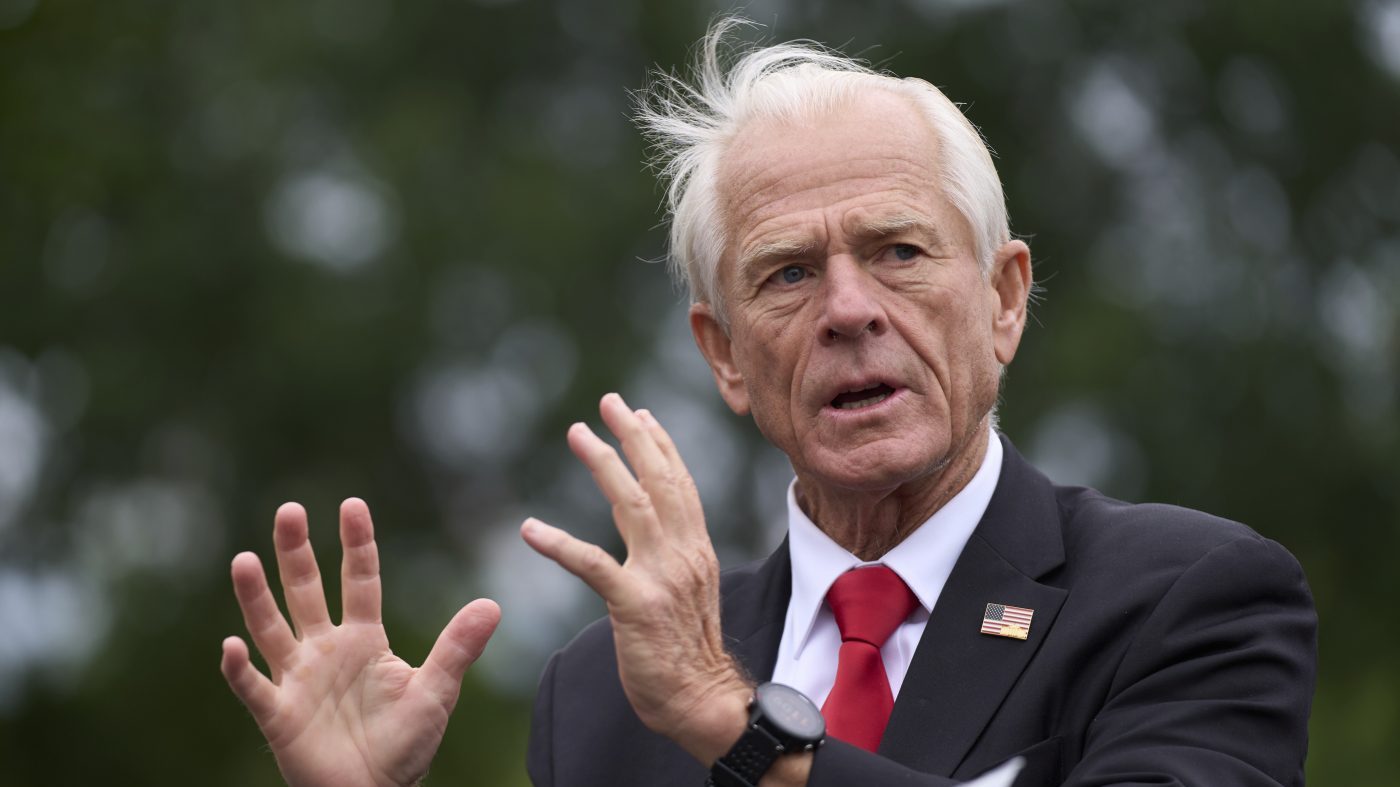
A federal appeals court on Tuesday affirmed the contempt of Congress conviction of Peter Navarro, a former White House trade advisor, ruling that he failed to demonstrate that President Donald Trump had invoked executive privilege to justify his refusal to testify before the House select committee investigating the January 6, 2021, attack on the Capitol.
Navarro, who has already served a four-month prison sentence for the conviction, had sought to overturn the ruling, arguing that Trump's assertion of executive privilege shielded him from complying with a congressional subpoena. However, the U.S. Court of Appeals for the D.C. Circuit found no credible evidence to support that claim.
Key Ruling Details
The panel, led by Judge Patricia Millett, highlighted that Navarro could not produce any written communication from Trump or his office directing him to assert executive privilege. In a previous case involving a similar issue, the court noted that when a president does invoke the privilege, it is typically documented in writing. "Dr. Navarro submitted phone records corroborating the phone call’s timeline, but he failed to produce any document establishing that President Trump had directed him to assert executive privilege and could not recall whether such a document existed," Millett wrote.
The court also pointed to testimony from former Trump administration officials who could not corroborate Navarro's claim that the president wanted to block his testimony. This lack of evidence, combined with Navarro's failure to respond to the subpoena in any meaningful way—he did not produce documents, submit a privilege log, or appear for his scheduled deposition—undermined his defense.
Navarro's Role in Election Challenge
Navarro came under scrutiny after publishing a 2021 book in which he detailed his role in a plan to delay the congressional certification of Joe Biden's 2020 presidential election victory. That plan caught the attention of the January 6 committee, which subpoenaed him for testimony and documents. He refused to comply, leading to his contempt conviction.
The appeals court emphasized that even if executive privilege had been invoked, it would not have excused Navarro's complete failure to respond to the subpoena. "In short, Dr. Navarro has acknowledged that even if executive privilege had been invoked, that would not have excused his categorical failure to comply with the Select Committee’s subpoena," Millett wrote.
Ongoing Legal Battle
Navarro's attorney, Abhishek Kambli, signaled that the fight is far from over. In a statement, Kambli described the panel's decision as "one step in a battle to correct decades of incorrect (D.C. circuit) precedent." He added, "He intends to move swiftly with his appeal because his case affects every senior presidential advisor, regardless of political party, who believes in good faith they cannot comply with a congressional subpoena based on executive privilege."
The case has broader implications for the balance of power between Congress and the executive branch, particularly regarding claims of executive privilege. A recent Supreme Court ruling on agency independence dealt a blow to public trust by limiting oversight mechanisms, and this case continues to test the boundaries of presidential authority. Additionally, the appeals court's decision underscores the judiciary's reluctance to accept unsubstantiated claims of privilege, warning that courts "could mistakenly apply the privilege against the will of the President based solely on a defendant’s say-so."
As Navarro pursues further appeals, the outcome could set a precedent for how future administrations handle congressional subpoenas, especially in politically charged investigations. The case also highlights the ongoing legal fallout from the January 6 committee's work, which has led to several high-profile contempt cases.