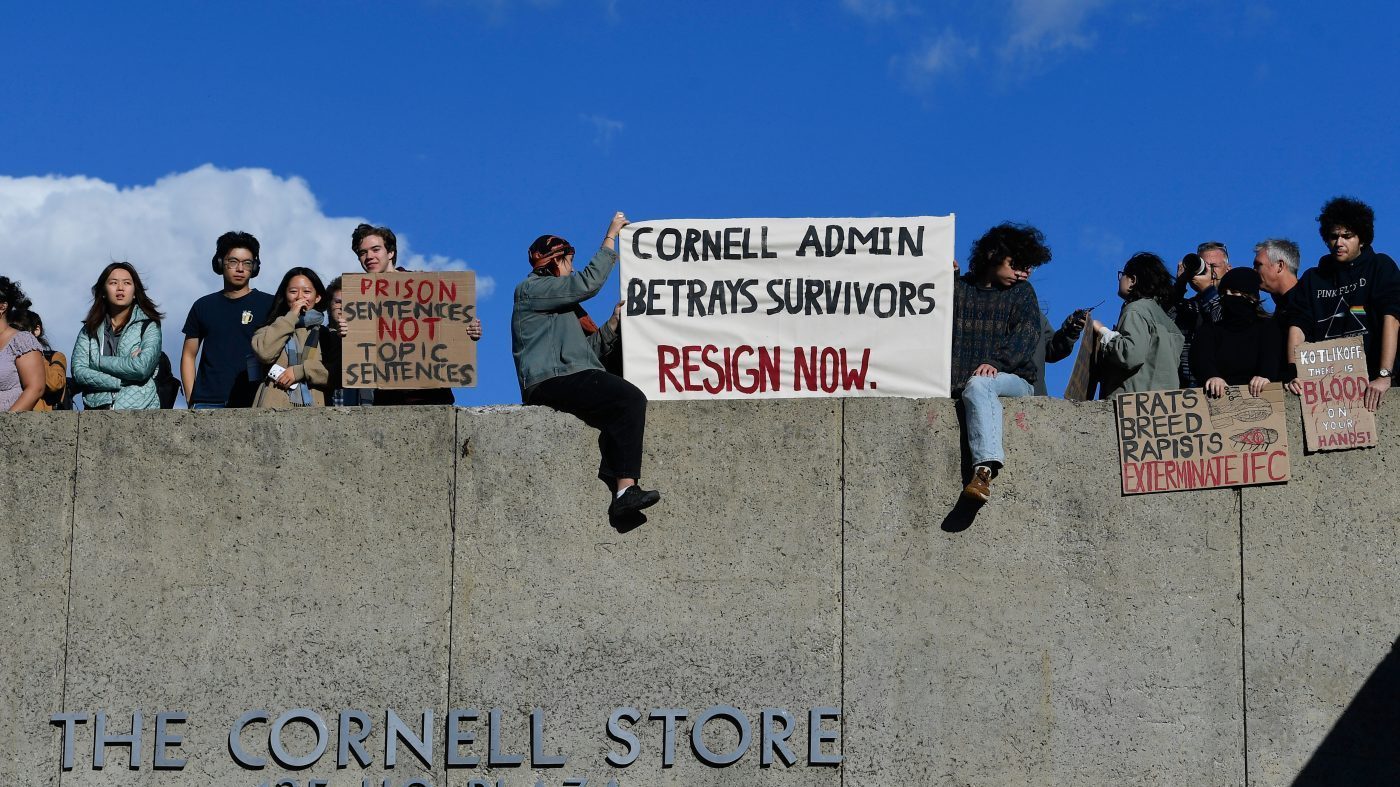
A legal battle over media publicity is intensifying in the Cornell University gang rape case, with a defense attorney for one of the seven accused Chi Phi fraternity members asking a court to muzzle the plaintiff’s lawyer.
James C. Knox, representing Diego Sarabia, filed a request on October 9 seeking to bar Thomas P. Giuffra, the attorney for Jane Doe, from further media appearances and comments about the case. Knox described Giuffra’s conduct as “an orchestrated campaign from the outset.”
In the filing, Knox argued that the case is still in its early stages, with some parties yet to appear, no answers or responsive motions filed, and discovery not yet begun. He warned that continued media appearances by parties or their counsel “risks further prejudice to the adjudicative process.”
Giuffra fired back on Monday, telling NewsNation that the defense is “attempting to silence me.” He accused the defense of leaking confidential documents, giving interviews that question Ms. Doe’s account, and calling her lawsuit immoral.
“These attempts to shift the narrative have not been successful,” Giuffra said. “The Defense is now attempting to silence me and Ms. Doe because we have been so successful in rebutting their ineffectual attempts to undermine her story. Truth always wins out.”
The underlying allegations are explosive: Doe claims that seven members of the Chi Phi fraternity at Cornell University drugged and raped her in October 2024. The case was reopened last month.
As the legal maneuvering continues, the dispute over publicity highlights the high-stakes nature of the case and the competing narratives being advanced by both sides. The court will now weigh whether to impose restrictions on attorney speech, a move that could have implications for how the case is litigated in the public eye.
This is not the first time high-profile cases have seen clashes over media coverage. Similar tensions have arisen in other politically charged legal battles, such as the Supreme Court’s new test for assault weapons and the NFL’s push for Supreme Court action on prediction markets. In each, the line between zealous advocacy and prejudicial publicity is fiercely contested.
For now, the Cornell case remains under investigation, and the court’s ruling on the defense motion could set an early tone for how the proceedings unfold.