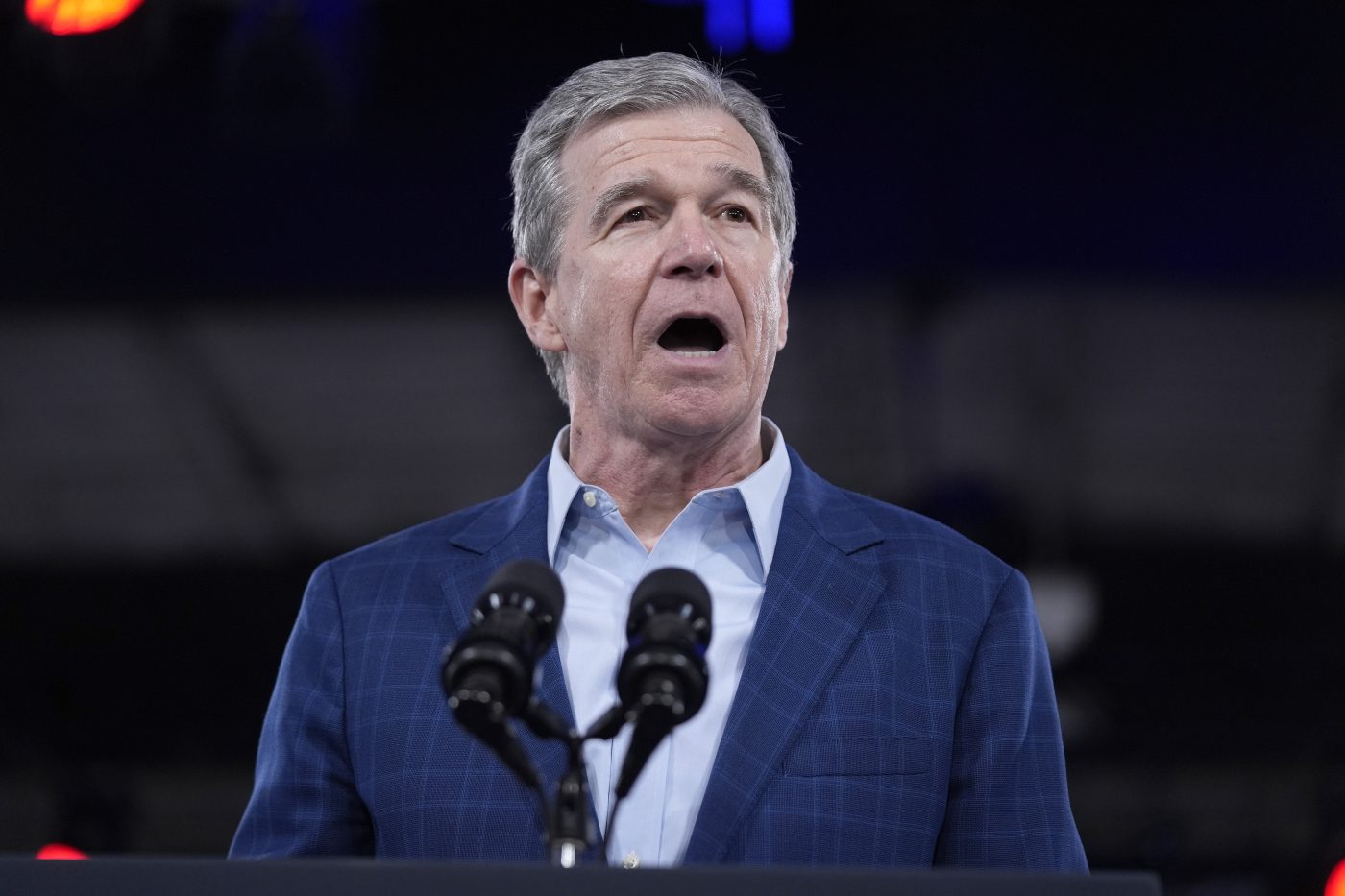
Former North Carolina Governor Roy Cooper, the Democratic nominee for the U.S. Senate, warned Monday that the Supreme Court’s recent campaign finance decision will have a disproportionate impact on his race against former Republican National Committee chair Michael Whatley. In an interview with MS NOW’s Chris Hayes, Cooper called the ruling “the worst campaign finance decision since Citizens United.”
“Probably it will affect my race more than any others in that it empowers political parties, it empowers wealthy people,” Cooper said. “And my opponent, Michael Whatley, was the chairman of the RNC, so he has access to all of that.”

The high court’s June 30 decision, siding with Vice President Vance, eliminated federal caps on how much individual candidates can coordinate their spending with national party committees. This marks a significant departure from previous restrictions and builds on the 2010 Citizens United v. FEC ruling, which opened the door to unlimited independent corporate and union expenditures.
Under the new framework, both the Democratic National Committee and the RNC can now spend unlimited sums in direct coordination with campaigns. Critics argue this will further amplify the influence of big donors and party machinery, while weakening the role of small-dollar contributors.
Justice Elena Kagan, joined by the court’s two other liberal justices, dissented sharply, accusing the majority of overriding congressional intent. Cooper echoed that sentiment, warning the decision will permit “virtually unlimited spending” from political parties and “takes away the power from the small donors.”
Cooper, who has made campaign finance reform a central plank of his Senate bid, called for overturning Citizens United and its progeny. “We really need now more than ever to stand up to this big money,” he said. “We need to get rid of Citizens United and its effects, and we need people that are elected who will be willing to stand up to do that, and I will.”
The ruling arrives amid a broader debate over money in politics, with recent controversies—such as the Maine Democrat Platner campaign pausing after a sexual assault allegation—illustrating how quickly political dynamics can shift. Meanwhile, other Supreme Court decisions, including one on women’s sports and another on birth tourism, continue to shape the national political landscape.
For Cooper, the immediate challenge is clear: facing an opponent with deep party ties and a new legal landscape that supercharges those connections. The North Carolina Senate race is already one of the most closely watched in the country, and this ruling could tip the scales even further.