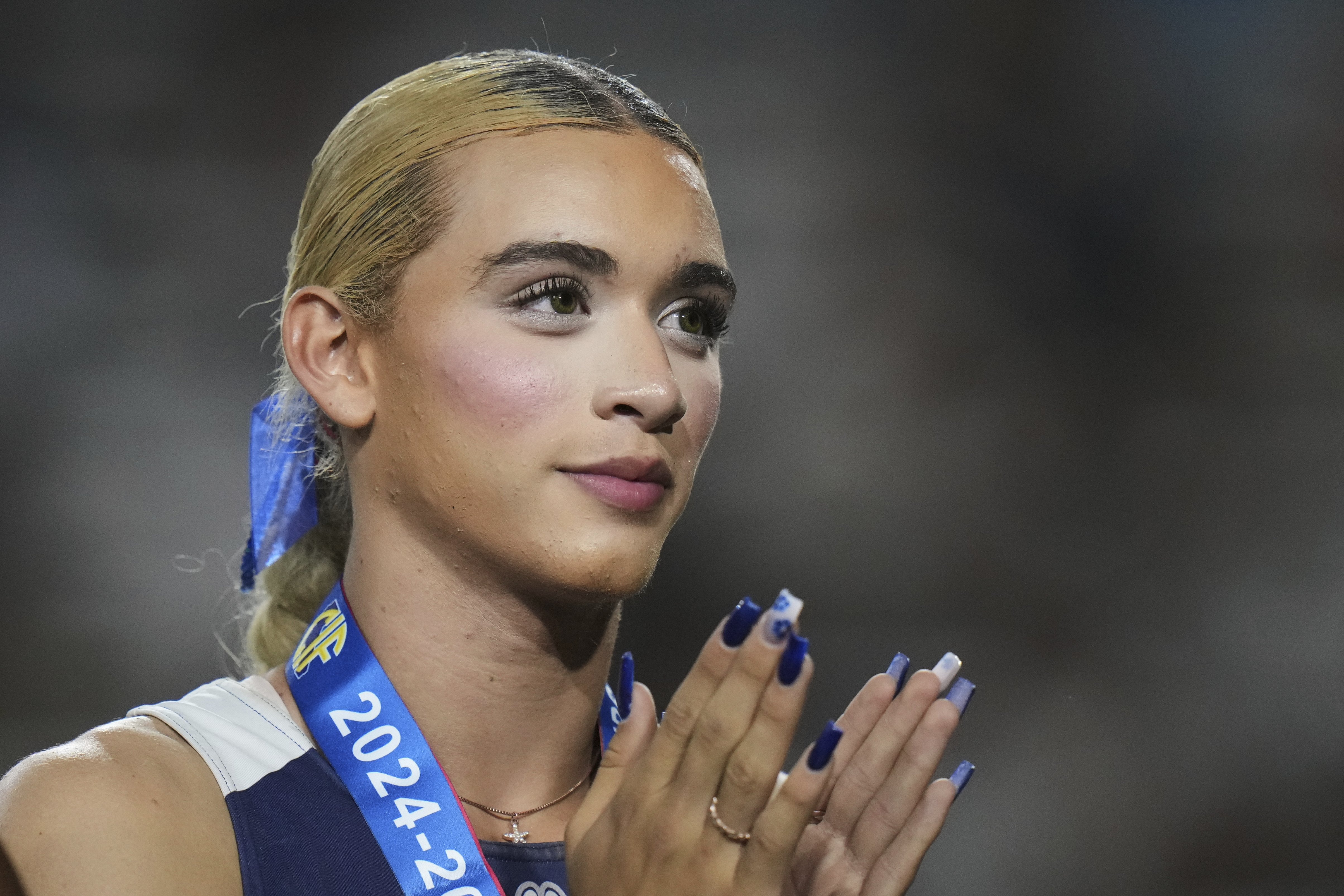
The Supreme Court delivered a significant victory for advocates of female-only sports on June 30, ruling 9-0 on Title IX and 6-3 on equal protection grounds that states may bar male athletes from competing in women's athletic categories. The decisions in West Virginia v. B.P.J. and Little v. Hecox affirmed that sex, as defined by biology, is the basis for Title IX protections. But the ruling's limited scope means it only applies in the 27 states that have enacted similar laws, leaving female athletes in states like California without the same safeguards.
Title IX, enacted in 1972, prohibits sex discrimination in education, and the Equal Protection Clause of the 14th Amendment has shielded women from government discrimination since 1971. Yet in recent years, male athletes claiming a female gender identity have entered women's sports, citing their internal self-perception over physical reality. Idaho Governor Bradley Little, when signing the Fairness in Women's Sports Act in 2020, argued that separate sex-specific teams promote equality by giving female athletes fair opportunities for scholarships, recognition, and athletic success. West Virginia followed with a similar law in 2021.

Male athletes challenged both laws. B.P.J. argued that West Virginia's statute violated Title IX and the Equal Protection Clause, while the plaintiff in Hecox contested Idaho's law solely on equal protection grounds. The court rejected these challenges, recognizing that male athletes hold inherent athletic advantages over females—sometimes even when high school boys are compared to elite female athletes. The majority opinion stated that the term 'sex' in Title IX and related amendments 'cannot plausibly be interpreted to refer to anything other than biological sex.'
This decision solidifies protections for female athletes in states that have already moved to safeguard the female category. In those jurisdictions, girls and women can compete exclusively against other females and avoid privacy intrusions in locker rooms. Male athletes, including those identifying as transgender, remain free to compete in men's and boys' sports.
However, the ruling does not extend to states like California, which continues to permit male athletes such as A.B. Hernandez to compete in girls' events. This creates a troubling inconsistency: if sex is real under Title IX, why should the law apply in West Virginia but not in California? Are girls in Maine less deserving of equal protection than those in Montana or Mississippi? The court sidestepped these questions, but further litigation is inevitable.
In a concurring opinion, Justice Clarence Thomas signaled he would explicitly rule that 'transgender people' are not a protected class under the Constitution in the same way as race, sex, or national origin. Justices Amy Coney Barrett and Samuel Alito did not join that view, despite having expressed similar sentiments in the 2025 Skrmetti case. The silence leaves room for future cases to clarify the scope of sex-based protections.
Kara Dansky, a civil rights attorney and feminist activist who filed a friend-of-the-court brief in the case, hailed the decision as a step forward but warned it is incomplete. 'Male athletes do not belong in women's sports. Male inmates don't belong in women's prisons. Male residents don't belong in women's shelters,' she wrote. 'If the law cannot acknowledge that women and girls exist as a discrete sex class, it cannot acknowledge that women and girls are fully human.'
The ruling comes amid broader debates over the Supreme Court's role in shaping policy. As the NAACP launches a record $20 million midterm push after a separate voting rights blow, and critics call for reforms to restore judicial independence, the court's incremental approach to women's sports leaves the issue unresolved for millions of female athletes. Until a federal standard is established, the battle will continue state by state.