The 2026 midterm elections delivered a clear message to Washington: Americans want services that are accessible, programs that are affordable, and representatives who are accountable. That's the assessment of Rep. James E. Clyburn (D-S.C.), who campaigned across 14 states and saw a voter mandate take shape in unexpected places.
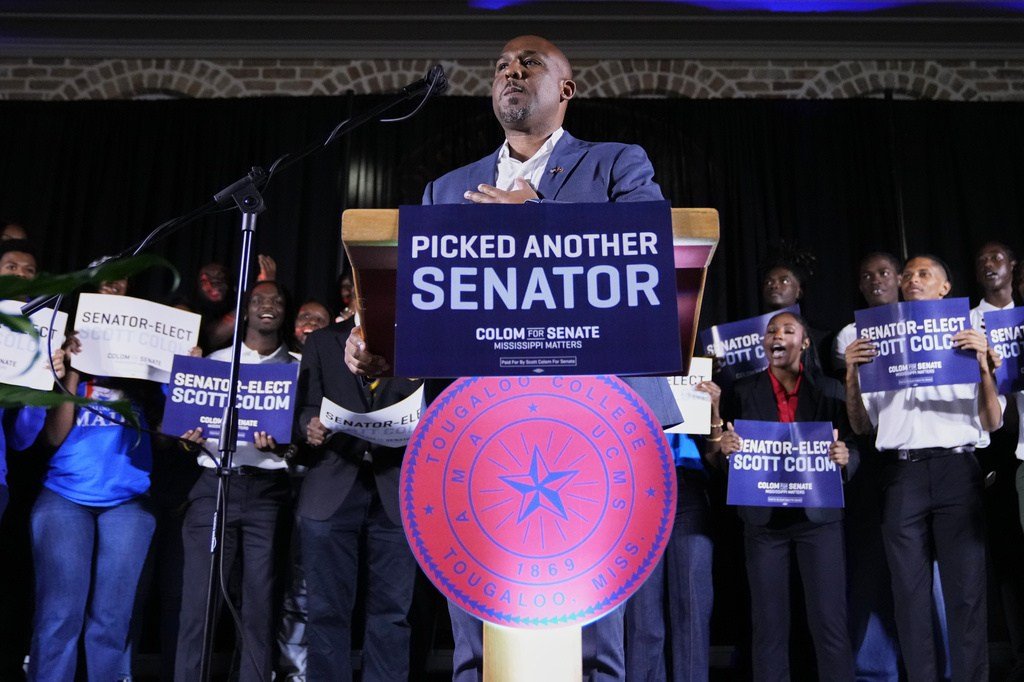
Clyburn, a veteran lawmaker and former House majority whip, said the election results echoed the frustrations of civil rights leader Fannie Lou Hamer, who famously declared she was “sick and tired” of government failures. In Ruleville, Miss., where he campaigned with Sen.-elect Scott Colom (D-Miss.), Clyburn said he heard voters yearning for basic necessities: healthcare, childcare, housing, and energy that don't break the bank.

Colom's historic victory—he will be the first African American popularly elected to the U.S. Senate from Mississippi—was a focal point of the Democratic wave. Clyburn noted that Colom's path to the Senate was paved by an earlier snub: Sen. Cindy Hyde-Smith (R-Miss.) blocked Colom's federal judgeship nomination despite broad bipartisan support. That move, Clyburn argued, fueled Colom's candidacy and ultimately cost Hyde-Smith her seat.
The midterm results, Clyburn said, offer lessons for both parties. For Democrats, the lesson is not to neglect the South. “Over half of the nation's African Americans live in the South,” he noted, and states like South Carolina, Texas, Georgia, Mississippi, and North Carolina proved they are battlegrounds worth contesting. In his home state, Dr. Annie Andrews became the first woman elected to the U.S. Senate, and Vice Admiral Nancy Lacore flipped a House seat from red to blue.
For Republicans, Clyburn had a more pointed message: “People do not respond favorably to insults and bad manners.” He urged the GOP to abandon what he called a dismissive attitude toward Southern voters and Black communities, warning that such tactics are “not winning propositions.”
The mandate, as Clyburn frames it, is a three-pronged call for action: accessibility, affordability, and accountability. He tied this to the broader political moment, noting that the 2026 results come on the heels of Trump-era turbulence, including the Jan. 6 insurrection and the rise of “Project 2025,” which he has called “Jim Crow 2.0.”
Clyburn also invoked Alexis de Tocqueville's observation that America's greatness lies in its ability to repair its faults. “I was hopeful that most Americans were ready to repair the faultlines,” he said, pointing to the election as a step in that direction.
The new Congress faces early tests on leadership and agenda, and Clyburn's analysis suggests Democrats must deliver on their promises or risk losing the trust they've regained. Meanwhile, Republicans are reassessing their strategy after the GOP's 2028 calculus shifted following the rout. Some, like Sen. Lisa Murkowski, have acknowledged the losses were a direct rebuke of Trump, while others, like Sen. John Thune, blame uncontrollable issues and urge a focus on the economy.
For Clyburn, the path forward is clear: “We must take our campaigns to where the votes are.” And in 2026, that meant the South—a region that may no longer be safely red.