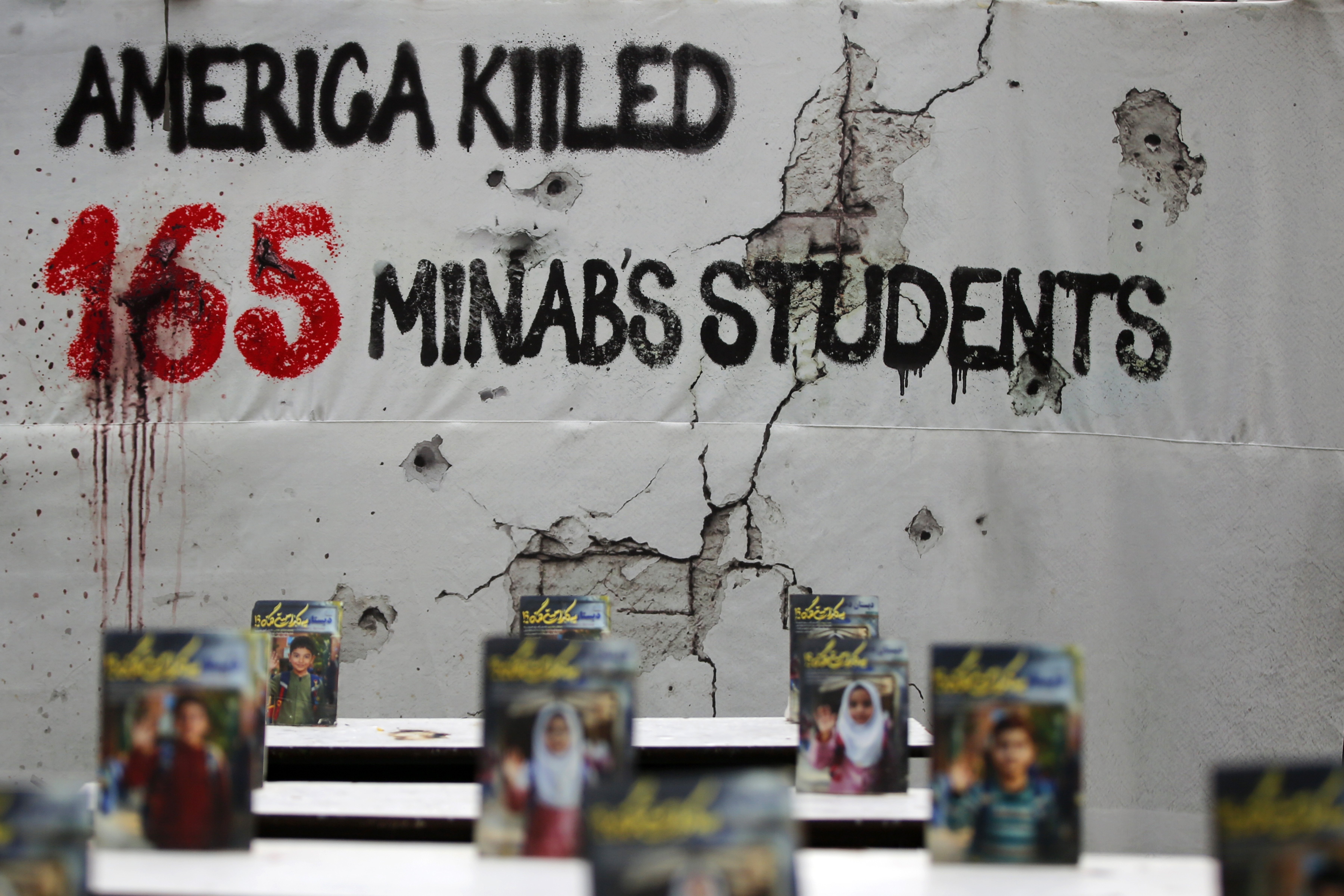
A U.S. missile strike on an elementary school in southern Iran killed at least 175 people, most of them children, according to evidence suggesting outdated targeting data was used. The incident in Minab saw a father racing to the school after a first strike, only to arrive after a second missile killed his daughter.
More than one hundred international law scholars from leading American universities have since declared aspects of the broader U.S.-Israeli military campaign a violation of the U.N. Charter. They point to Defense Secretary Pete Hegseth's public declaration of "no quarter, no mercy" as a statement that could itself constitute a war crime under international humanitarian law.
Military action escalated with an attack on infrastructure near Tehran this month, seen as a precursor to strikes with devastating civilian impact. Before a fragile April 8 ceasefire, former President Donald Trump threatened to destroy Iran's power plants and water desalination systems, stating, "A whole civilization will die tonight, never to be brought back again." Legal experts argue that while bombing a school with bad intelligence may stem from negligence, deliberately targeting civilian life-support systems is a war crime by design.
The Radicalizing Legacy of Civilian Suffering
Historical and sociological research consistently shows that civilian suffering does not pacify populations but radicalizes them. The trauma of war scars societies, creating cycles of violence that persist for generations, long after the original conflict ends. This dynamic has played out repeatedly in recent U.S. military engagements.
In Afghanistan, initial operations justified as liberation devolved into night raids and airstrikes on civilian gatherings, which human rights monitors documented as summary executions. A retired Army lieutenant colonel who served there noted that grievances accumulated over time, fueling narratives of the U.S. as an indiscriminate killer and making political resolution impossible. After twenty years and trillions of dollars, the Taliban regained control not through superior ideology, but because U.S. actions validated their arguments in countless unnamed villages.
The pattern extends beyond Afghanistan. Military interventions across Pakistan, Iraq, Syria, and Yemen, promoted as counter-terrorism, have directly killed over 400,000 civilians with indirect deaths in the millions. Despite these campaigns, the global threat landscape has expanded, not contracted.
A Generation Forged in Grievance
The survivors of strikes like the one in Minab—the siblings, the grieving parents—are often indifferent to official Pentagon investigations. They carry a potent combination of grief and rage that permeates their culture. The children shaped by this wreckage constitute a specific cohort of mourners and witnesses, defined by the knowledge of who killed their loved ones.
Every civilian death, particularly a child's, risks creating future adversaries. Violence does not purchase security; it opens long-term accounts of hatred that compound across decades. This reality underscores a fundamental failure in strategic planning, where the enduring consequences of security policies are often overlooked in favor of immediate tactical objectives.
The domestic political context for such military decisions remains complex. While the administration pursues its strategy, public opinion polls show significant divisions on the legacy and actions of key political figures. Furthermore, the economic ramifications of prolonged conflict are felt widely, contributing to issues like the global fertilizer affordability crisis exacerbated by Middle East instability.
The legal and moral reckoning for actions taken in conflict is not merely academic. It strikes at core questions of national character and long-term security. As history demonstrates, the seeds of future conflict are often sown in the rubble of today's strikes, creating enemies where none existed and ensuring that the costs of war are paid with interest by generations to come.