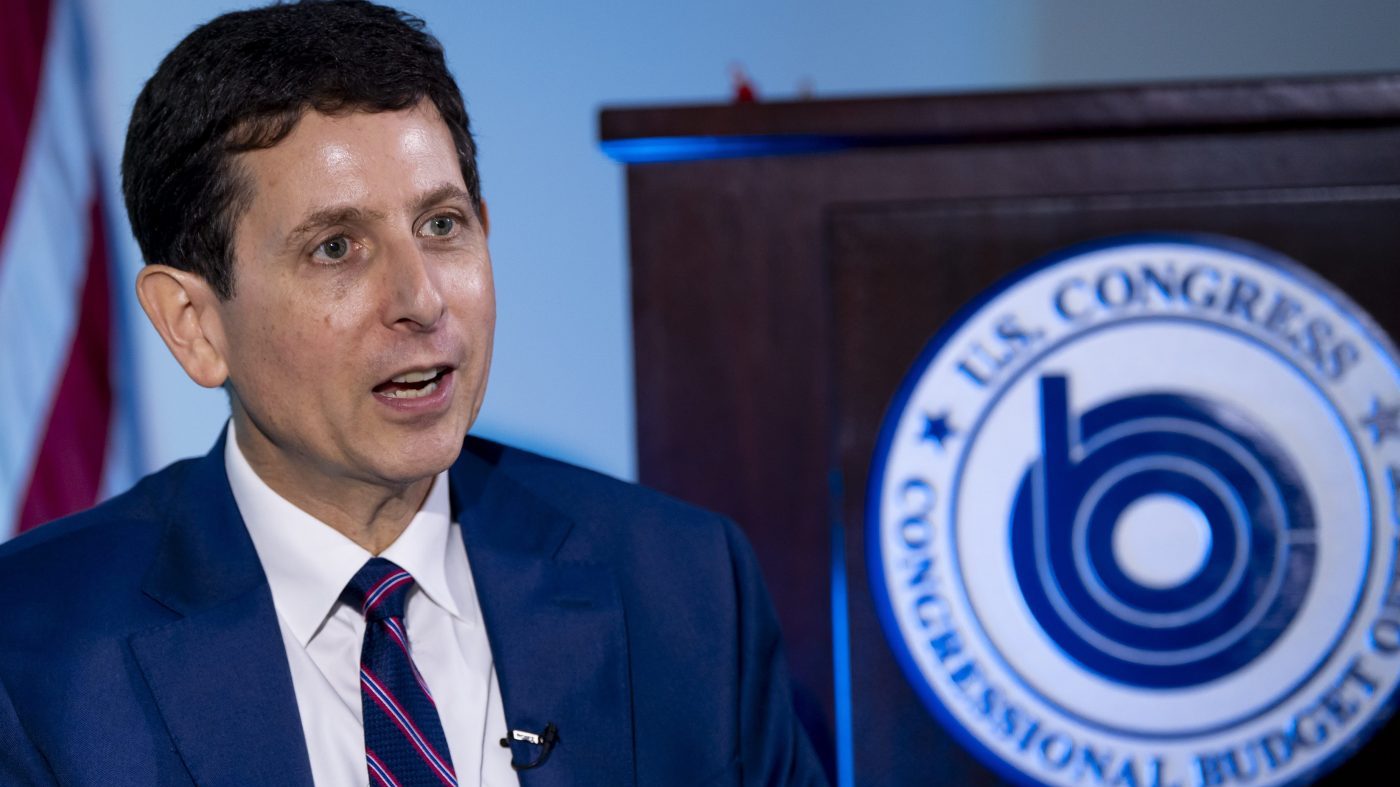
The Congressional Budget Office on Monday revised its fiscal 2026 deficit projection upward by $200 billion, now expecting a shortfall of $2.1 trillion. The update, released in its monthly budget review, marks a significant shift from the February estimate of $1.9 trillion.
The primary driver, according to the CBO, is a smaller-than-expected haul from U.S. Customs and Border Protection tariff duties. That shortfall follows the Supreme Court's February decision striking down import taxes President Trump imposed under the International Emergency Economic Powers Act (IEEPA). Although the administration has since pivoted to new levies under Section 122 and Section 301 of the Trade Act of 1974, the CBO now projects that all tariffs and customs duties collected in 2026 will run about $250 billion below earlier forecasts.
Through the first ten months of the fiscal year, federal revenues rose by $139 billion compared with the same period in fiscal 2025. Outlays, however, climbed by $308 billion, with roughly a third of that increase attributed to a timing quirk: payments that would have been due on August 1—a weekend—were shifted into July. Excluding those shifts, the deficit for the period stands at $1.7 trillion, still $71 billion higher than the same stretch a year earlier.
Adjusting for timing, total outlays from October through July exceeded $6.2 trillion, an increase of $209 billion year-over-year. Mandatory spending on Social Security, Medicare, and Medicaid accounted for about 86 percent of that rise, driven by more beneficiaries, higher Medicare enrollment, and increased per-enrollee Medicaid costs.
The new figures come amid growing alarm over the long-term solvency of Social Security. In June, the Trump administration projected that the Old-Age and Survivors Insurance Trust Fund would be able to pay full benefits only through the final quarter of 2032, after which it would cover just 78 percent of scheduled benefits.
That warning has prompted a range of legislative proposals, from lifting the cap on payroll taxes to a bipartisan plan by Sens. Bill Cassidy (R-La.) and Tim Kaine (D-Va.) to inject $1.5 trillion into a dedicated fund to cover the program's unfunded liability. The debate is likely to intensify as lawmakers return from the Senate's five-week recess.
The CBO's revised deficit estimate also complicates ongoing budget negotiations. Earlier this month, Senate leaders struck a deal to fund the government through December, but the larger-than-expected shortfall could sharpen calls for spending cuts or revenue measures. Some fiscal hawks have pointed to independent audits, such as the GAO's dispute of DOGE's savings claims, to argue that claimed efficiencies have not materialized.
The administration has defended its tariff strategy as a revenue source, but the Supreme Court's ruling has forced a reliance on older trade authorities. The CBO's analysis suggests that even those tools may not fully offset the loss, leaving the federal government to absorb a larger shortfall as entitlement spending accelerates.