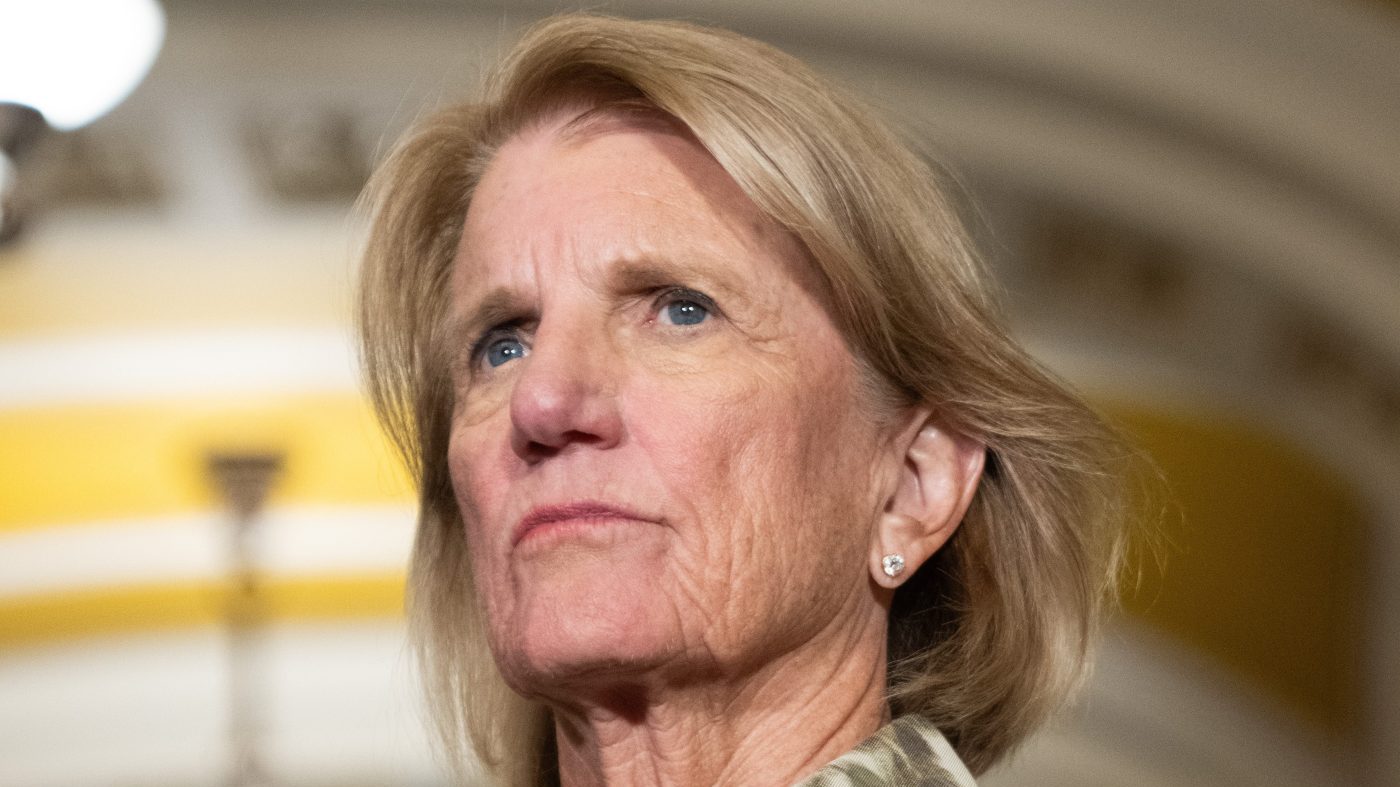
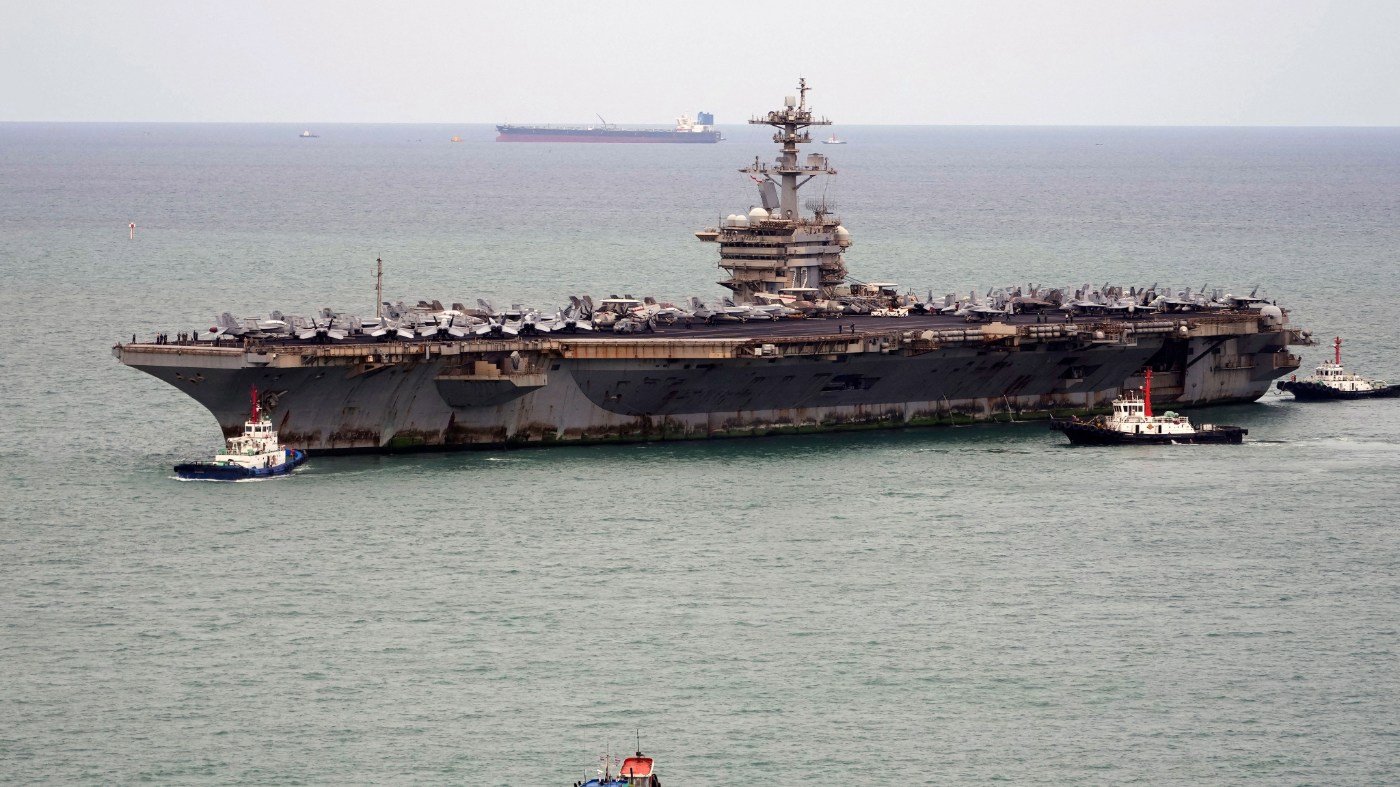
Senate Republican Policy Committee Chair Shelley Moore Capito (R-W.Va.) admitted Thursday that the American public is losing patience with the war in Iran, a conflict President Trump originally predicted would last just four to five weeks but has now stretched into its fifth month.
“I do think that the American public’s growing weary,” Capito told NewsNation’s “The Hill with Blake Burman.” She pointed to the mounting death toll and an extended timeline as key drivers of the fatigue.
Capito’s remarks came after fellow West Virginia Senator Jim Justice called for an “off-ramp” from the war earlier this week. “There’s got to be an off-ramp, that’s all there is to it,” Justice said Wednesday, referencing the recent deaths of three U.S. service members in Iranian strikes. Capito echoed that sentiment, noting that she and Justice represent the same constituents and hear similar concerns. “A promised shorter endgame has now been exceeded,” she said. “We’ve lost four of our service members. That is always devastating to Americans and American families.”
To date, 18 U.S. service members have died in the conflict, alongside hundreds or thousands of Iranian civilians. The most recent casualties include soldiers from Hawaii, Texas, New York, and North Carolina, underscoring the war’s national toll.
Despite the growing public unease, Capito and Justice voted against a war powers resolution on Thursday that would have required President Trump to withdraw U.S. troops unless Congress authorized the conflict. The House passed a non-binding version of the resolution with support from four Republicans: Reps. Tom Barrett (Mich.), Warren Davidson (Ohio), Thomas Massie (Ky.), and Brian Fitzpatrick (Pa.). Meanwhile, the House approved a $73 billion budget framework along party lines to fund the war effort.
Defense Secretary Pete Hegseth testified Tuesday that the conflict has cost taxpayers $37.5 billion so far. Capito said Senate Republicans will press the administration for clearer answers on an exit strategy as they consider an emergency supplemental defense spending package this summer. “It’s part of our oversight to see how much this is being funded for the Iranian situation. And where is the endgame,” she said.
Capito described Hegseth’s responses on ending the war as “vague,” citing rapidly shifting developments like the emergence of Iranian-backed Houthi militants in Yemen, who now threaten oil shipments through the Red Sea. “He was vague on that because I think what we see is it’s popping up. There’s more. They’re attacking seven countries. The Houthis are involved in this,” she added.
The conflict’s expansion has fueled broader concerns about U.S. military entanglement in the Middle East. A recent Gallup poll found that 1 in 10 Americans now view politics as a top safety threat, reflecting a public increasingly wary of prolonged overseas engagements. Meanwhile, the Supreme Court’s recent ruling on agency independence has dealt a blow to public trust in government institutions, complicating the administration’s efforts to maintain support for the war.
As the conflict grinds on, Capito’s acknowledgment of public weariness signals a potential shift among Republicans, who have largely backed Trump’s approach but now face growing pressure from constituents and colleagues to chart a path out of the war.