With Brazil's presidential election less than two months away, the Trump administration's aggressive posture toward Latin America is facing its most consequential trial yet. The so-called new Monroe Doctrine—a policy of asserting U.S. influence and countering leftist and extra-continental forces in the hemisphere—has already shaped recent contests in Colombia, Peru, Honduras, Costa Rica, and Chile. But Brazil, the region's largest economy and most populous nation, represents a far more significant prize.
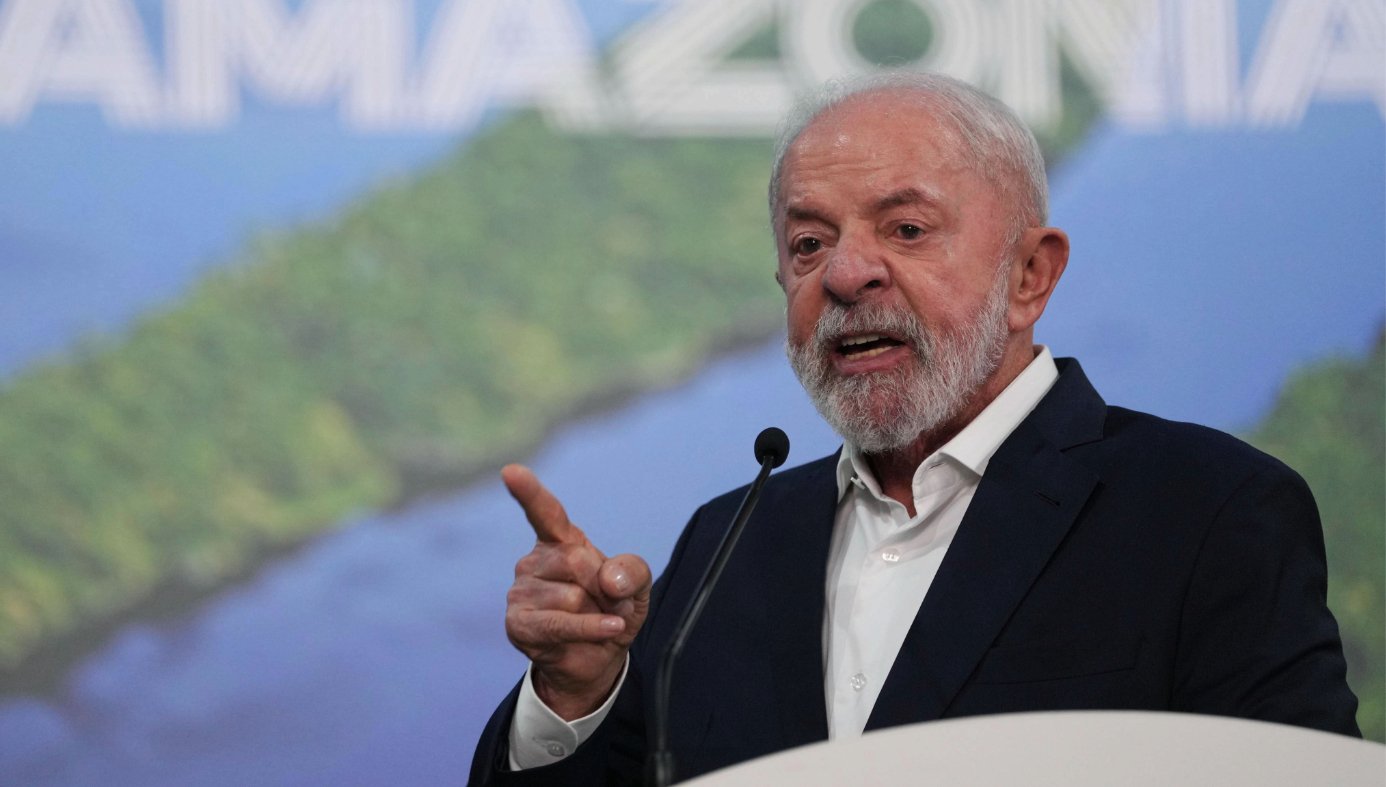
President Luiz Inacio Lula da Silva is seeking a fourth term, and his candidacy has become a lightning rod for the administration's broader strategy. The task of defeating him is made somewhat easier by the visible failures of leftist regimes in Cuba, Nicaragua, and Venezuela—all of which Lula has supported. These governments serve as cautionary tales of what his allies have done with power, and they give the U.S. and its partners a stark talking point.
Relations between Washington and Brasília are at a historic low. In September 2025, President Trump attempted a reset, meeting Lula briefly and claiming a good personal rapport—what he called "good chemistry." That goodwill evaporated quickly. In early May, Lula visited the White House for a three-hour, closed-door meeting, deliberately kept away from the press to avoid a repeat of the contentious "Zelensky effect" incident. But the substance of that meeting would soon become clear.
In late May, Secretary of State Marco Rubio dealt Lula a major blow by designating Brazil's two most powerful criminal organizations—the Primeiro Comando da Capital (PCC) and the Comando Vermelho—as foreign terrorist organizations and specially designated global terrorists. For Lula, this was tantamount to a declaration of war. He argues the designation could be a pretext for U.S. military intervention under the banner of fighting drug trafficking and terrorism, much like the operation that removed Nicolás Maduro in Venezuela.
The tension escalated further in July when Rubio announced that President Trump would impose 25% tariffs on Brazilian imports. "Let there be no confusion about why," Rubio said. "President Lula and his government have not negotiated with the U.S. in good faith. His economic policies are bad for Americans and bad for Brazilians."
Lula has seized on the tariff threat to fuel a patriotic, anti-American narrative, which has helped him close the gap in the polls. A recent survey shows him just three points behind his rival, Senator Flavio Bolsonaro. However, his "resist America" strategy has begun to show signs of strain. In recent weeks, Argentine President Javier Milei has thrown his support behind Bolsonaro and criticized Brazil's judiciary. Lula responded by expelling Argentina's ambassador and downgrading bilateral relations to lower-level diplomatic contacts—a risky move given that Argentina is Brazil's neighbor and the two countries trade $31 billion annually.
Despite these external pressures, Lula retains significant domestic popularity, buoyed by social programs in health, education, and housing that function as patronage networks. Yet his security record is a glaring weakness, and security concerns have swung many recent elections across Latin America.
The fundamental issue with Lula, as his critics see it, is not his leftist ideology per se. It is his long record of cultivating deep economic, political, and even military ties with China, Russia, and Iran. His administration has also defended the authoritarian regimes in Cuba, Nicaragua, and Venezuela, despite their documented human rights abuses. For Washington, a fourth Lula term would open the hemisphere's doors to its most formidable adversaries.
As the election approaches, the new Monroe Doctrine faces its acid test: whether it can strengthen the U.S. commitment to allies in the Americas or whether it will allow a friend of China, Russia, and Iran to win again. The outcome will shape not just Brazil's future, but the entire region's geopolitical alignment. The stakes, as Trump's team sees it, could not be higher.