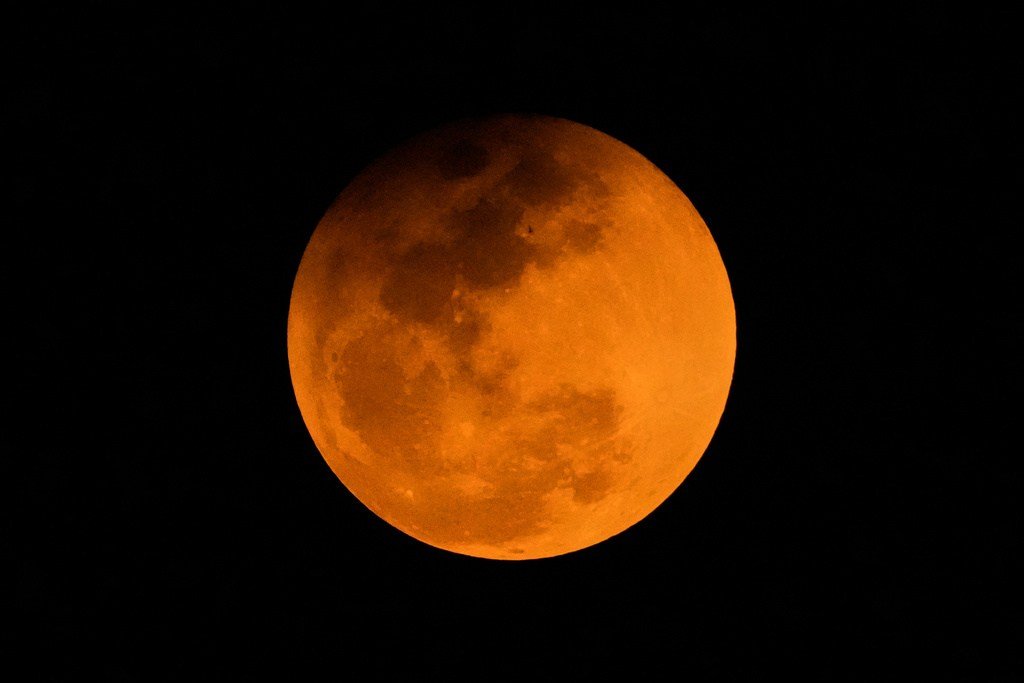
Skywatchers across North America are in for a celestial show Thursday night as a nearly total lunar eclipse—often called a blood moon—will be visible from coast to coast. At its peak, Earth's shadow will cover 96% of the full moon, giving it a striking reddish hue that has captivated observers for centuries.
Unlike a solar eclipse, this event requires no special glasses. The only requirement is clear skies and a willingness to look up. The eclipse will unfold over several hours, with the most dramatic moment—maximum coverage—occurring at different times depending on your time zone.

When to Watch in Your Time Zone
The partial eclipse, when the moon begins to enter the darkest part of Earth's shadow (the umbra), starts at the same moment in each time zone, but the local clock time shifts. Here's the breakdown:
- Eastern Daylight Time: Partial begins 10:33 p.m. Thursday; maximum at 12:12 a.m. Friday; partial ends 1:51 a.m. Friday.
- Central Daylight Time: Partial begins 9:33 p.m. Thursday; maximum at 11:12 p.m.; partial ends 12:51 a.m. Friday.
- Mountain Daylight Time: Partial begins 8:33 p.m.; maximum at 10:12 p.m.; partial ends 11:51 p.m.
- Mountain Standard Time (Arizona): Partial begins 7:33 p.m.; maximum at 9:12 p.m.; partial ends 10:51 p.m.
- Pacific Daylight Time: Partial begins 7:33 p.m.; maximum at 9:12 p.m.; partial ends 10:51 p.m.
- Alaska Daylight Time: Partial begins 6:33 p.m.; maximum at 8:12 p.m.; partial ends 9:51 p.m.
- Hawaii Standard Time: Partial begins 4:33 p.m.; maximum at 6:12 p.m.; partial ends 7:51 p.m.
Before the partial phase, there is a subtle penumbral eclipse, when the moon passes through the outer fringe of Earth's shadow. That begins about an hour earlier and ends about an hour after the partial eclipse concludes, but the darkening is barely noticeable to the naked eye.
East Coast Advantage, West Coast Challenge
As with many celestial events, geography plays a role in viewing quality. According to our analysis of viewing conditions, the East Coast is positioned for the best view, with the moon high in the sky during the peak. The West Coast, however, faces a horizon challenge: the moon will be lower, potentially making it harder to see if buildings or trees block the view.
For those in the Pacific time zone, finding a clear line of sight to the east-southeast is crucial. In Hawaii, the eclipse occurs during early evening, so the moon will be relatively low as well, but still visible if skies are clear.
Political Context: A Rare Distraction
For many Americans, this eclipse offers a brief respite from the political turbulence of the week. With ongoing disputes over voting rules and border policy, the celestial event is a chance to look up rather than at a screen. But as with everything in a polarized era, even the moon can become a political football—some have joked that the red hue is a sign of the times.
Still, astronomers and casual stargazers alike are urging people to step outside and witness the event. Unlike many political spectacles, this one requires no partisan allegiance—just a clear night sky.
If you miss Thursday's eclipse, the next total lunar eclipse visible from North America won't occur until 2025, so this is a rare opportunity. Set your alarms, find a dark spot, and enjoy the show.