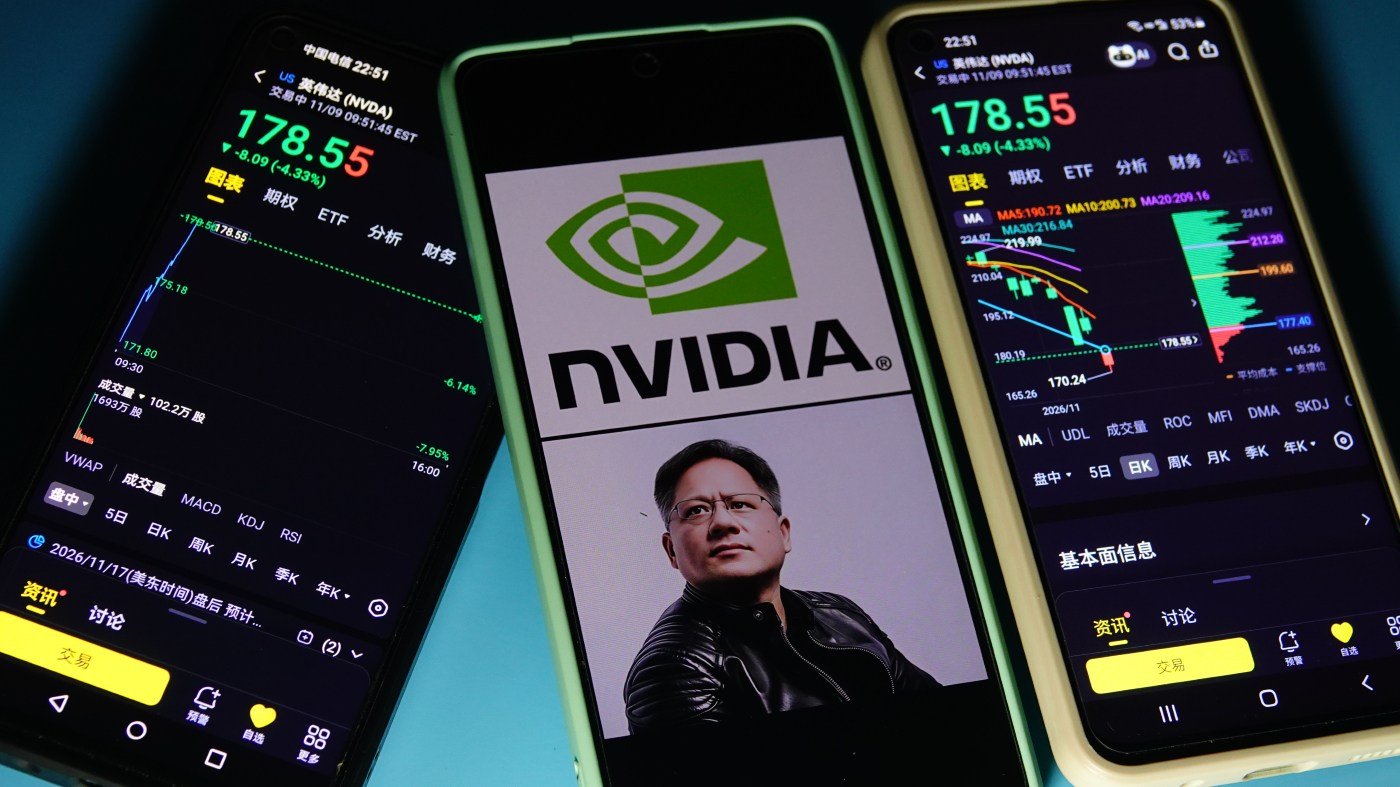
Lawmakers from both parties are demanding answers over Nvidia CEO Jensen Huang's admitted affair with an alleged Chinese intelligence asset, but the emerging political fault line is clear: Republicans want to know what Huang did, while Democrats want to know what President Trump knew and when.
The rare bipartisan consensus on Capitol Hill follows revelations that Huang had an extramarital relationship with a woman identified by U.S. intelligence as a suspected agent of Beijing. The affair, first reported by The New York Times, has triggered scrutiny across multiple committees, from intelligence and foreign relations to banking and finance, exposing the tangled web of U.S.-China tech competition, export controls, and presidential decision-making.
Democrats target Trump's role
Sen. Chris Coons (D-Del.), poised to chair the Senate Foreign Relations Committee when Democrats take the majority in January, said the central question is why Trump ignored intelligence briefings about Huang's relationship and still brought the Nvidia chief on Air Force One to Beijing in May. "Why did he put our national security at risk?" Coons asked. "Why did he take Jensen Huang with him on Air Force One, to significant meetings with the Chinese? That strikes me as the most pressing question."
Trump, when asked Monday, said the intelligence "didn't make much of an impact on me." That response has only fueled Democratic calls for a fuller accounting. Sen. Mark Warner (D-Va.), ranking member of the Senate Intelligence Committee, said Tuesday he has "a lot of questions" and that a briefing for the full Senate may be necessary, though he acknowledged jurisdictional overlaps: "Intelligence, my committee, has a huge footprint there. There are questions in terms of export controls, which come out of Banking."
Republicans focus on Huang, not Trump
Republicans, while equally alarmed, are steering clear of implicating Trump. Outgoing Sen. John Cornyn (R-Texas), who lost his seat after Trump backed his primary opponent, said he wants an investigation into Commerce Department approvals of chip sales to shell companies with alleged ties to the Chinese military. "I don't know yet, sort of, who was instrumental in those decisions," Cornyn told The Hill. "And that's why I think there needs to be an investigation to figure out what exactly happened."
Cornyn also questioned why Huang never received a "defensive briefing by the FBI" to alert him that he was the target of a foreign intelligence operation. "That's typically what happens in counter-intelligence investigations," he said. The FBI declined to comment.
House GOP seeks closed-door briefing
Three House Republicans have asked Huang to appear for a closed-door briefing on Nvidia's security protocols and his interactions with Megaspeed executive Alice Huang, the alleged intelligence asset. There is no familial relation between the two, and Jensen Huang has acknowledged the affair, saying Nvidia's board is launching an independent investigation.
The scandal has also given fresh momentum to bipartisan efforts to tighten export controls. Sen. Jim Banks (R-Ind.) and Sen. Elizabeth Warren (D-Mass.) are pushing their AI Overwatch Act, which would cut off pathways for China to access advanced chips. Rep. Brian Mast (R-Fla.) echoed that call, saying "this situation with NVIDIA's CEO is a massive concern for the national security of the United States." Mast said he has no concerns about Trump's relationship with Huang.
Commerce Department under fire
Democrats are also pressing Commerce Secretary Howard Lutnick to halt exports of advanced AI chips, with a trio of senior House Foreign Affairs Committee Democrats sending a letter Monday demanding answers. "If Commerce was not briefed, we need to know why. If it was briefed, we need to know how it responded. And if the Department knowingly permitted these exports despite credible national-security concerns, the American people deserve an explanation," they wrote.
The unfolding controversy comes amid broader Democratic electoral gains and a shifting political landscape. As the investigation takes shape, the divide over Trump's involvement is likely to deepen, with Democrats framing it as a dereliction of duty and Republicans treating it as a matter of individual conduct. The question of who ultimately bears responsibility—Huang, the Commerce Department, or the White House—remains unresolved.