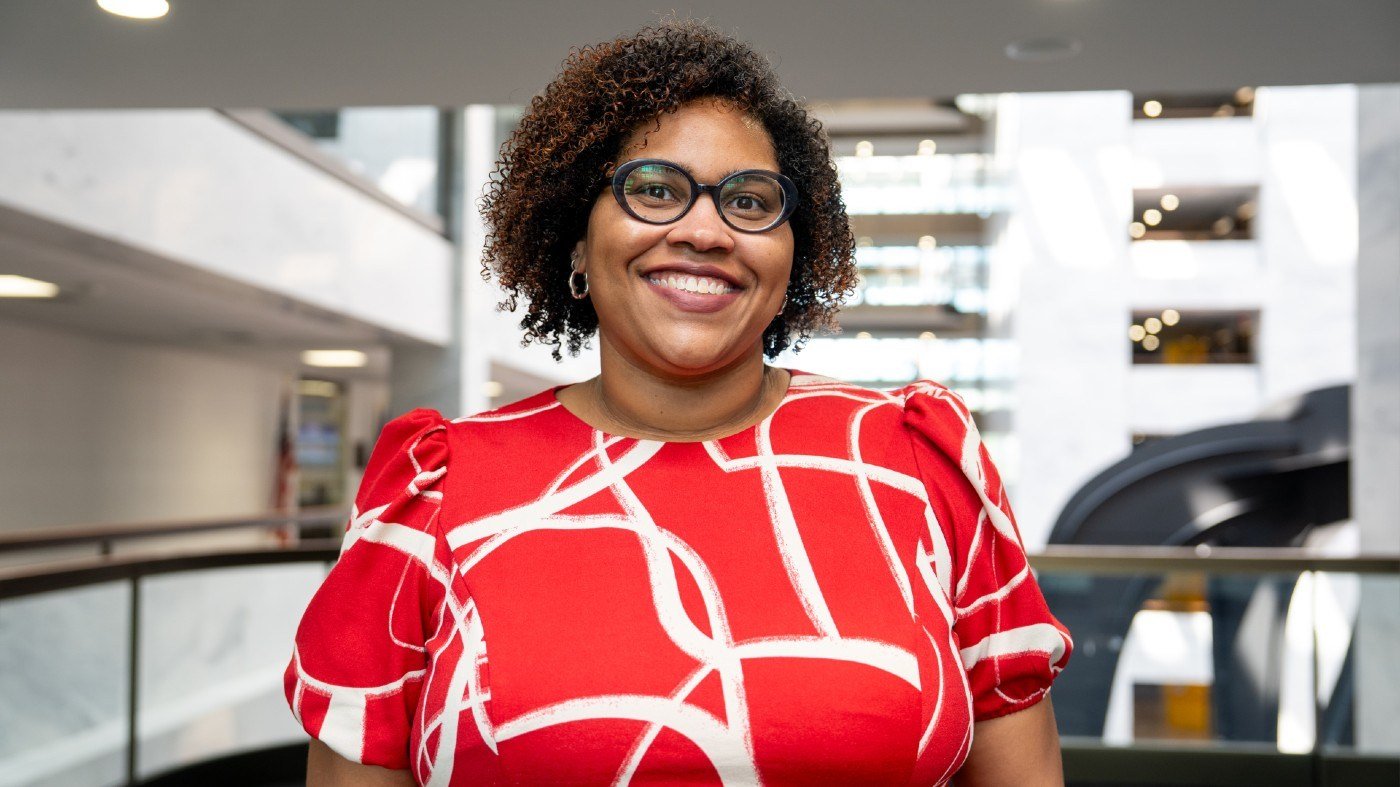
AJ Swinson's role as the coalitions and outreach director for the House Judiciary Committee might sound straightforward on paper: she's the bridge between the panel and the outside groups, advocates, and stakeholders who care about its work. But in the era of Chair Jim Jordan (R-Ohio), that job carries a weight far beyond simple coordination.
Jordan, a founding chairman of the House Freedom Caucus and a product of the Tea Party wave, commands a national profile that draws intense scrutiny and high expectations from conservative allies. Swinson, who jokes she's a "cheap alternative" to the chairman, knows that many coalition partners would rather hear directly from Jordan. Her task is to make sure they don't have to—and to spare Jordan the time-consuming work of explaining his positions and strategy to every outside group.

"I'm making sure people understand where he's coming from, so that when he goes to an event or something like that, people already know the lay of the land, and they know what he wants, what he doesn't want," Swinson said.
In some respects, Jordan's stature simplifies her job. "People know where he stands already," she noted. "He's a consistent conservative and chooses based on what his principles have always been." But that same national profile also raises the bar. Early in the new Congress, she recalled, the committee faced pressure from activists demanding immediate action—like impeaching judges or pursuing prosecutions. "We had a lot of those moments early on: 'Why won't you impeach a judge? Why aren't people in jail?'" Swinson said. "At the end of the day, you have to work within a conference, so it's not just about what Jim wants. He's not King of the House Republicans."
Swinson's path to this role was unconventional. Before entering politics, she spent time as a middle school English teacher—a job she says was perfect preparation for the friction of Capitol Hill. "There's no conflict you're afraid of after teaching middle school," she said. "I've had to argue with seventh graders, and they're just about as irrational as people here sometimes are."
That experience taught her to keep disagreements from becoming personal. "People are passionate because they care," she said, and her job is to "connect with people to give them access to the Hill and to what's going on so that they can understand and participate fully."
The work is dynamic, she says: "No two days are the same. It's a lot of fun."
Swinson's role is part of a broader effort by House committees to manage external relationships. Similar outreach functions exist on other panels, such as the House GOP's member services and cabinet outreach, and the House Oversight Democrats' new deputy director shaping Epstein probe strategy. The Judiciary Committee's work often intersects with high-stakes political battles, from oversight to judicial nominations, making Swinson's coordination all the more critical.
As Jordan's committee presses forward on its agenda, Swinson remains focused on ensuring that outside voices are heard—and that they understand the realities of governing within a divided conference. It's a balancing act that requires patience, thick skin, and a willingness to explain the same point repeatedly. But for Swinson, it's all in a day's work.