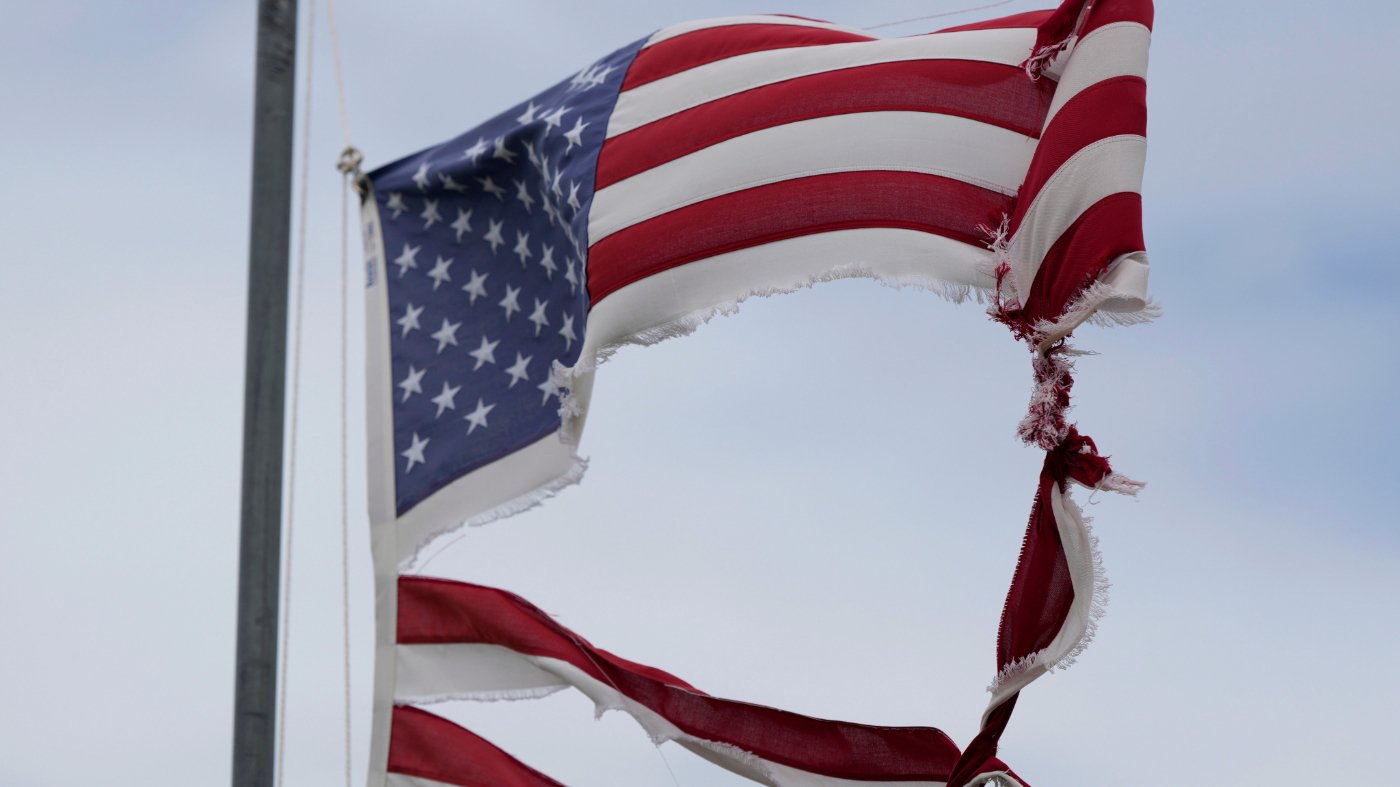
As the United States barrels toward its 250th anniversary, a former White House and Pentagon official is sounding an alarm: the glue that once held the nation together has all but dissolved. In a searing reflection, Douglas MacKinnon argues that the shared pride that once united Americans on the Fourth of July has been replaced by siloed hostility, with growing numbers of citizens sanctioning political violence and abandoning faith in democratic governance.
MacKinnon, who spent a year immersed in the history of 1776 while writing a book about the signers of the Declaration of Independence, says he watched from the sidelines as left-leaning voices called for canceling the Founding Fathers by removing statues and renaming schools. “If our history is bad, we should condemn it and learn from it,” he writes. “But we should never, ever cancel our shared American history.”
His childhood, marked by poverty and 34 evictions by age 17, gave him a cross-section view of America: from majority-Black housing projects to rural farming towns. Despite the turmoil, he recalls that the Fourth of July was a day that “united all in pride,” regardless of politics, race, or faith. That, he says, is no longer true.
Today, MacKinnon sees a nation he calls the “Siloed States of America,” cratering from hate, misinformation, and dark money. He contrasts the bipartisan camaraderie of senators like Bob Dole, George McGovern, and Daniel Patrick Moynihan with the current climate, where he claims hundreds of thousands cheered the assassination of Turning Point USA founder Charlie Kirk. Multiple polls, he notes, show rising acceptance of murdering political or business opponents.
A recent Fox News poll found that voters “remain attached to the country, even as a majority describe it in negative terms and many believe Americans are more divided by their values than united by them.” Meanwhile, an AP-NORC survey reports that 72% of Americans believe the country is heading in the wrong direction. Most alarming to MacKinnon: more than half of respondents under 30 said democracy isn’t essential to the nation’s identity. “Let that sink in,” he writes. “More than half of those who will soon take control of the reins of our nation don’t believe democracy is essential.”
The former official also recounts a conversation with a special operations warrior, a father of two, who questioned whether leaders are part of a “Uni-party” serving elites rather than national values. That sentiment echoes a broader disillusionment that MacKinnon argues threatens the republic’s future.
As 2026 approaches, MacKinnon wonders what Thomas Jefferson, Benjamin Franklin, and John Adams would make of today’s United States. Would they see a path forward, or conclude that their “noble dream had finally run its course”? The question, he suggests, is no longer hypothetical.
For more on the nation’s trajectory, read our analysis on debt and racial shifts threatening stability and explore whether Americans can still celebrate a shared national pride.