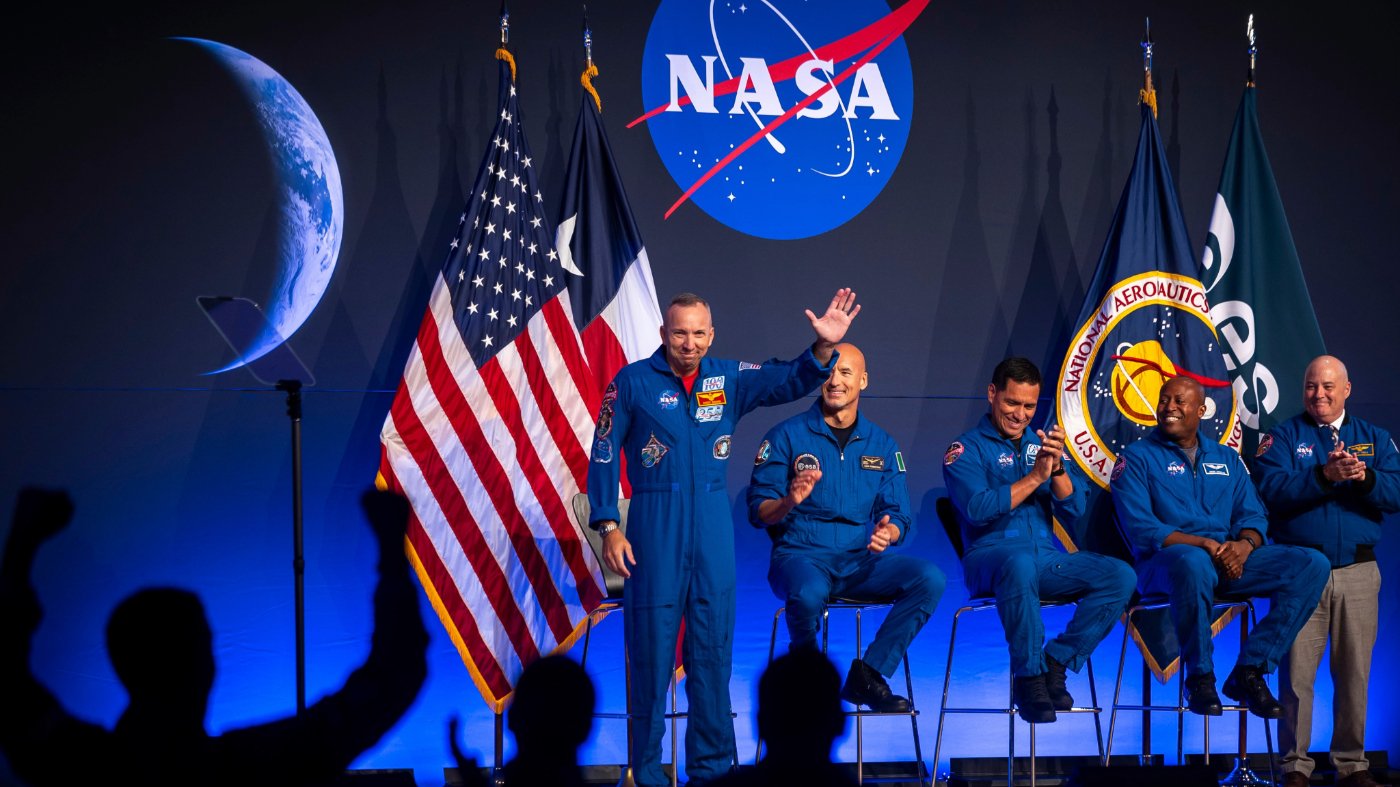
NASA has released new details about the Artemis III mission, revealing a four-person crew and a complex orbital choreography set for no earlier than June 2027. Unlike the lunar flyby planned for Artemis II, this mission will remain in low Earth orbit to test critical docking procedures between three different spacecraft.
The crew includes Commander Randy Bresnik, a former International Space Station commander; European Space Agency astronaut Luca Parmitano, who also led the ISS; mission specialist Frank Rubio, who holds the record for the longest single spaceflight by an American at 371 days; and mission specialist Andre Douglas, a former Coast Guard officer who served as a backup for Artemis II. The team brings a blend of station command experience and endurance records, but their selection has drawn scrutiny for one glaring omission: no women are on board.

Former NASA deputy administrator Lori Garver publicly questioned the decision, posting on social media that while all 38 active astronauts are qualified, “unintended bias is real.” Her comments echoed a broader online backlash, with critics pointing to the lack of female representation in a high-profile mission designed to pave the way for lunar return.
NASA Administrator Jared Isaacman pushed back, stating that crew assignments are driven by mission requirements, including test pilot experience, program development work, and availability. He argued that critics “may not be aware of the pipeline of crews already preparing to launch to the Space Station, or those who have been undergoing lunar-specific training that would be a better fit for a future surface mission.”
The mission itself is a logistical puzzle. First, a Blue Origin New Glenn rocket will launch a Blue Moon lander into orbit. Despite a recent catastrophic failure that destroyed a New Glenn vehicle and damaged a launch pad, Blue Origin expressed confidence in meeting the timeline. Next, an Orion capsule will launch and dock with the Blue Moon lander for two days. Finally, a SpaceX Starship will launch and dock with Orion for a day before Orion separates and returns to Earth.
Artemis III may lack the glamour of a lunar flyby, but its importance is hard to overstate. The uncrewed tests of Starship and Blue Moon lander systems will reduce risk ahead of Artemis IV, which aims to land humans on the moon for the first time in over 55 years. In a symbolic handoff, three Artemis II crew members—Reid Weisman, Victor Glover, and Christina Koch—presented a baton to their Artemis III counterparts, a likely new NASA tradition.
Isaacman quoted Apollo 17 astronaut Gene Cernan’s final words from the lunar surface in 1972: “America’s challenge of today has forged man’s destiny of tomorrow. And, as we leave the Moon at Taurus-Littrow, we leave as we came and, God willing, as we shall return — with peace and hope for all mankind.” He noted the long delay, but added that after two false starts, humanity is finally fulfilling that wish.
The controversy over crew diversity, however, underscores broader tensions in space policy. As NASA pushes forward with ambitious timelines and private partnerships, decisions about who flies remain deeply political. For now, the agency is betting that experience—not optics—will carry the mission.
For more on how political dynamics shape space policy, see Redistricting Chaos in Southern States Reshapes Congressional Races and California House Primaries: Open Seats, Redistricting Reshape 2026 Map.