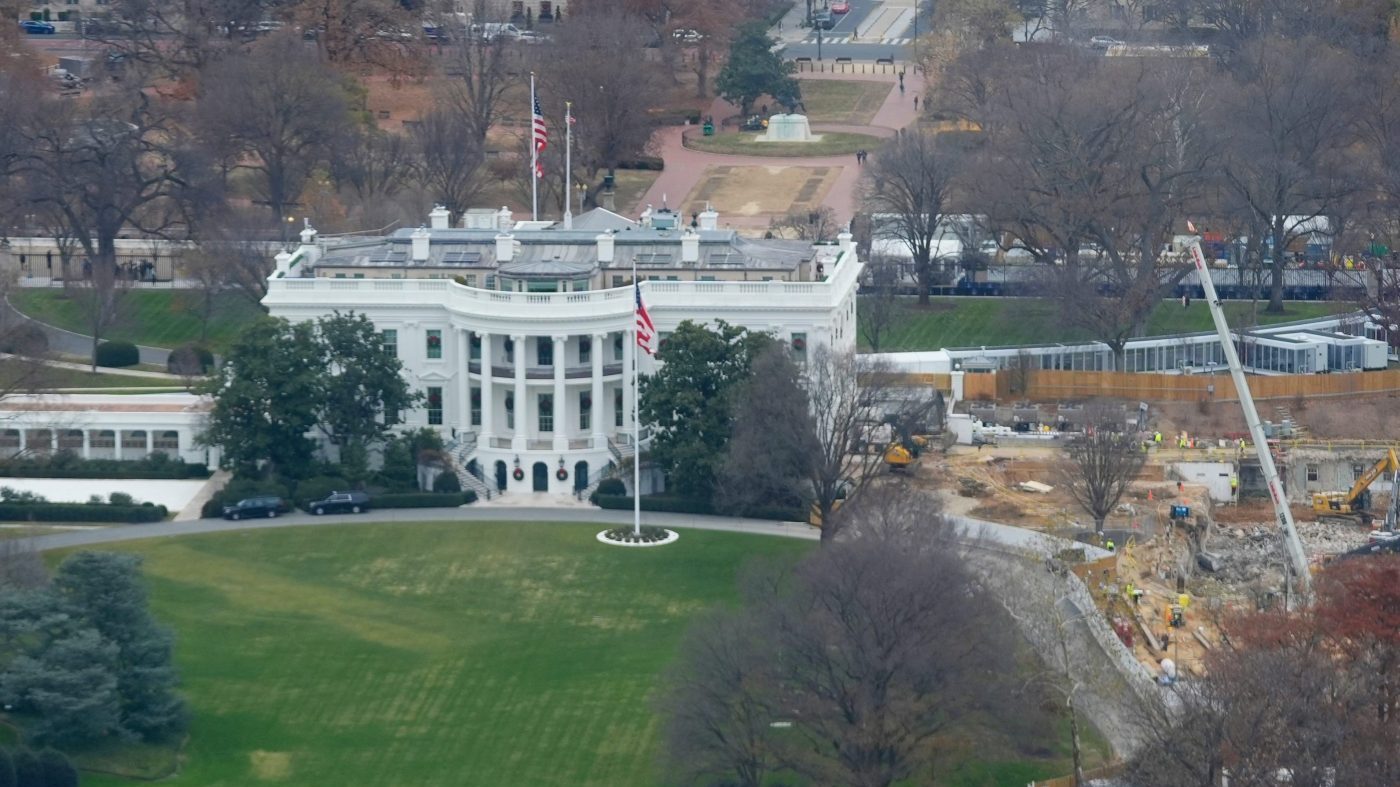
A federal appeals court has temporarily reinstated construction of a controversial ballroom at the White House, granting the Trump administration a procedural victory in its legal battle with historic preservationists. The ruling, issued Saturday by a divided three-judge panel of the U.S. Court of Appeals for the D.C. Circuit, pauses a preliminary injunction that had halted the $400 million project late last month.
Security Concerns Drive Ruling
The 2-1 decision allows work to continue at least until April 17, while the court considers the administration's broader appeal. The panel, in its order, stated it could not fairly determine on the current record whether the lower court's injunction adequately addressed what the government describes as urgent safety and security needs. The judges have instructed U.S. District Judge Richard Leon, a George W. Bush appointee who issued the original injunction, to clarify how his order will ensure the security of the White House, its occupants, and visitors during the litigation.
The administration has consistently argued that completing the ballroom is essential to fortify the White House against potential attacks and environmental exposure. In court filings, government lawyers contended that leaving the structure unfinished would "imperil" President Trump and others, and that the project's "entire design cohesively advances critical national security objectives." This argument echoes the administration's frequent invocation of executive authority in matters of national security, a pattern seen in other contentious policy areas such as the ongoing debate over warrantless surveillance powers.
A Sharp Dissent and Questions of Authority
Judge Neomi Rao, a Trump appointee, filed a dissenting opinion. Rao argued that the plaintiffs, the National Trust for Historic Preservation, lack the legal standing to challenge the project and asserted that the president possesses the inherent authority to proceed with the construction. "The government had presented credible evidence of ongoing security vulnerabilities at the White House that would be prolonged by halting construction," Rao wrote. Her dissent highlights the judicial friction surrounding the administration's expansive view of executive power, a theme also evident in the unprecedented number of emergency appeals the administration has filed with the Supreme Court.
Lawyers for the preservation group countered that their challenge does not seek to stop work on an associated underground bunker, which they do not oppose. Their core argument is that the ballroom's construction first requires congressional approval, a procedural hurdle they claim the administration has bypassed. They maintain that Judge Leon's injunction does not prevent the government from addressing any genuine security concerns through other temporary measures.
Regulatory Approval Amid Legal Wrangling
Even as the legal fight plays out in the courts, the project received a boost from the National Capital Planning Commission (NCPC). Following Judge Leon's initial injunction, the NCPC voted to approve the construction. Commission members justified their decision by citing presidential history, noting that similar modifications to the White House have been undertaken by previous administrations.
The sole dissenting vote on the commission came from Phil Mendelson, chair of the Council of the District of Columbia. Mendelson objected to the ballroom's expected size and suggested the proposal had evolved significantly since first being introduced. He argued that any future changes to the White House should be reviewed comprehensively rather than in a "piecemeal" fashion. This local regulatory clash underscores the complex interplay between federal authority and local oversight, a dynamic also present in disputes over issues like state versus federal regulation of gambling.
The court's decision to remand the case for clarification reflects the judiciary's cautious approach when national security claims are invoked by the executive branch. The panel explicitly noted the difficulty of assessing irreparable harm on a "hurried record," indicating a desire for more precise findings from the district court before making a final determination on the injunction's validity. This procedural move kicks the immediate decision back to Judge Leon, setting the stage for another round of filings before the April 17 deadline set by the appeals court.
The outcome of this dispute will establish a significant precedent regarding the scope of presidential authority over the White House grounds and the ability of private groups to challenge security-related construction projects. With the administration framing the project as a security imperative and opponents decrying it as an unauthorized vanity project, the case sits at the intersection of preservation law, separation of powers, and the spending of public funds—a combination that guarantees continued legal and political scrutiny as the appeal proceeds.