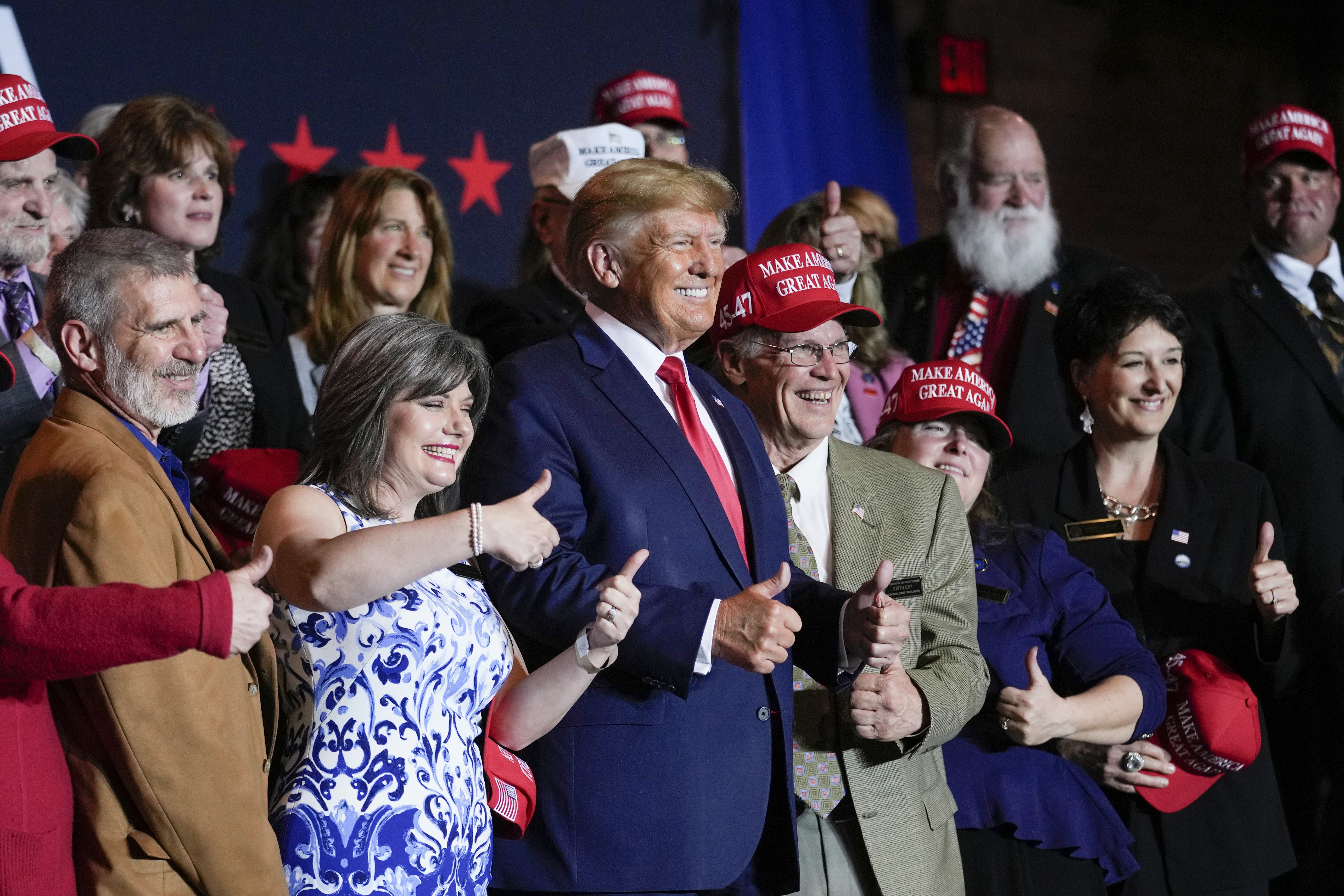
In a January interview, former President Donald Trump distilled the nature of his political movement with a characteristically blunt formulation. Responding to speculation that his supporters might oppose certain military actions, he stated, "MAGA is me. MAGA loves everything I do, and I love everything I do, too." This statement, while self-aggrandizing, accurately captures the fundamental reality of the Make America Great Again coalition: it is less a traditional political ideology and more a highly personalized brand centered on one man.
The Anatomy of a Movement
Over its decade-long dominance of Republican politics, MAGA has evolved into what analysts describe as a cult of personality. The movement embodies a specific political attitude—combative, transgressive, and dismissive of established norms—that mirrors Trump's own public persona. This is evident in official communications, such as when the Republican National Committee adopts profane, confrontational language toward media outlets, treating political discourse as a form of combat sport.

The bond is reinforced by a narrative that casts Trump in a martyr-like role, a champion who endured persecution for his supporters. This dynamic creates intense loyalty among an estimated 25-30% of the electorate, a bloc whose size and devotion are unmatched in contemporary American politics. This control over a significant plurality in a divided nation has allowed Trump to reshape the political landscape, leveraging a primary system that rewards intense minority support.
The Illusion of Policy Rifts
Recent polling underscores the movement's monolithic nature. A survey showing Trump with 100% approval among self-identified MAGA supporters was highlighted by the former president, who interpreted it as validation of his January claim. As data analyst Harry Enten noted, this statistic effectively demolishes the media narrative that MAGA adherents might break with Trump over specific policies, such as his aggressive naval actions against Iran.
The circular logic is revealing: identifying as part of MAGA is functionally synonymous with supporting Trump. Searching for MAGA members who criticize the leader is largely futile, as maintaining such a position would create unsustainable cognitive dissonance. Followers typically resolve any policy disagreements by either leaving the movement or suppressing their doubts. This explains why figures like former Rep. Marjorie Taylor Greene, who has distanced herself from the label, are cited as examples of "MAGA dissent"—they are, by definition, no longer part of the core group.
Dissent Exists Outside the Cult
This does not mean Trump faces no opposition from the right. Significant conservative voices have criticized his foreign policy maneuvers, leading to public fractures with former allies. Furthermore, a substantial portion of the Republican coalition—including traditional party members and right-leaning independents—supports Trump as a pragmatic alternative to Democrats rather than as a movement figurehead. These voters, who backed him as the "lesser of two evils," are far more likely to express policy-based disapproval.
Trump's awareness of this external criticism is evident in his reactive lashing out at critics, such as his ongoing feud with Pope Leo XIV regarding Iran strategy. These conflicts, however, occur at the movement's periphery. Within the MAGA core, the bond is not based on policy alignment but on personal allegiance to Trump's identity and perceived struggle.
The movement's strength lies in this personalization, but it also represents a vulnerability. Its fortunes are inextricably tied to a single individual. As Trump continues to test political boundaries—from promoting controversial economic policies to engaging in cultural battles that sometimes alienate even conservative allies—the MAGA movement follows, demonstrating that in today's Republican politics, personality decisively trumps policy.