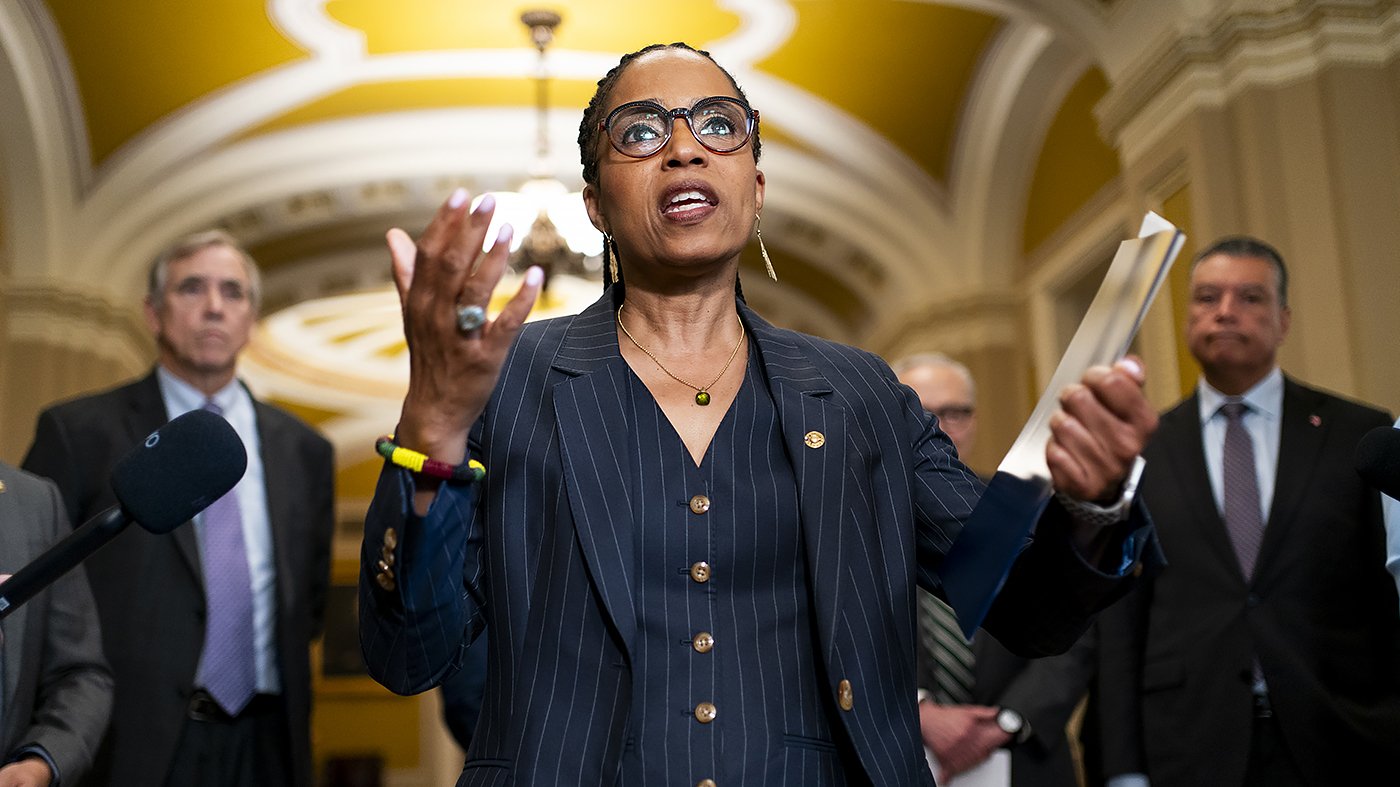
Democratic Senator Angela Alsobrooks of Maryland is set to introduce legislation on Thursday that would carve out an exemption for school supplies from the tariffs imposed by President Trump. The move comes as families across the country brace for the financial strain of the upcoming academic year.
The proposed measure, known as the Back-to-School Supplies Affordability Act, targets items such as backpacks, lunchboxes, notebooks, pencils, and crayons, according to a draft shared with The Hill. Alsobrooks argues that these everyday essentials should not be subject to the president’s import duties, which have driven up costs for households, teachers, and local governments.
“I think it will really go a long way just to putting a few dollars back into the pockets of families at a time where everything else is rising,” Alsobrooks said in a phone interview, emphasizing the broader economic pressures facing constituents.
The National Retail Federation projects that parents will spend an average of $146.45 per child in grades K-12 on school supplies this year, a modest increase of $2.68 from last year. However, a separate analysis from the Groundwork Collaborative and The Century Foundation highlights steeper price hikes for specific items, such as lunchboxes, which have surged 26.8% to over $18.90. Notebooks, index cards, and tissues also saw average cost increases of at least 20%, a trend linked directly to the tariffs.
While the Supreme Court struck down a set of tariffs earlier this year that were imposed under the International Emergency Economic Powers Act, the Trump administration has continued to levy duties using other legal authorities, including Section 301 of the Trade Act of 1974. Alsobrooks’ bill would not eliminate all tariff authority; it explicitly preserves the president’s ability to impose duties under Section 201, which allows temporary relief for domestic industries facing foreign competition.
The Maryland Democrat, who is in her first term, stressed that she is not categorically opposed to tariffs, viewing them as a legitimate tool in trade policy. But she criticized the current administration’s approach as “too chaotic and too arbitrary,” and accused Congress of failing to exercise proper oversight. “Whatever the goal is, these tariffs have been too chaotic and too arbitrary to achieve that goal,” she said.
If enacted, the legislation would require Commerce Secretary Howard Lutnick to report to the Senate Finance and House Ways and Means committees every 180 days on which items are excluded, and would allow Congress to pass resolutions disapproving of any exemptions. Alsobrooks plans to refer the bill to the Senate Finance Committee, chaired by Republican Senator Mike Crapo of Idaho. She has already secured co-sponsors from her Democratic colleagues, including Lisa Blunt Rochester, Chris Coons, John Hickenlooper, Andy Kim, Jacky Rosen, and Chris Van Hollen, and says she will seek bipartisan support.
The timing of the bill coincides with broader economic anxieties, including rising gas prices, which have climbed to about $4.06 per gallon nationally, up from under $3 before recent conflicts. Alsobrooks noted that she has heard concerns about the cost of living during her travels, from Maryland to Mississippi and Georgia. “This has become yet another area of everyday life that has become a challenge for the average family,” she said.