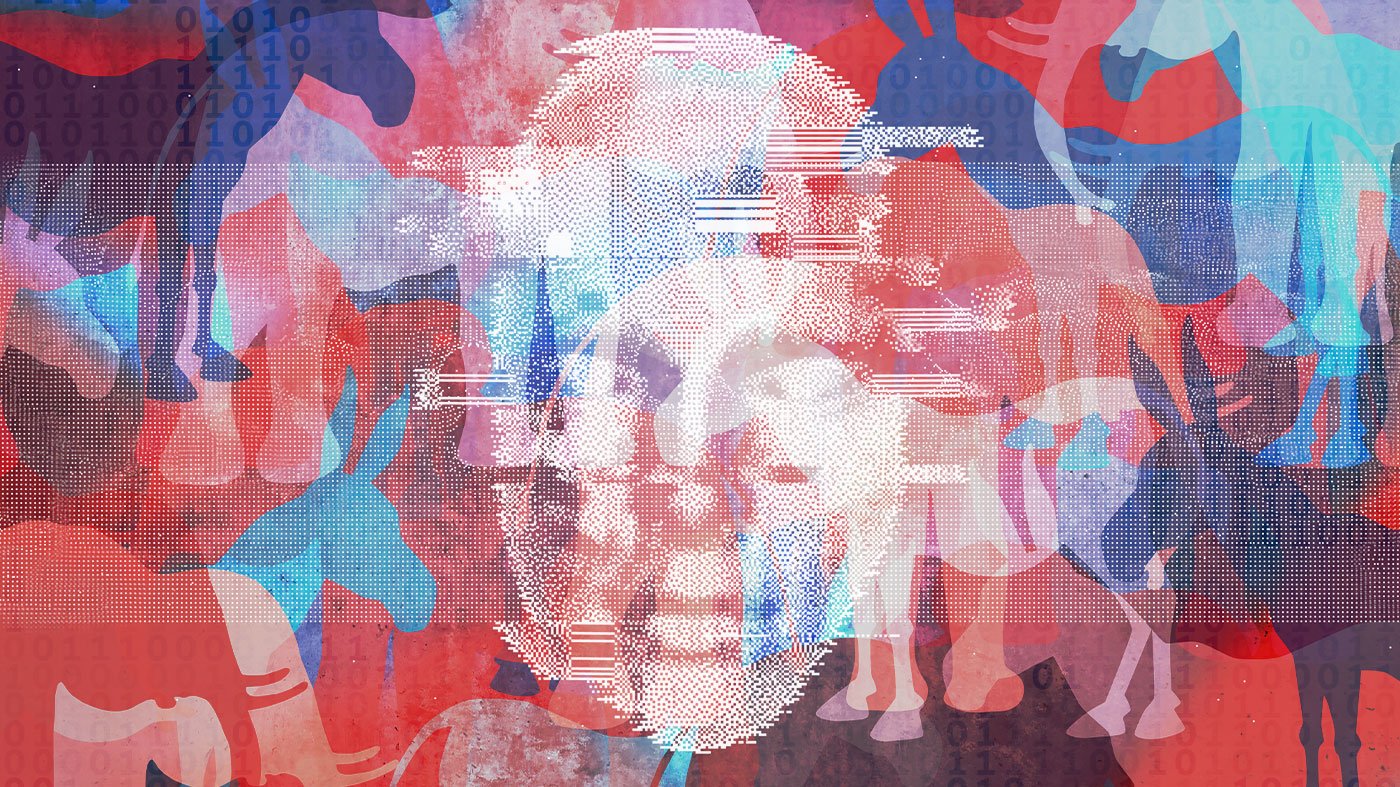
Artificial intelligence is now a central tool on the campaign trail, as candidates at every level adopt the technology to produce viral attack ads, self-promotional videos, and social media content. The rapid embrace of AI-generated media is reshaping how campaigns communicate, but it is also fueling a fierce debate about whether these realistic fabrications could mislead voters and undermine democratic processes.
Supporters argue that AI-generated content is simply the latest evolution in political advertising, akin to the use of political cartoons and graphics in past decades, but at a fraction of the cost. Critics, however, warn that the technology can blur the line between fact and fiction, potentially swaying elections with fabricated imagery and audio.
The debate intensified last week when the conservative group American Principles Project (APP) released a digital ad supporting Texas Attorney General Ken Paxton (R) in his Senate race. The ad depicts his opponent, state Rep. James Talarico (D), as a doctor performing gender-reassignment surgery on a young girl. The 30-second spot, which echoes the famous 1964 "Daisy" ad, is part of a broader Republican effort to target Talarico over his stance on transgender issues.
APP President Terry Schilling defended the use of AI, comparing it to political cartoons: "We took the approach of using AI in the same way that you would use political cartoons to articulate a point or a message about the consequences of someone's voting behavior or their actions while in office." The ad shows a girl counting flowers in a field, then transitions to a hospital scene where a deepfake Talarico stands over her as a narrator warns about "irreversible puberty blockers, cross-sex hormones, sex-change surgeries."
Talarico's campaign spokesperson JT Ennis called the ad "flat-out lying," noting that Talarico does not support gender-transition surgery for minors. Ennis accused Paxton and his wealthy backers of using "shameful scare tactics" and "disgustingly using children as political props" to distract from real issues like the cost of living.
This ad is just one of dozens of AI-generated attacks this cycle. Earlier, Paxton's campaign released an AI-generated image of Talarico in a dress singing about transgender children. In Los Angeles, a viral ad showed mayoral candidate Spencer Pratt as a hero in a dystopian scene, with incumbent Mayor Karen Bass (D) depicted as the Joker. Bass condemned the ads as "taking on a violent trend." In New York, Republican gubernatorial candidate Bruce Blakeman faces an ethics complaint over AI ads against Gov. Kathy Hochul (D), which Democrats say "distort reality."
The technology is also being used in Tennessee's 6th Congressional District GOP primary, where both candidates employed AI in ads against each other, potentially violating a new state law requiring AI disclosures. The use of AI is not limited to Republicans; high-profile Democrats like California Gov. Gavin Newsom and former New York City Mayor Eric Adams have also utilized the technology for political attacks.
As AI capabilities improve, the content becomes more realistic and accessible. Schilling noted that APP's latest ad was the first from the PAC using AI, stating that past AI-generated ads looked "cheap." He added, "The technology is only getting better, I really could see a day where you wouldn't even be able to tell at all."
Research by Daniel Schiff, a Purdue University professor studying deepfakes, suggests that even when viewers recognize a deepfake as fake, it can still influence their beliefs. "Even if they know it's a deepfake ... that doesn't necessarily correlate to their beliefs," Schiff said. "We'll ask people, 'Do you think this is literally true?' And then we'll say, 'Even if it's not literally true, does it represent something that feels true about the world?' And they'll say, 'Yes.'"
The rise of AI in campaigns is part of a broader trend of technology reshaping the workforce and other sectors. As the 2024 election approaches, the use of AI is likely to intensify, prompting calls for clearer regulations. The campaign finance landscape is also evolving, with new spending records and reform debates. Meanwhile, the fertility gap is emerging as a political issue, intersecting with AI's role in shaping public discourse.