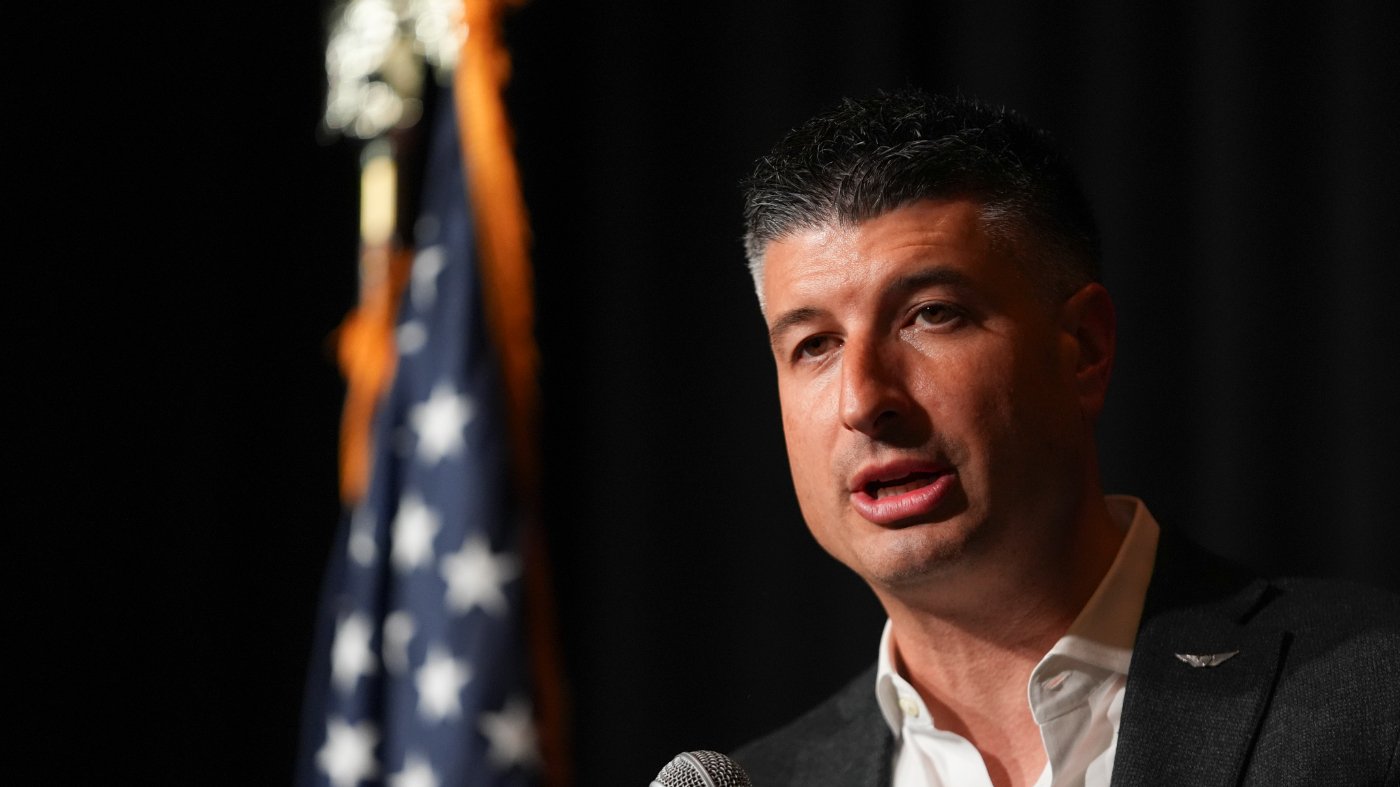
During his nine years in Congress, former Rep. Tom Campbell (R-Calif.) witnessed firsthand how unchecked campaign spending warps legislative priorities. Since he left Washington in 2001, the problem has only intensified. Outside spending in the 2022 midterms exceeded $2 billion, nearly doubling by 2024, and early projections for 2026 suggest another record is on the horizon.
As spending has surged, so has public concern. According to Pew Research, the role of money in politics now ranks among Americans' top worries for the second straight year, outpacing inflation and healthcare costs. Notably, the issue is no longer the exclusive domain of the left. Pew found it is a top concern for Republican voters as well, and the only issue that supermajorities of both Democrats and Republicans label a “very big problem.”
Republican Lawmakers Take Action
With tough reelection battles ahead, some Republicans are warming to reform. Rep. Tom Barrett (R-Mich.), who represents a swing district, recently introduced Joint House Resolution 191, a constitutional amendment that would empower Congress and states to limit campaign spending. Unlike many symbolic amendments, Barrett’s proposal reflects a genuine shift among GOP lawmakers who recognize that frustration with unlimited political cash is no longer confined to progressives.
Barrett is not alone. In recent years, state legislatures in Utah, Idaho, and Oklahoma—all deep-red states—have passed resolutions calling for a similar amendment, with broad Republican support. The Sutherland Institute, a conservative think tank, endorsed the measure, arguing it would “help restore equilibrium to our constitutional system.”
How Money Distorts Congress
The committee system offers a stark example of the problem. Party leadership assigns the most powerful committee seats—those overseeing federal spending, tax policy, and industry regulation—to the top fundraisers. These members then attract even more donor money, creating a corrosive cycle: power flows to those who raise cash, and cash flows to those with power.
Rank-and-file members are caught in the same machine. In an era of unlimited spending, any lawmaker can face a well-funded primary challenge at any moment. Survival requires loyalty to party leaders who control the money needed to fend off challengers. Over time, this pressure has hollowed out the political center, punishing independence and rewarding tribalism.
Fundraising Eats Into Governing
The time required to fundraise has also eroded the actual work of legislating. Both parties maintain fundraising offices steps from the Capitol, and members—especially newcomers—are pressured to spend hours daily on donor calls instead of meeting with constituents or crafting policy. Miss enough call time, and party leaders remember when assigning committee seats.
This wasn’t always the norm. For most of American history, voters influenced campaign spending rules through their elected representatives. That changed in 1976, when the Supreme Court ruled in Buckley v. Valeo that spending money in elections is a form of protected speech, striking down most expenditure limits. Citizens United v. FEC extended that logic to corporations and unions, and last month, in National Republican Senatorial Committee v. FEC, the Court further eroded remaining guardrails. As a Gallup poll recently highlighted, 1 in 10 Americans now see politics as a top safety threat, reflecting the broader unease.
The Path Forward
Waiting for the Supreme Court to reverse 50 years of precedent is unrealistic, Campbell argues. The only durable solution is a constitutional amendment. The Republicans joining Barrett on this issue come from different places: some represent competitive districts where independents will decide the outcome; others hold safe seats but have watched primary fundraising spiral out of control. What unites them is the recognition that voters of both parties are well ahead of Washington in demanding change.
“The politics of this issue have shifted,” Campbell writes, “and the voters are well ahead of Washington in noticing.”