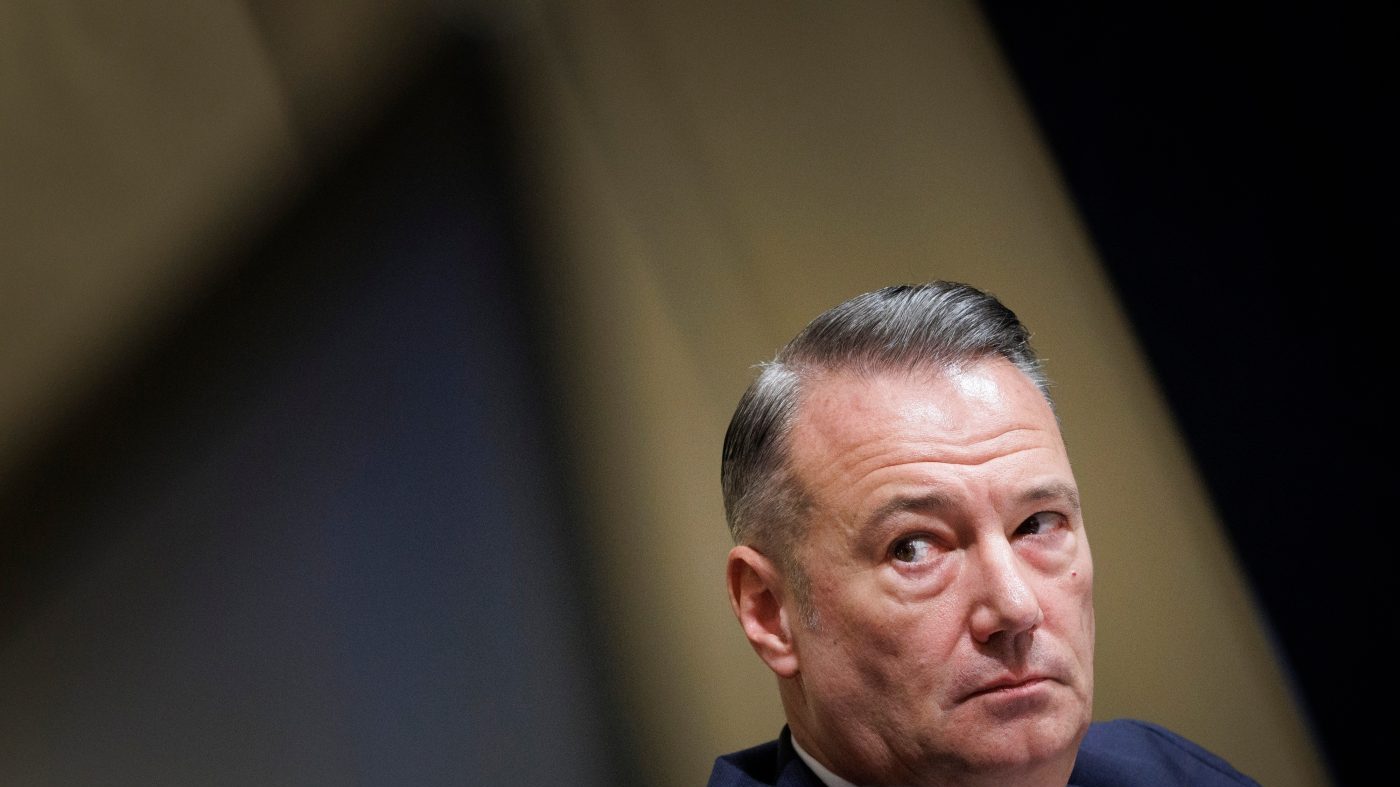
Acting Immigration and Customs Enforcement Director Todd Lyons will leave his post at the end of May, Homeland Security Secretary Markwayne Mullin confirmed Thursday. Lyons, who has led the agency in an acting capacity, will depart for a position in the private sector on May 31, according to an announcement Mullin made on the social media platform X.
Praise and Controversy Mark Departure
In his statement, Secretary Mullin offered strong praise for Lyons's tenure, framing his leadership as central to the Trump administration's immigration enforcement agenda. “Director Lyons has been a great leader of ICE and key player in helping the Trump administration remove murderers, rapists, pedophiles, terrorists, and gang members from American communities,” Mullin wrote. He added that Lyons “jumpstarted an agency that had not been allowed to do its job for four years,” claiming American communities are safer due to his leadership.

Lyons's planned exit, however, was met with starkly different reactions from Democratic officials who have clashed with ICE's operations. Illinois Governor J.B. Pritzker issued a scathing statement, vowing to hold Lyons accountable for the deployment of agents to Chicago. “Todd Lyons led a secret police force for Trump where masked agents attacked our own American streets, violated Constitutional rights, and shot our own citizens,” Pritzker wrote on X.
A Turbulent Tenure Under Scrutiny
Lyons oversaw ICE during a period of significant operational expansion and controversy. The agency conducted its largest-ever immigration enforcement operation in Minnesota earlier this year, an operation that resulted in federal agents fatally shooting two people, including 37-year-old mother Renee Good on January 7. The killings sparked nationwide protests. During a congressional hearing in February, Lyons declined to apologize for Good's death, citing an ongoing investigation.
His tenure also included the controversial deployment of thousands of federal agents to several states, including California, Oregon, Minnesota, Maine, and Illinois, to intensify immigration enforcement—a move that drew sharp criticism from state leaders and immigrant rights advocates. Democratic Representative Delia Ramirez of Illinois celebrated Lyons's departure, writing on X: “Lyons, don’t let the door hit you on your way out. You will still be held accountable by the American people.”
Leadership Vacuum and Mullin's First Major Decision
Lyons's departure creates an immediate leadership vacuum at a critical agency. It will fall to Secretary Mullin to appoint a successor, marking his first significant personnel decision since he replaced Kristi Noem as Homeland Security secretary at the end of March. The Senate has not confirmed a permanent director for ICE since 2017, resulting in the agency being led by a series of acting officials for nearly a decade. It is not yet clear who will assume the acting director role in June.
In a letter to Mullin, Lyons reportedly called his role a “tremendous honor” and stated he was leaving to spend more time with his family, according to The New York Times. He first joined ICE as an agent in 2007, giving him nearly two decades of service at the agency.
Political Reactions and Broader Context
The White House, through deputy chief of staff Stephen Miller, issued a statement obtained by CBS News lauding Lyons as “a phenomenal patriot and dedicated leader who has been at the center of President Trump’s historic efforts to secure our homeland and reverse the Democrats’ sinister border invasion.”
Lyons's exit occurs against a backdrop of sustained political and budgetary pressure on the Department of Homeland Security. The department is currently navigating an ongoing partial government shutdown that has stretched for over two months, severely impacting agencies like the Transportation Security Administration, the U.S. Coast Guard, and FEMA, even as ICE received substantial funding last summer. This financial strain comes as DHS security chiefs are preparing to face intense questioning from House appropriators over the department's budget and operations.
The leadership change at ICE also intersects with broader immigration policy battles in Congress. Recent legislative maneuvers, such as the House vote to extend protections for Haitian nationals, highlight the deep partisan divisions on immigration that any new ICE director will inherit. Furthermore, the agency's future direction is tied to the administration's wider homeland security strategy, which faces scrutiny over its fiscal sustainability, with the White House budget chief recently warning that the Homeland Security Department is nearing a state of collapse due to budgetary constraints.