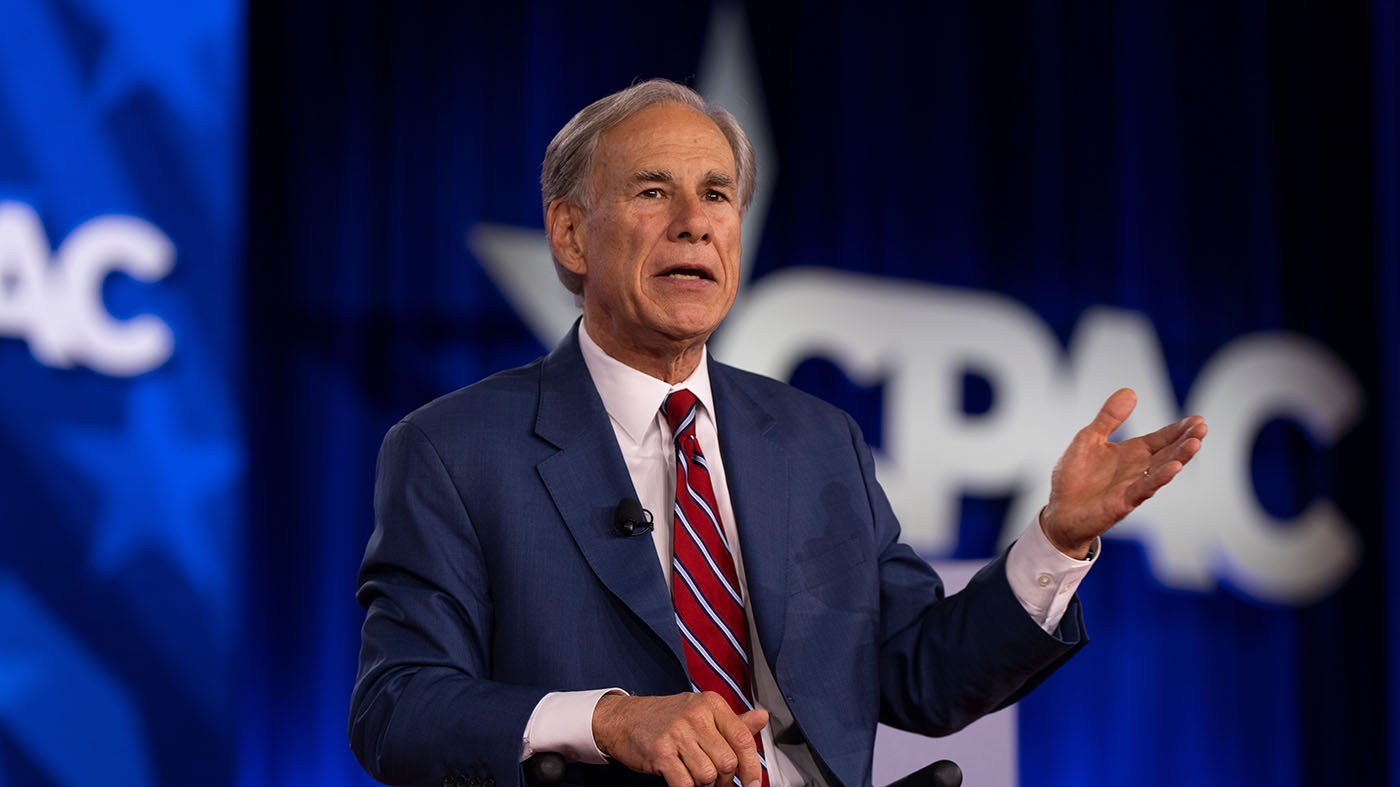
AUSTIN — Gov. Greg Abbott has ordered the Texas Water Development Board to take enforcement action against data centers that skip mandatory water-use reporting, a move his office says is necessary to protect the state's water supply.
In a letter issued this week, Abbott directed the TWDB to impose penalties for past failures to comply with Texas Water Code survey requirements and to pursue legal consequences for any future noncompliance. The governor's office said some major water users, including data centers, appear to have violated state law by not submitting required information.

“Data centers must share the duty to protect Texas water,” Abbott said in a statement. “The Texas Water Code requires a complete and accurate water use survey. I direct the Texas Water Development Board to use its enforcement authority to penalize past failures and to impose legal consequences for any future failure to comply.”
Under the code, entities that receive a TWDB water-use survey must complete and return it. Abbott's office warned that data centers that fail to do so could face criminal penalties and lose eligibility for certain Texas Commission on Environmental Quality permits, amendments, or renewals. The TWDB can also refer cases to county or district attorneys.
The TWDB said it supports the directive. “The TWDB recognizes the need for complete water-use reporting from major water users, including data centers,” the agency said in a statement. “Those reports are critical to the agency's long-term water planning. At the direction of Governor Abbott, the TWDB will compel all water users to comply with Texas Water Code survey requirements so that the State has the information it needs to plan for Texas' future water needs.”
Democratic gubernatorial nominee Gina Hinojosa dismissed the move as a campaign stunt, arguing that Abbott has allowed data centers to operate with little oversight. “Looks like Greg Abbott saw another bad poll today,” Hinojosa said. “A strongly worded letter every day from now until the election won't change Texans' minds about how Abbott has made Texas the Wild West of data centers, raked in $20 million in donations from their CEOs, and pledged to make Texas the 'epicenter' of AI at the expense of working people. Texans deserve real regulations on data centers right now, and unless Abbott calls a special session to pass laws that protect Texans and give them a seat at the table to decide if and how data centers come into their communities – as I called for months ago – this is all just more lip service to save his campaign.”
Community activists also expressed skepticism. Claudia Hollern, a volunteer with the Caldwell Data Center Action Team, said the directive feels like a distraction. “At this point, it seems like, kind of a distraction instead of an actual directive to make these data centers slow down,” Hollern said. “I don't understand why Greg Abbott doesn't just call a special session and have a moratorium to pause this.”
The governor's action is part of a broader push to increase oversight of data centers, which have boomed in Texas amid the AI boom. In August, Abbott directed the Public Utility Commission and ERCOT to audit data centers that go through the grid interconnection process. That audit includes water consumption, water sources, and use of water-efficient technologies. Projects that fail to complete the audit must be denied interconnection, according to the governor's office. The TWDB will work with ERCOT to gather additional water-use data.
The TWDB must report progress to Abbott by Oct. 14. Tom Seng, an assistant professor of energy finance at Texas Christian University, said he was surprised stricter enforcement wasn't already in place. “I think water is rising to the top in terms of critical issues,” Seng said. “We have ways to produce electricity, I don't know that we have ways to produce fresh drinking water. Going forward, we need to have a set of rules and standards. I'm a little surprised that this hasn't already been going on.”
As Texas grapples with how to balance data center growth and community concerns, Abbott's directive may be just the beginning. But critics say more concrete action is needed, and they're watching to see if the governor follows through with enforcement or if this remains a symbolic gesture.