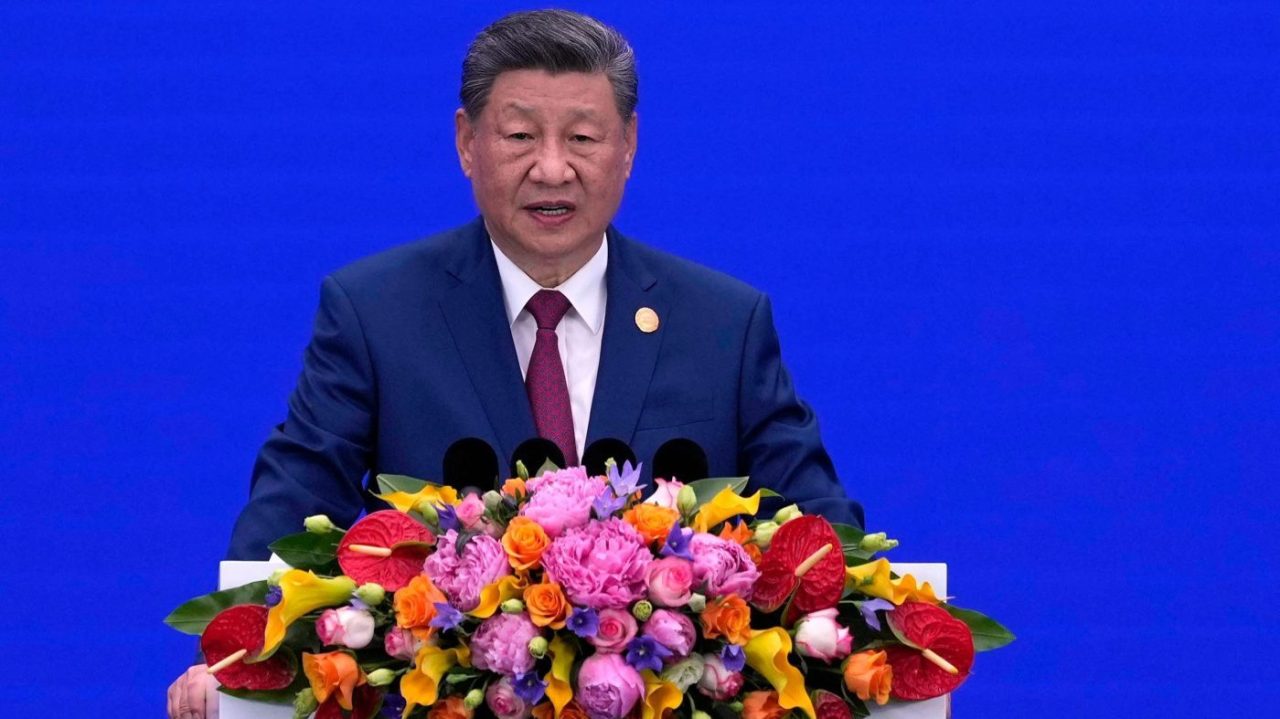
Chinese President Xi Jinping used a major artificial intelligence conference in Shanghai on Friday to advocate for a multilateral approach to AI development and governance, while taking a veiled swipe at the United States for what Beijing sees as overly restrictive technology policies.
Speaking at the opening of the World Artificial Intelligence Conference, Xi argued that AI should not be controlled by any single country. "The development of artificial intelligence should not be a solo performance by any single nation but rather a symphony of global cooperation," he said, drawing a contrast with American-led efforts to limit China's access to advanced chips and AI tools.
Xi reiterated Beijing's longstanding complaint that Washington is "overstretching the concept of national security" in the technology sector, a charge that has intensified as the two superpowers compete for dominance in emerging fields. He called for a system where one country's security is not prioritized above others.
The Chinese leader announced a series of initiatives aimed at positioning China as a leader in AI governance. He pledged to expand collaboration with the Association of Southeast Asian Nations, the Arab League, the African Union, and other regional blocs. China will also provide 5,000 AI training opportunities to developing countries over the next five years and offer access to a Chinese-developed AI weather early-warning tool to 30 nations.
"Closer partnerships can help prevent historical injustice in AI," Xi said, framing his country's push as a counterweight to what he portrayed as a Western-dominated tech order.
Just ahead of the conference, 29 countries—including Pakistan, Russia, and Kazakhstan—signed an agreement to establish a World Artificial Intelligence Cooperation Organization, headquartered in Shanghai. State media called it an intergovernmental body focused on global AI governance. Analysts view the new organization as China's answer to the U.S.-led Pax Silica initiative, which aims to coordinate AI supply chains among allies such as Japan, the U.K., and Australia.
George Chen, a partner at Washington-based consultancy The Asia Group, said Xi's speech signaled that China intends to be a reliable partner for the Global South. "China will not let America be the monopoly of AI technology," Chen said.
Despite tensions, the U.S. and China agreed in May to hold a dialogue on AI development and governance, following a visit by President Trump to Beijing. That diplomatic channel has yet to yield public breakthroughs, but both sides have acknowledged the need for some coordination.
At the conference, Chinese tech giant Huawei showcased its powerful Atlas 950 SuperPoD AI computing system, part of a broader push to achieve self-reliance in advanced technology. Analysts now argue that China has moved beyond simply catching up to the U.S. in AI and is innovating in its own right. Open-source models like DeepSeek and Kimi K3, which boasts 2.8 trillion parameters, are gaining traction in developing countries as cheaper alternatives to largely closed-source American models.
However, tensions over intellectual property persist. U.S. politicians and companies like Anthropic have accused Chinese AI firms of illicitly "distilling" their models—a charge Beijing dismisses as groundless. U.S. policymakers also worry that Chinese AI could pose an economic threat.
Xi's remarks come amid a broader geopolitical struggle over technology. The U.S. has imposed export controls on advanced semiconductors and equipment, aiming to slow China's military modernization. Beijing, in turn, has accelerated its own research and development, with a five-year plan prioritizing AI as a frontier science.
The conference, which runs through Monday, has drawn over 1,100 companies and 1,400 guests, according to Chinese state media.