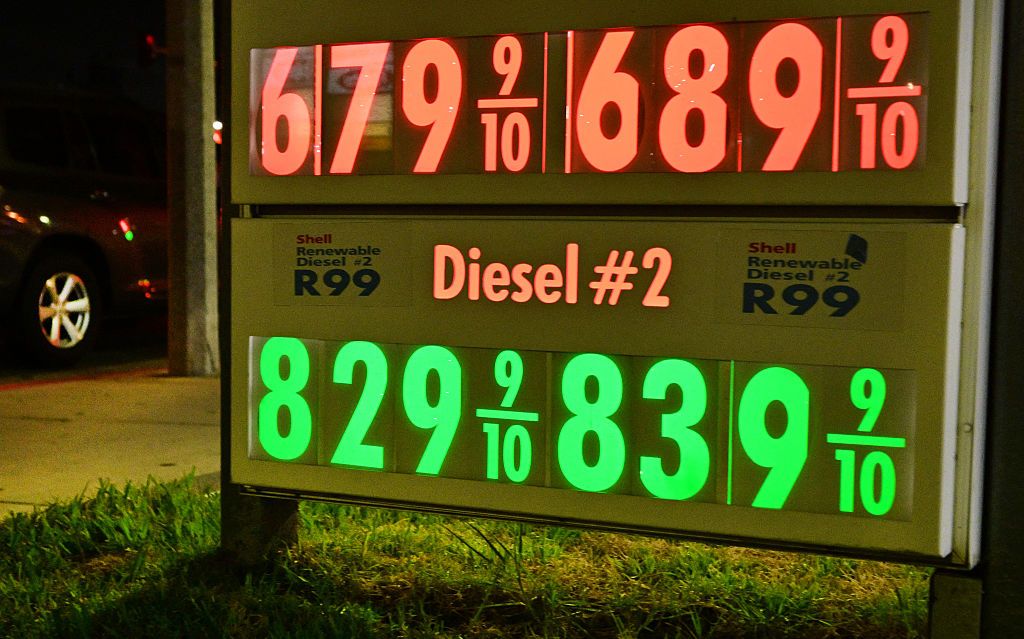
The 1979 Iranian Revolution sent crude prices from roughly $13 to $34 a barrel in a year, exposing America's dependence on imported oil. That shock drove decades of investment in domestic supply and refining infrastructure, culminating in the shale revolution that made the U.S. the world's largest oil producer by 2018. But the country's refining base was built for heavy grades, so Gulf Coast plants can't process the light crude now flowing from shale fields. As a result, the U.S. exports that light crude to allies, while still importing heavy barrels that must pass through vulnerable maritime chokepoints.
Investing in light crude refining would deliver three strategic gains: it would keep fuel flowing at home when a chokepoint closes, capture the export margins foreign refiners now earn on American crude, and give Washington diplomatic leverage by supplying allies with finished fuel.
Supply resiliency at home
Refineries tuned to heavy oil can't switch grades overnight. The Energy Information Administration tracks seven chokepoints; the Strait of Hormuz alone carries about 20 million barrels per day, roughly a fifth of world demand. Iran mined the Gulf during the 1980s Tanker War, and Washington blamed Tehran for limpet mine attacks on six tankers near Hormuz in 2019. Houthi missiles have targeted more than 100 merchant ships near the Bab el-Mandeb since late 2023, a campaign that resumed in 2026. If any of these closures returned at scale, or if a war over Taiwan shut the Strait of Malacca, American refiners would lose the Saudi and Iraqi heavy barrels they import while domestic light crude sat stranded at export terminals. The mismatch would show up as diesel and jet fuel shortages at home.
Capturing export margins
In 2023, American refiners shipped out roughly 6 million barrels per day of gasoline, diesel, jet fuel and other products, at margins that at times passed $30 per barrel on diesel alone. When the U.S. sends raw light crude to Rotterdam or Ulsan, refiners in Europe and Korea take that margin while American producers collect only the wellhead price. Since the European Union banned Russian diesel in February 2023, European buyers have paid extra for American fuel, a gap that new light crude plants on the Gulf Coast could fill at scale.
Diplomatic leverage
Foreign policy leverage goes to the country that sells finished fuel, since a buyer of raw crude can more readily find another seller. Crude oil trades across dozens of suppliers, so a customer who loses American barrels can replace them from Guyana or the North Sea within weeks. In contrast, diesel and jet fuel move through a thinner market, in which refining capacity sets the limit, so a supplier of fuel becomes much harder to replace. Washington could then extend or withhold fuel guarantees in talks with allies in East Asia, where Japan and Korea bring in nearly all of their crude through sea lanes that China could cut.
The path forward
The path runs through expansions at existing plants rather than new refineries since no company has built one with major capacity in the United States since 1977. In 2023, ExxonMobil finished a 250,000 barrel per day expansion of light crude capacity at its Beaumont plant for roughly $2 billion, which puts the cost of 1 to 2 million barrels of new light capacity somewhere between $10 and $20 billion.
Furthermore, the 2025 reconciliation bill redefined eligible energy infrastructure under Section 1706 to include refining. The Department of Energy can now guarantee loans for exactly these expansions from a $250 billion lending cap. Additionally, the Permitting Council could put each project on its FAST-41 dashboard with a binding federal timetable, while Congress could add a 25 percent investment tax credit modeled on the one that moved TSMC and Intel to build chip plants in Arizona and Ohio.
Because that leverage builds on the first two gains, a refining sector sized for American light crude would protect fuel supply at home through any chokepoint closure, keep the $30 diesel margin with American firms, and give the State Department a tool that raw crude exports cannot offer. As public trust in institutions remains fragile, energy security is a tangible way to rebuild confidence.