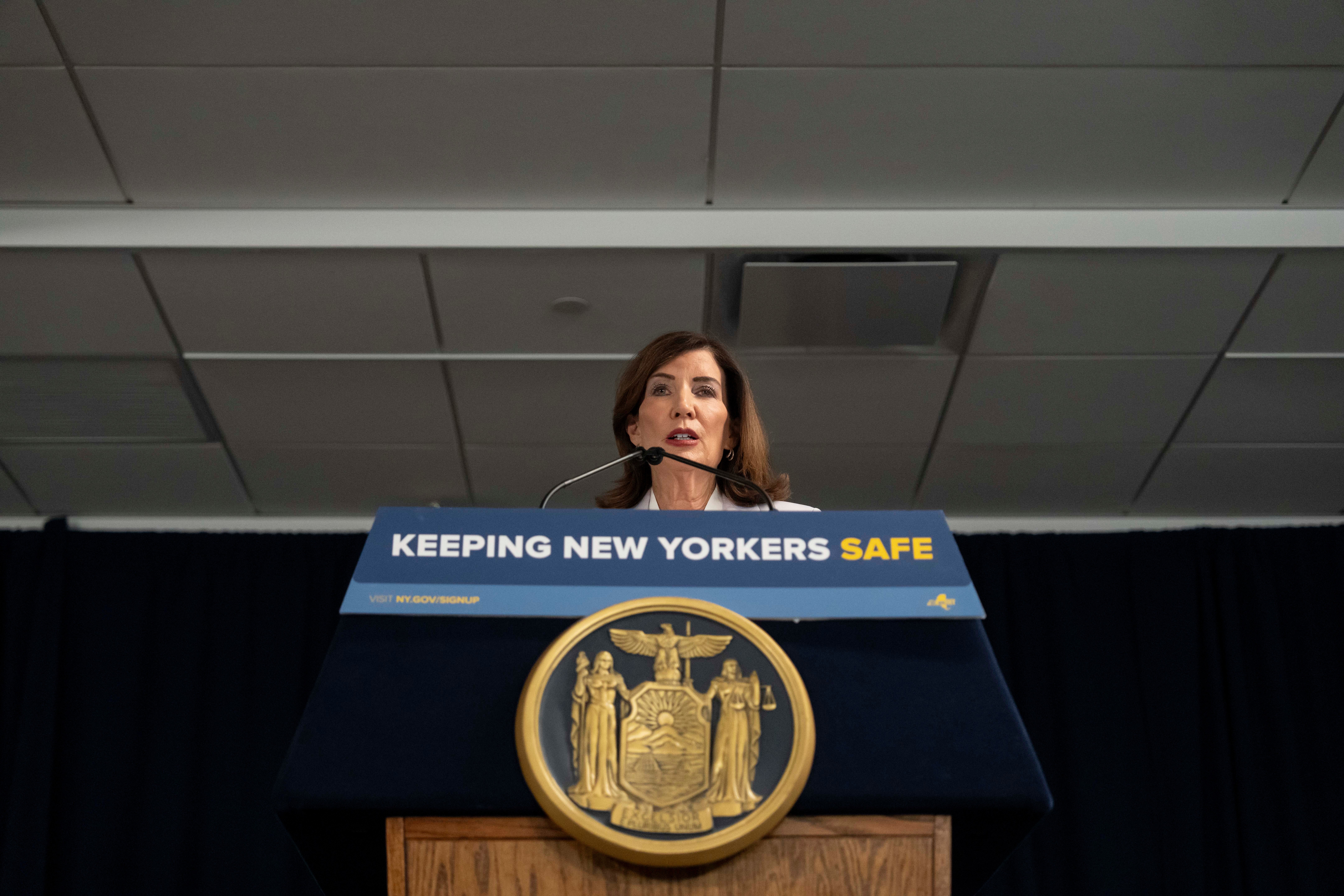
New Yorkers may be suffering from a political version of Stockholm Syndrome, as they appear ready to reelect a governor whose policies have arguably made the state one of the most expensive places to live in the nation. That's the conclusion some political observers draw from the latest Siena College poll showing Gov. Kathy Hochul (D) leading Nassau County Executive Bruce Blakeman (R) by 9 points, 50-41. Even as her margin slips, 65% of voters expect her to win in November.
The disconnect is striking in an era when "affordability" dominates national politics. According to the World Population Review, New York is the fourth most expensive state overall, with the fourth-highest rents, the tenth-highest grocery costs, the ninth-highest healthcare expenses, and the eighth-highest transportation outlays. For many residents, the state is simply unaffordable, yet Hochul remains the favorite.
Critics point to a series of policy decisions under Hochul and her predecessor, Andrew Cuomo, that have driven up costs. Energy is a prime example. While the Iran conflict has inflated petroleum prices, New Yorkers have faced rising home heating and electricity bills for years. The state's 2015 ban on fracking and restrictions on natural gas pipelines, driven by environmental concerns, have limited access to one of the nation's most abundant and cleaner-burning fossil fuels. Neighboring Pennsylvania, which allows fracking, is the second-largest natural gas producer in the U.S., and its residents pay an average of $82 per month for home heating versus $98 in New York.
Electricity rates are similarly punishing. New Yorkers paid 29 cents per kilowatt-hour in June, compared to 22 cents in Pennsylvania and 15 cents in Florida. The high costs stem partly from the state's aggressive climate mandates, including the 2019 Climate Leadership and Community Protection Act, which requires a 40% reduction in emissions from 1990 levels by 2030 and an 85% cut by 2050, along with 100% zero-emission electricity by 2040. Hochul has admitted these goals could impose more than $4,000 per year in costs on families by 2031 and is now seeking to delay them.
Housing is another battlefield. New York's housing cost burden relative to income ranks third in the nation, according to the state controller. Manhattan rents have soared 10% in the past year to an all-time high, despite Mayor Zohran Mamdani's campaign promises to lower them. The root cause is a severe supply shortage driven by excessive regulation. Construction costs in New York average $211 per square foot, versus $160 in Florida, where a building boom is underway.
The state's broader business climate compounds these problems. A Citizens Budget Commission report found New York ranks as the tenth worst state for starting a small business, third slowest in small business growth, and second most regulated. These regulations translate into higher consumer prices, as do the state's high taxes.
With affordability topping voter concerns, Hochul's vulnerability is evident. She has tried to blunt criticism by sending utility relief checks to low- and middle-income households just before the election—a move some call bribery. But such payments are unsustainable as wealthy residents and businesses flee, leaving those who remain to foot the bill through higher taxes or reduced services. The question is whether voters will reward that short-term fix or demand a long-term solution.