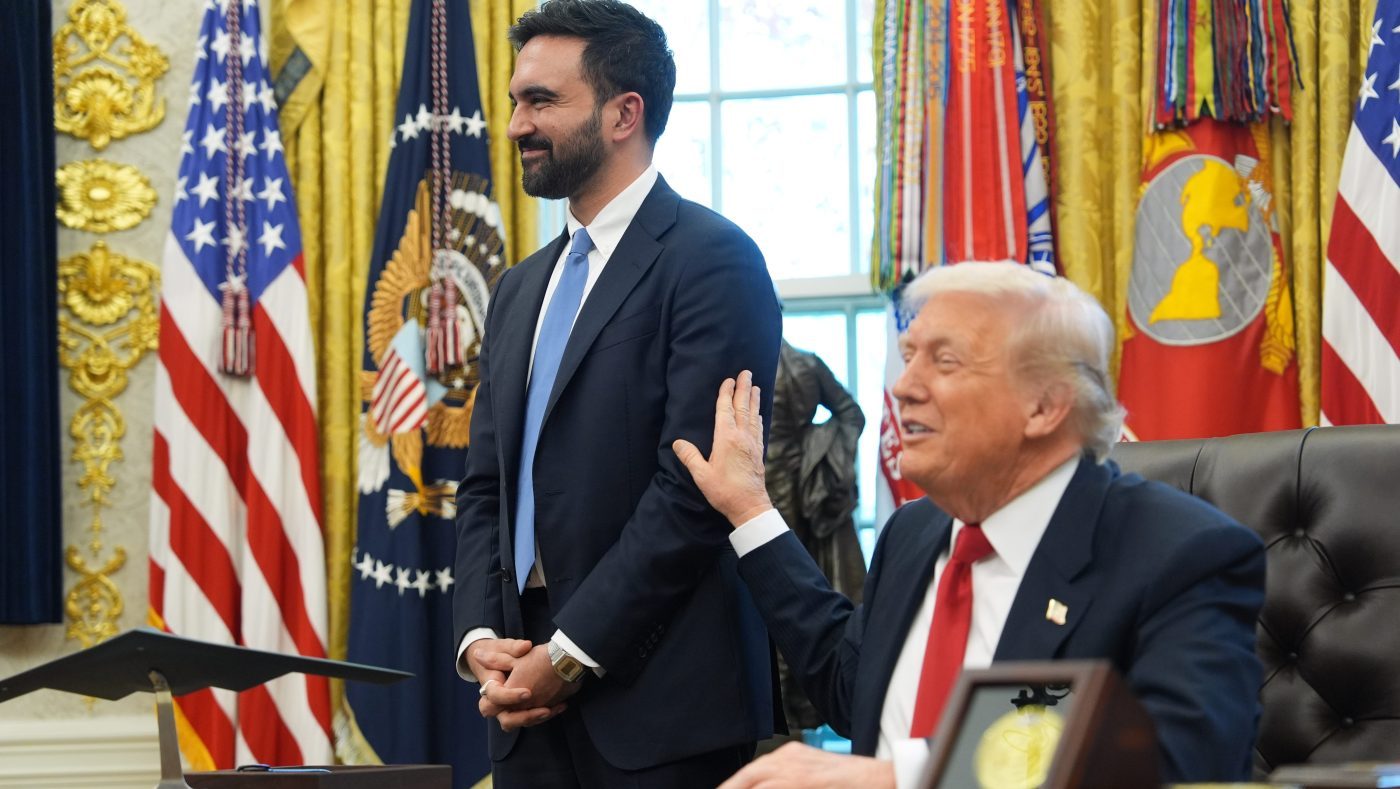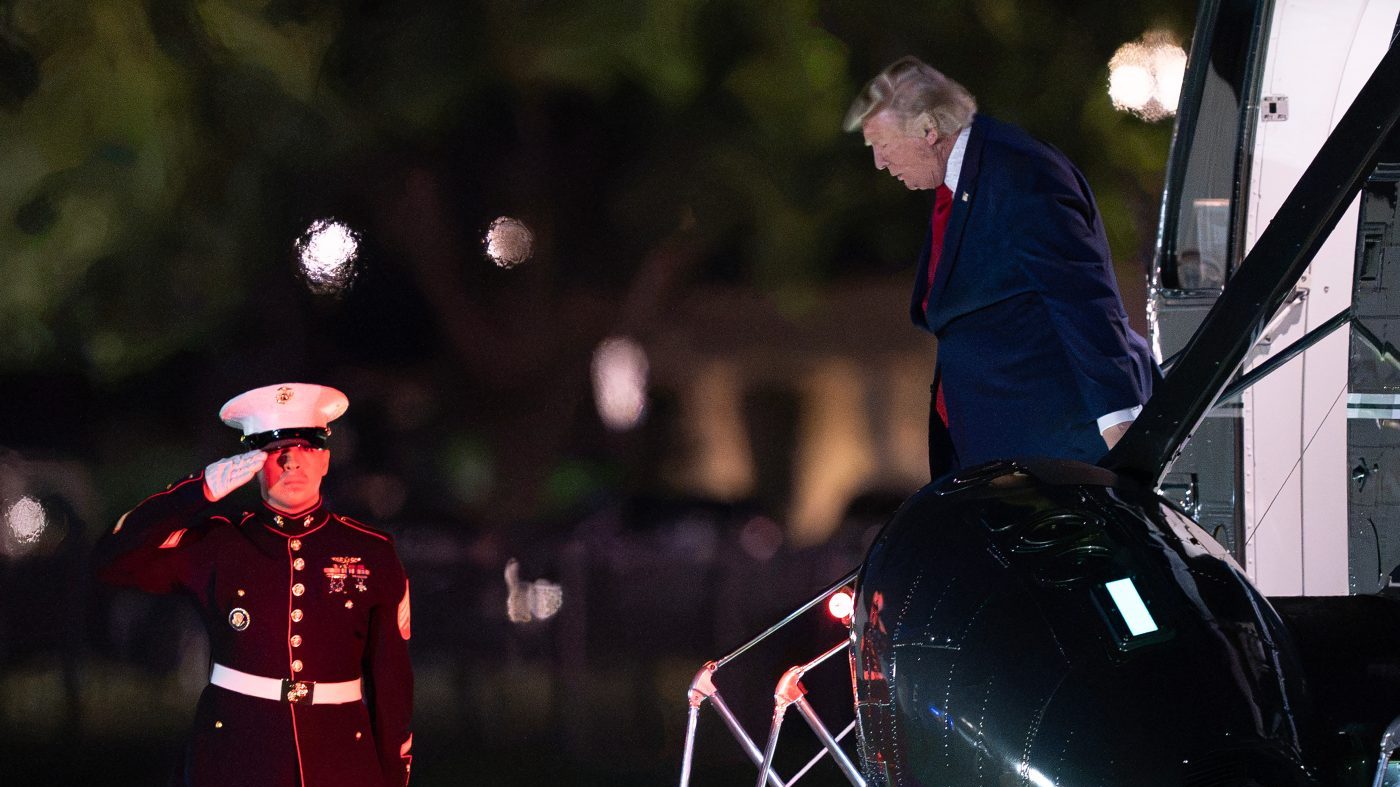
The White House on Wednesday pushed back against reports that President Trump was in peril when his Marine One helicopter flew within a mile of a passenger jet near Washington, D.C., on Tuesday. Spokesperson Kush Desai told NewsNation that the president was "never in harm's way," citing the skill of the pilots who operate the presidential helicopter.
According to reports from The New York Times and The Wall Street Journal, air traffic controllers at Reagan Washington National Airport (DCA) failed to halt commercial departures before Marine One lifted off from the White House en route to Joint Base Andrews in Maryland, where Trump was to board a flight to Los Angeles. The incident occurred shortly after 2:30 p.m. EDT.
The Federal Aviation Administration (FAA) confirmed a "momentary loss of separation" between the two aircraft, a breach of the standard 1.5-mile horizontal or 500-foot vertical buffer required by federal regulations. The FAA stressed that its controller was in contact with both pilots throughout the event and reiterated that the president was never in danger.
"We are continuing to review the incident and will implement any appropriate corrective actions based on our findings," an FAA spokesperson said, echoing the White House's assurance of safety.
The National Transportation Safety Board (NTSB) announced Wednesday that it has opened an investigation into the near-miss, adding to the scrutiny of air traffic operations at one of the nation's busiest airports. The incident comes just months after the deadly collision over the Potomac River in January 2025, when an American Airlines flight and an Army Black Hawk helicopter crashed, killing all 67 aboard. In the wake of that tragedy, the FAA had restricted military helicopter operations near DCA to essential missions only.
This latest close call raises fresh questions about the effectiveness of those restrictions and the broader airspace management around the capital. Some aviation safety experts have pointed to the need for more robust separation protocols, especially when presidential movements intersect with commercial traffic.
The White House has not indicated any changes to Trump's travel schedule, and the president continued his trip to Los Angeles as planned. The FAA's review, along with the NTSB probe, is expected to determine whether any procedural lapses or systemic issues contributed to the incident.
Political observers note that the episode could become a talking point for critics of the administration's handling of aviation safety, particularly given the recent history of near-catastrophes. However, the White House remains focused on downplaying the severity, with Desai emphasizing the professionalism of the Marine One crew.
As investigations proceed, the FAA has pledged to take corrective action if warranted, but for now, the official line is clear: the president was safe, and the system functioned as intended under the circumstances.