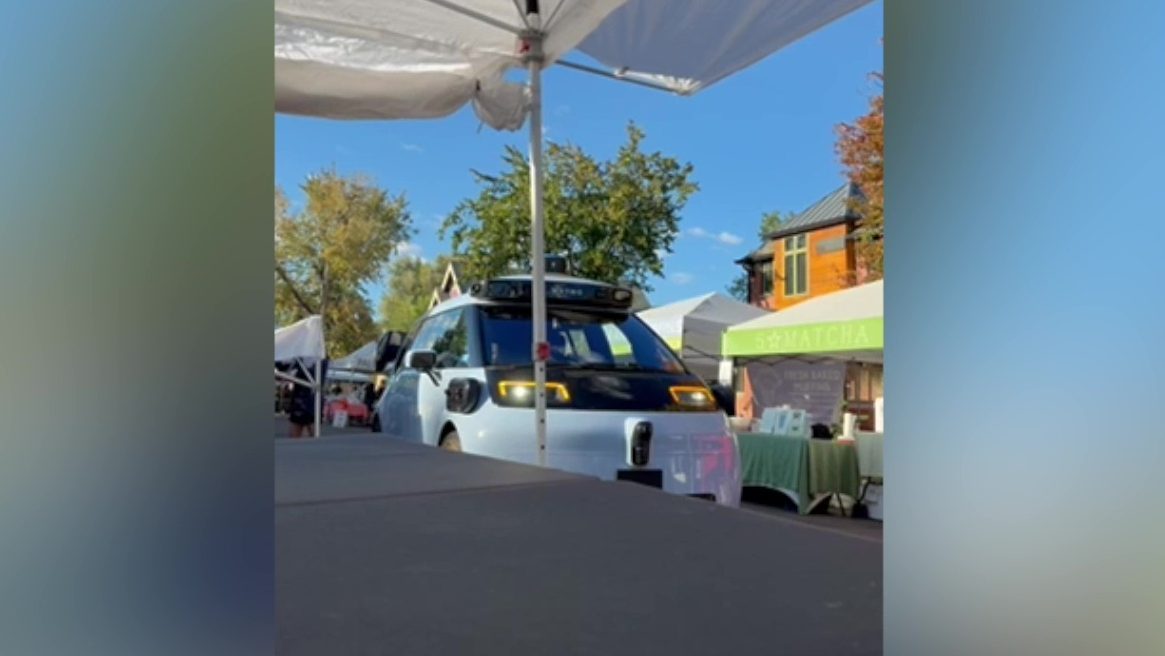
Newly surfaced video shows a Waymo robotaxi navigating a closed section of road and passing through the South Pearl Street Farmers Market in Denver as vendors were preparing for the day’s operations, according to footage reviewed by local media.
The incident occurred at approximately 8:15 a.m. Sunday, when roughly 160 vendors were in the middle of setting up their stalls. The self-driving vehicle entered the market area through a designated food truck zone, according to Nicole Jarman, the market’s production director.
“It entered through our food truck area,” Jarman said, describing the moment the robotaxi rolled into a space that was supposed to be off-limits to regular traffic.
The market is typically held on a closed street, making the presence of any vehicle—especially one operating without a human driver—a notable safety concern during the busy setup period. No injuries or collisions were immediately reported.
Waymo, a subsidiary of Alphabet, has been expanding its robotaxi services across several U.S. cities, but the company has faced mounting scrutiny over how its vehicles interact with pedestrians, temporary road closures, and unconventional traffic patterns. The Denver episode adds to a growing list of incidents in which autonomous vehicles have encountered situations that challenge their programming.
The timing of the event comes amid broader political and regulatory debates over self-driving technology. Lawmakers and federal agencies are weighing how to oversee an industry that operates across state and local jurisdictions, often with patchwork rules. As Trump’s market dependence shapes his AI stance, the pressure to balance innovation with public safety has only intensified.
In Denver, the city has already taken an aggressive posture on certain federal enforcement issues, as seen in its recent legal challenge to ICE presence at polling places. That combative stance could extend to how local officials respond to autonomous vehicle incidents if they perceive a threat to public safety.
Waymo has not yet issued a public statement on the Denver incident. The company has previously said its vehicles are designed to detect and avoid pedestrians, and that it continuously updates its software based on real-world events.
For now, the farmers market episode remains under review. But it raises fresh questions about whether self-driving cars are ready for the unpredictable, human-scale environments that define American streets—especially when those streets are temporarily transformed into community gathering spaces.