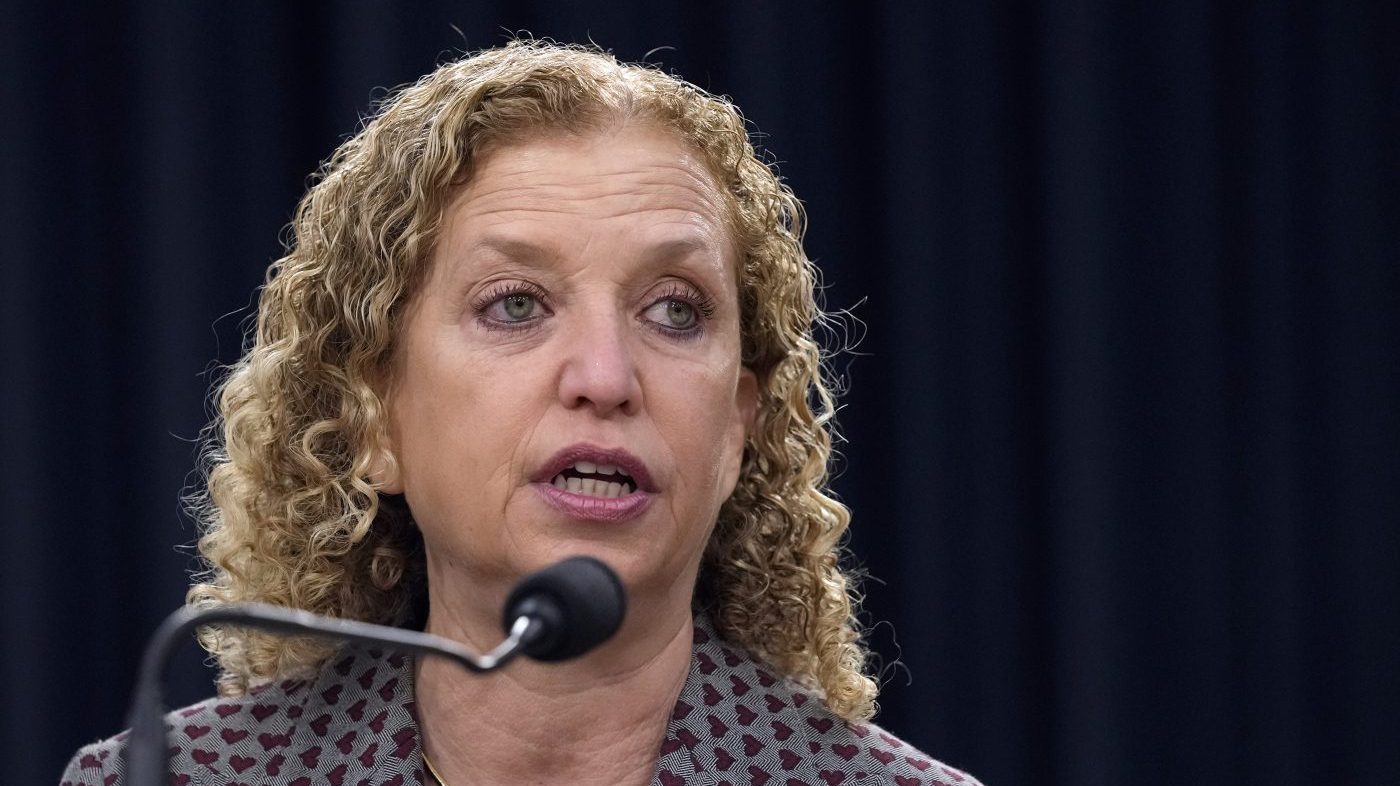
Representative Debbie Wasserman-Schultz (D-Fla.) on Monday asserted that President Trump's 2018 withdrawal from the Joint Comprehensive Plan of Action—the Iran nuclear deal negotiated under President Obama—left the Islamic Republic on the brink of a nuclear breakout, a claim that sharpens the partisan divide over the accord as negotiations with Tehran continue.
Speaking with CNN's Pamela Brown, Wasserman-Schultz criticized the emerging memorandum of understanding between the U.S. and Iran, which reportedly includes unfreezing Iranian assets and reopening the Strait of Hormuz. She argued that Trump's decision to scrap the JCPOA was a strategic blunder. “Let's not put the cart before the horse,” she said. “The reason that Donald Trump pulled us out of the JCPOA—of Obama's deal—is because he said it was not a good deal. But what it did was it at least put Iran years from nuclear breakout, and him pulling us out left them weeks from nuclear breakout.”
The Florida Democrat insisted that any final agreement must compel Iran to surrender its enriched uranium stockpile, dismantle its missile program, and forgo nuclear weapons capability. “If those things don't happen, this is a failure,” she warned.
President Trump, meanwhile, stated on Monday that Iran's enriched uranium would either be handed over to the United States or to the Atomic Energy Commission for destruction. The comments come as both sides negotiate a potential deal to end hostilities and reduce global energy prices by permitting oil shipments through the closed Strait of Hormuz. A proposed 60-day ceasefire extension would give Iran and the U.S. time to determine the fate of Tehran's uranium.
Secretary of State Marco Rubio echoed Trump's cautious optimism on Tuesday, saying the president will “make a good deal or no deal, so on that everyone should be assured. But that may take a little while, I mean, a few more days.” As Rubio warned that the Iran deal may take days more, Trump's hopes for a quick resolution appeared to fade.
However, the talks are on shaky ground after Iran's Supreme Leader Mojtaba Khamenei warned that U.S. military bases in the region are no longer safe following American “defensive strikes” on Iranian boats. Central Command said the vessels were attempting to lay mines and target missile sites. Khamenei declared, “America, in addition to no longer having a safe place for aggression and military bases in the region, is moving further away from its former status day by day.” Iran's foreign ministry accused the “U.S. regime” of violating the ceasefire and blamed Washington for “all the consequences resulting from these aggressive and unjustified actions.”
Trump has characterized the negotiations as “proceeding nicely,” though Gen. Seyed Majid Mousavi, commander of the Islamic Revolutionary Guard Corps Aerospace Force, dismissed them as a “pure loss” following Monday's strikes. The fragility of the talks underscores the broader political stakes: with Trump's disapproval rating hitting 58.3%, the Iran crisis is weighing heavily on his standing.