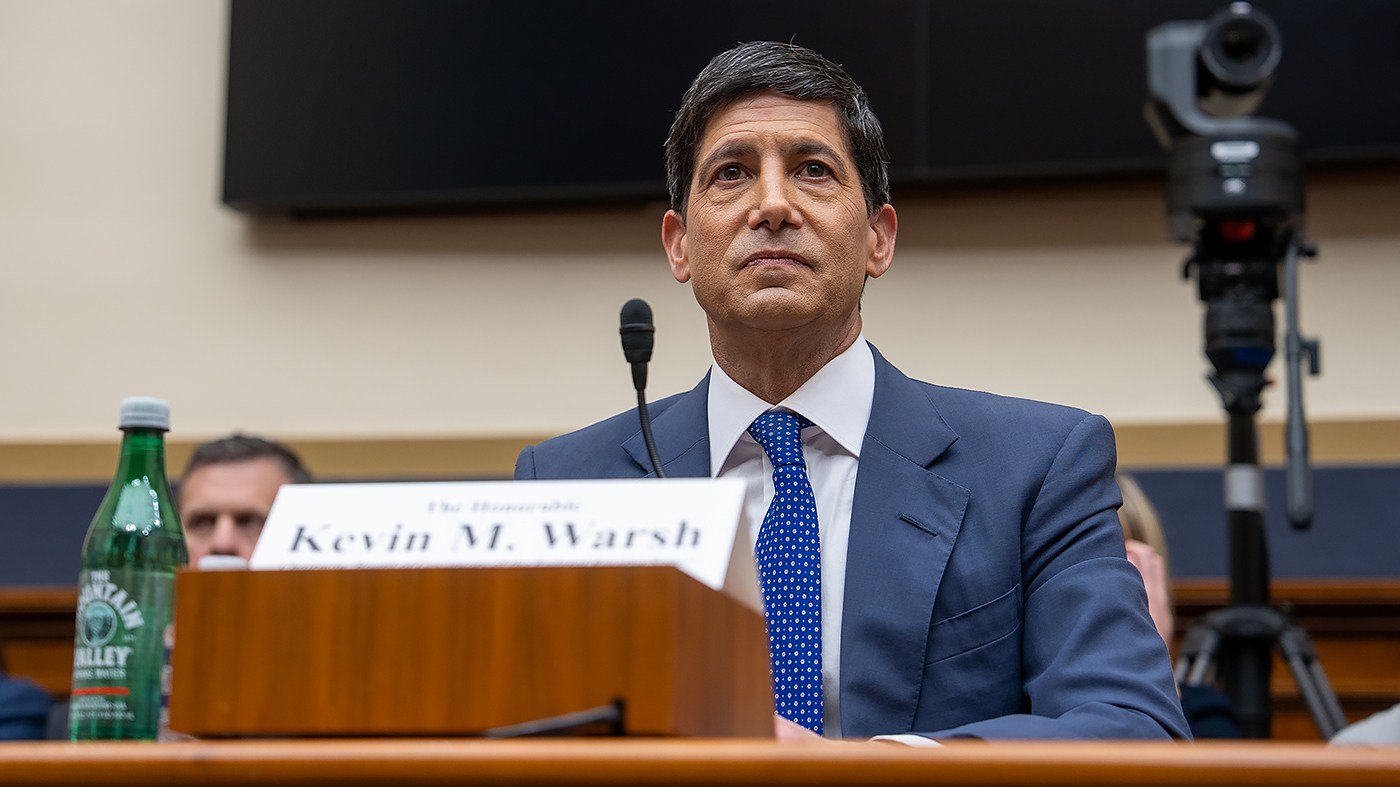
Federal Reserve Chair Kevin Warsh is set to deliver his first major policy address at the annual Jackson Hole symposium on Friday, a moment that investors and analysts are watching closely for any hint of the central bank's next move. With inflation running above target and bond markets flashing warning signs, the stakes for Warsh's remarks are unusually high.
Warsh, who took the helm at the Fed in late May, has deliberately pared back the central bank's communications, a sharp contrast to his predecessor's more talkative approach. This strategy has left markets guessing, and his upcoming speech is drawing outsized attention.
“Historically, Jackson Hole has been looked at as this kind of utopic platform where the chairman has the opportunity to announce notable changes or new directives and policy,” said Lindsey Piegza, chief economist at Stifel Financial. “But now we’re talking about Chair Warsh, and he has shied away from offering any forward guidance and limiting Fed communication overall.”
The bond market has been particularly unsettled. The yield on the 30-year Treasury hit a 19-year high last week, surpassing 5.3 percent for the first time since 2007. It dipped after Treasury Secretary Scott Bessent announced a plan to double the government's buyback of long-term debt, but then spiked again, settling at 5.18 percent by Thursday afternoon.
“It’s not so much that investors expect clear signals from Warsh, but they would like to get some idea of the Fed’s reaction function — how it would respond to changing economic conditions,” said Ian Katz, managing director at Capital Alpha Partners.
The Fed is also wrestling with inflation that remains stubbornly above its 2 percent target. The personal consumption expenditures price index, the Fed's preferred gauge, held at a 3.7 percent annual rate in July, unchanged from June and down from May's 4.1 percent peak. Meanwhile, the July jobs report showed a loss of 23,000 positions, and second-quarter GDP growth slowed to a sluggish 1.5 percent.
“The data is so uneven and so cuspy, if you will, that it would be so beneficial to have a better understanding of what the chairman is viewing and his interpretation of the data,” Piegza added.
At the Fed’s July meeting, three officials dissented from the decision to hold rates steady, pushing for a quarter-point hike. Markets currently assign a 66 percent probability that rates stay put in September, with a 34 percent chance of an increase, according to CME's FedWatch tool.
President Trump has continued to call for lower rates, although he has praised Warsh's performance, blaming instead “people put in by Obama, Biden, and me” on the Fed's board. Warsh is widely expected to maintain his cautious stance, offering little in the way of concrete policy guidance.
“He'll emphasize price stability in the long run and be somewhat vague or meticulously, studiedly vague on the particularities in the near term,” predicted Toomas Laarits, an assistant finance professor at NYU's Stern School of Business.
Piegza echoed that sentiment, noting that investors are unlikely to get “a window into what he views as the appropriate pathway for policy, let alone a concrete sort of direction or commitment for rates.” She added, “It’s not the effective hand-holding, inside baseball, whatever you want to call it, that investors really need at this point, particularly given the incredible amount of volatility in the marketplace.”