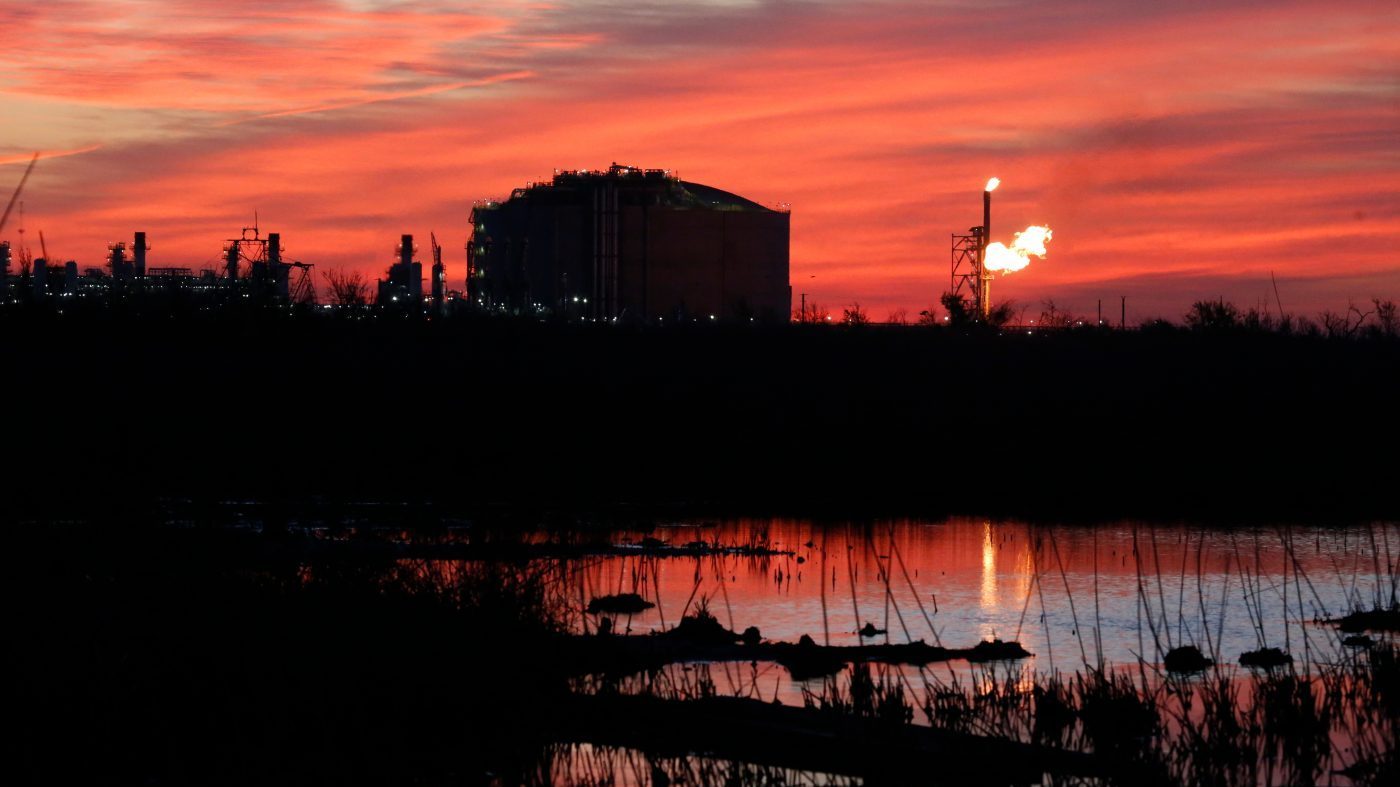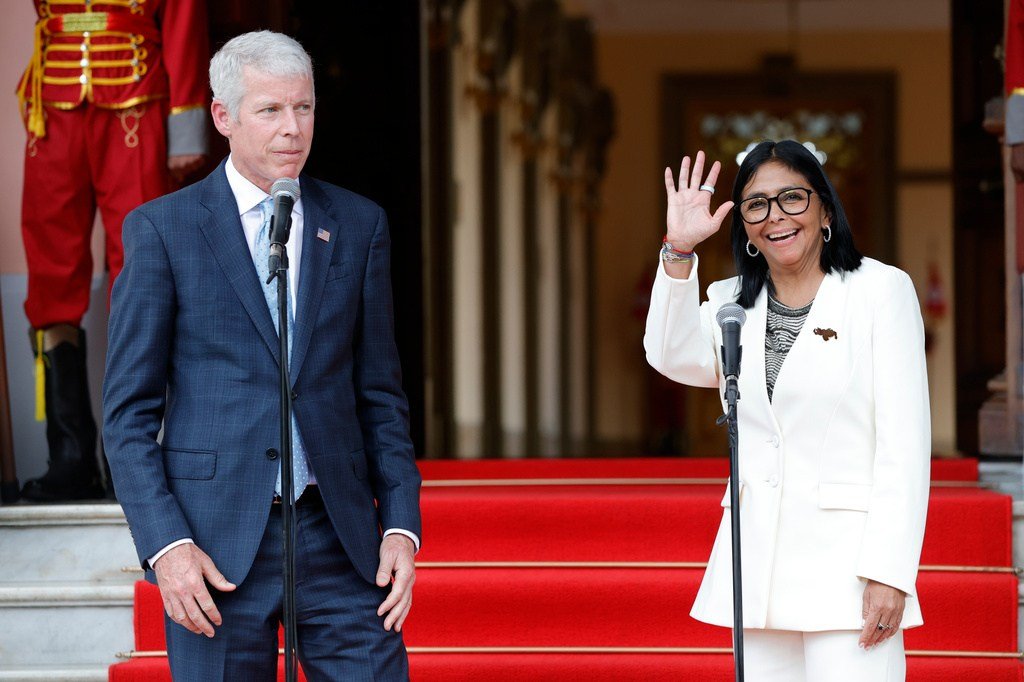
Last week's announcement that Washington would take a 55 percent stake in a new venture controlling over 65 billion barrels of Venezuelan crude—under concessions U.S. officials suggest could last a century—was initially viewed as a regional development. A post-Maduro resource arrangement in America's backyard, perhaps. But the significance extends far beyond Caracas.
This deal is not just about Venezuela; it is a template. It provides a quiet answer to a question that has lingered over Iran policy for months: What does this administration actually consider a win?
The answer begins with a straightforward observation: Washington is waging two campaigns against oil-producing adversaries, and they increasingly resemble two versions of the same strategy. In Venezuela, the U.S. employed force—a military operation, a captured president, and an interim government willing to sign away a century of oil-field access within seven months. In Iran, such a decapitation was never plausible. Six months into open conflict, Tehran has absorbed the pressure and has not cracked.
So Washington shifted to the tool it has left: economic strangulation. Treasury Secretary Scott Bessent's Operation Economic Outcast mirrors the Venezuela playbook in tone and ambition, promising to sever “every economic lifeline” sustaining Tehran—with China, Iran's largest oil buyer, placed squarely in the crosshairs.
That detail is the real connective tissue. Both operations share a secondary objective that has nothing to do with ideology and everything to do with market power: cutting China off from discounted, sanctions-adjacent crude. Venezuela's joint venture displaces China as the biggest customer of its state oil company. The Iran sanctions campaign targets Beijing's position as Tehran's largest trading partner.
This, more than any sweeping theory of a “Trump doctrine,” explains his current actions. And this thesis can be tested: watch whether secondary-sanctions deadlines for Chinese buyers and shippers are actually enforced, or quietly softened once Beijing signals real retaliation.
The more revealing question is what Venezuela tells us about the terms Washington will seek if Iran is eventually brought back to the table. Sanctions are usually sold as leverage toward narrow outcomes: ending the war, rolling back the nuclear program. But Venezuela shows that when this administration holds real leverage over an oil-producing state, it doesn't stop at policy concessions. It converts leverage into ownership.
If Iran returns to negotiations under economic exhaustion, the model on Washington's desk won't be the 2015 nuclear-deal framework of sanctions relief for inspections. It will look more like Caracas: American capital and off-take rights embedded directly in Iranian energy infrastructure, framed as reconstruction investment rather than war spoils—and sold domestically as costing U.S. taxpayers nothing.
That vision deserves skepticism. Iran is not Venezuela. There is no captured leader, no Delcy Rodríguez-style interim government willing to sign a century-long concession. Any equity transfer would require either a sweeping settlement far beyond anything currently on the table or an outright regime collapse, neither close to a base case today.
History cuts against the idea too. Sanctioned states under real strain—Iran under the 2015 deal, Iraq in the 1990s, Russia since 2022—have endured contraction, inflation, and discounted exports before surrendering core state assets. Equity-for-relief has no real precedent absent a compliant client government, which Washington has in Caracas but not in Tehran.
Iran's oil sector is also far less degraded than Venezuela's, and Tehran has spent two decades building alternatives to reduce its dependence on Washington's goodwill. Any deal resembling Venezuela's would collide with a deeper obstacle still: the legacy of the 1951 nationalization under Mohammad Mossadegh, which made resource sovereignty politically sacred across Iran's factions, a barrier Venezuela's constitutional language doesn't approach.
Even Venezuela's own precedent may not survive. Its constitution assigns the state primary ownership of hydrocarbons, and a century-long concession signed by an unelected government is exactly the kind of claim a future elected one could void. A model that may not endure in Caracas is a shaky template to export to Tehran.
These differences matter, and they're why nothing resembling the Venezuela deal is likely in Iran anytime soon. But they don't invalidate the comparison; they define it. The honest version of this argument isn't that Washington will replicate Caracas in Tehran. It's that the Venezuela deal has given this administration a working precedent for converting leverage into resource control when political conditions allow it—tested once, sold successfully at home—and that precedent will shape how negotiators define a favorable outcome the next time Washington holds real cards against an oil state, Iran included.
The question worth watching isn't whether Tehran signs a century-long concession next month. It's whether the language of “reconstruction investment” and “sanctions-relief partnership” begins showing up in any future Iran negotiating track. If it does, Venezuela will be the reason we already know what it means.