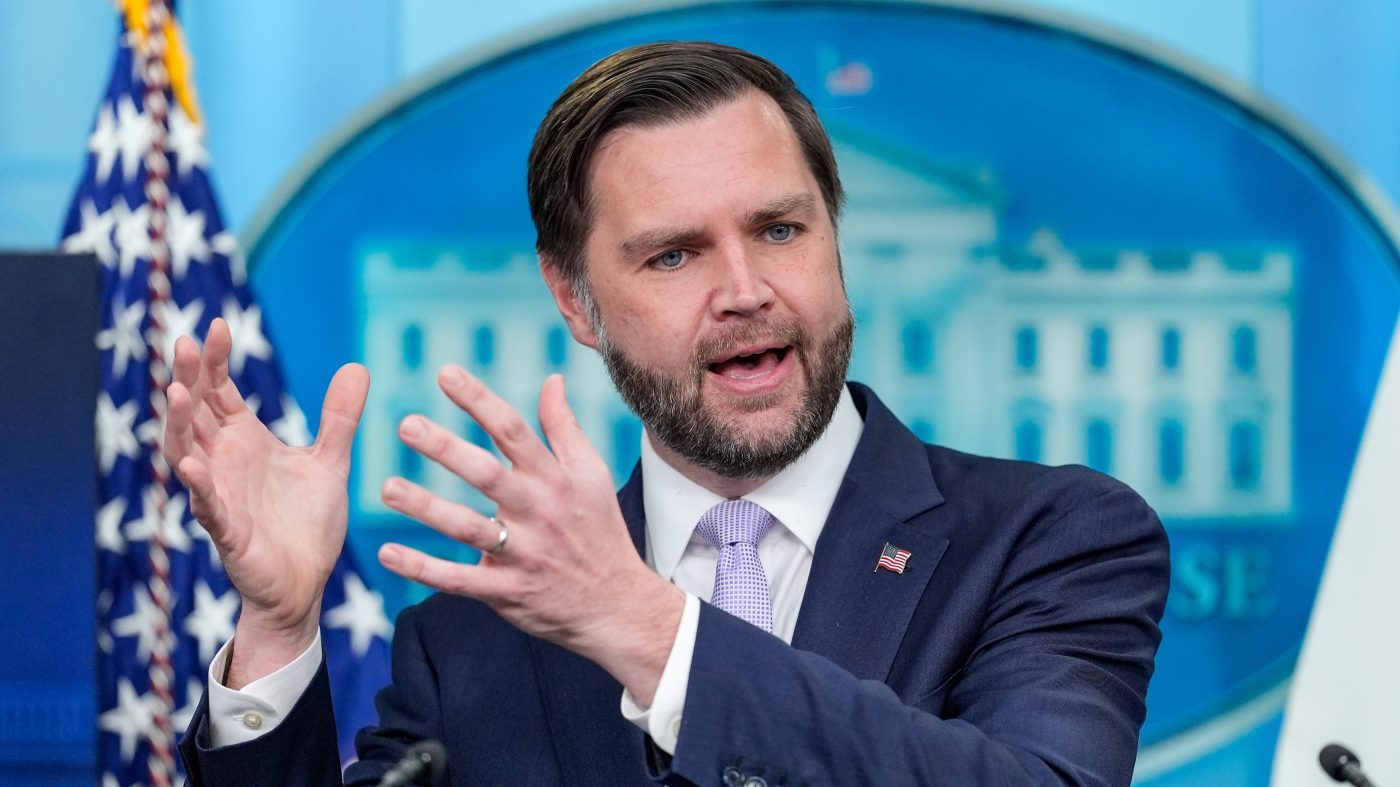
Vice President JD Vance on Tuesday praised Pope Leo XIV’s warnings about artificial intelligence, calling them “profound” as the Vatican released the pontiff’s first encyclical. The 42,000-word document, titled “Magnifica Humanitas,” marks a significant intervention by the first American pope into the debate over AI’s societal impact.
In an interview with NBC News, Vance said he had scanned “bits and pieces” of the encyclical, which was published Monday. “What I read of it sounds very profound, and the sort of thing that you would expect and hope from a leader of the church,” he said. “The thing about morality is that the principles never change, but the way you apply those principles does, because the world changes, right?”
The encyclical calls on policymakers to confront the rapid spread of AI with “clarity to establish adequate regulatory tools capable of upholding justice and curbing the distorting effects of technological power.” The pope wrote that technology “should not be considered, in itself, as a force antagonistic to humanity,” but insisted that society must ensure new tools are “oriented toward the good.” He added, “Calling for prudence, rigorous evaluation and even, at times, a slower pace in adopting AI does not mean opposing progress; instead, it is an exercise of responsible care for the human family.”
The pontiff also urged “more active political involvement that is capable of slowing things down” regarding AI, arguing that communities must be “able to participate and ask questions” about the technology and its uses. This call comes as the Pentagon moves aggressively into AI. In March, the Defense Department struck agreements with eight companies—including SpaceX, OpenAI, Google, Nvidia, Microsoft, Amazon Web Services, and Oracle—to deploy advanced AI on classified networks for lawful operations. Separately, U.S. Central Command chief Adm. Brad Cooper said American forces have used AI tools to “make smarter decisions” during the conflict with Iran.
Vance noted that AI in warfare highlights the need to “update” the Catholic Church’s “Just war” doctrine. The church’s catechism, published under Pope John Paul II in 1992, already states that the “power of modern means of destruction weighs very heavily” in assessing the legitimacy of defensive military action. “New ways of human beings interacting with one another, so you have to kind of rethink the entire Catholic social teaching in light of the new world that we live in,” Vance said. “And I think that’s exactly what the pope is trying to do. So I’m glad that he did it.”
The Trump administration has taken a hands-off approach to AI regulation. President Trump has emphasized the need to unleash American companies in the global race against China. Last week, he declined to sign an executive order that would have created a process for AI firms to voluntarily submit their models for government testing before public release. Trump told reporters that he didn’t want “to get in the way” of the U.S. lead over China. Similarly, Vance criticized “excessive regulation” of AI early in his tenure, arguing it “could kill a transformative industry just as it’s taking off.”
Yet Vance has also voiced concerns about non-economic impacts. In a March 2025 podcast with Ross Douthat of The New York Times, he said, “What I do really worry about is does it mean that there are millions of American teenagers talking to chatbots who don’t have their best interests at heart?” The vice president’s remarks reflect a balancing act between promoting innovation and addressing the ethical dilemmas that Pope Leo XIV’s encyclical now thrusts into the political spotlight.
As the debate over AI intensifies, the pope’s document adds a powerful moral voice. For Vance, who has previously led efforts to target fraud in Democratic-run states, the encyclical offers a framework for rethinking technology’s role in society. Whether the administration will heed its call for restraint remains an open question.