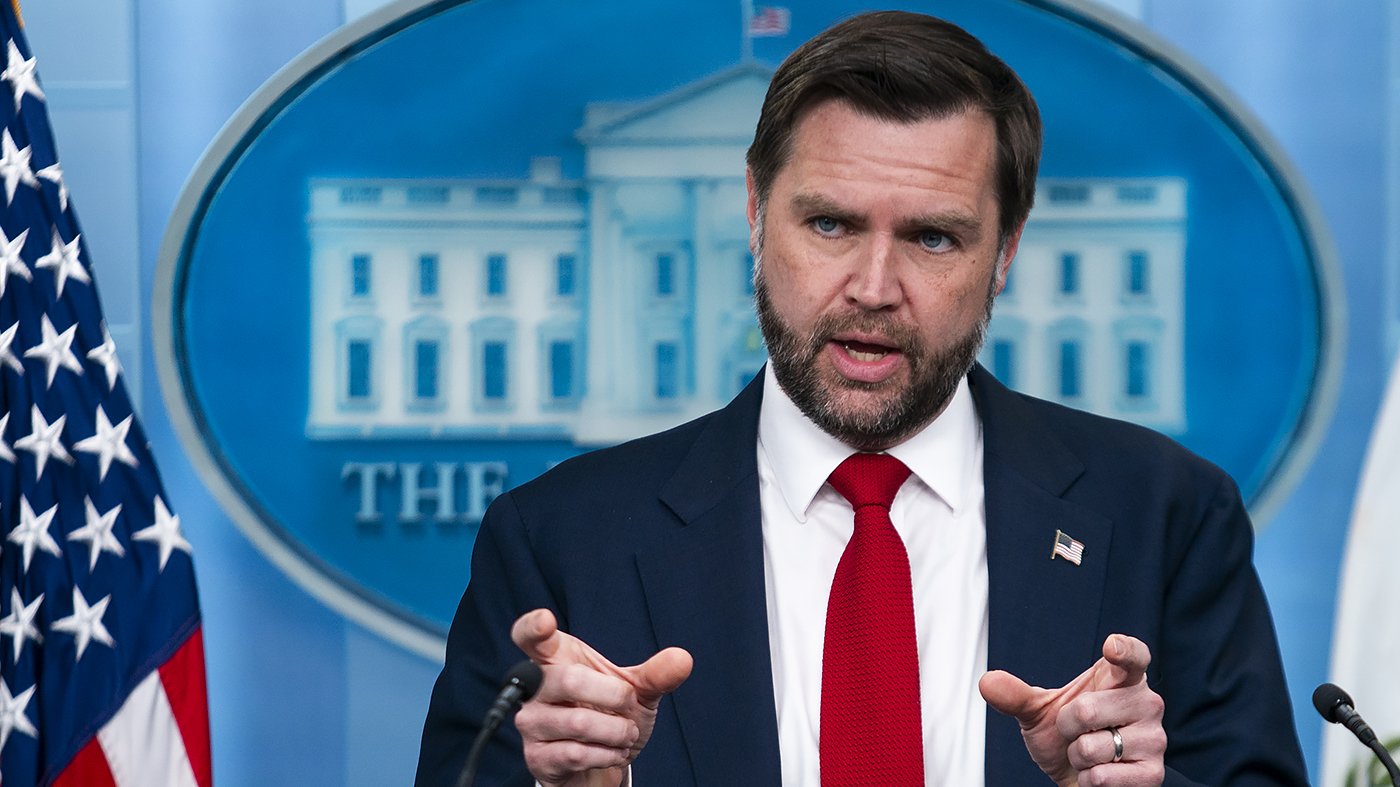
Vice President Vance pushed back forcefully Thursday against a wave of Republican criticism over the U.S.-Iran memorandum of understanding, as he confirmed the 60-day window for the next phase of nuclear talks is set to begin.
“So many of what I’ve read or heard that people believe about this is fundamentally untrue,” Vance told reporters, pushing back on what he described as misinformation surrounding the agreement.
The vice president stressed that the accord is a memorandum of understanding, not a final deal, describing it as a framework that rewards good behavior and punishes violations. He urged skeptics to “have a little faith” in President Trump’s judgment.
“The idea that he is going to strike a deal that’s been bad for the American people, it’s preposterous,” Vance said. “He is the person who has had the courage to fundamentally transform our relationship with Iran and with a lot of other countries over the last year and a half.”
Vance argued that once lawmakers understand the administration’s negotiating posture, they will see the MOU as “an excellent thing for the American people.” He pointed to support from Sen. Lindsey Graham (R-S.C.), a longtime Iran hawk, as evidence that the deal has merit. “That’s part of our job,” Vance said. “We’ve got to tell the story about what this means for Americans, how it’s going to make all of us safer and more prosperous.”
The pushback comes as a growing number of Republican lawmakers and conservative figures have denounced the agreement, arguing it provides Iran with a critical economic lifeline without securing verifiable concessions on its nuclear program. Sen. Ted Cruz (R-Texas), usually a close ally of the administration, was blunt in his criticism. “History teaches that giving billions of dollars to theocratic lunatics who want to murder us is not a good idea. I think the president is receiving some very poor advice on this deal,” Cruz told The Hill on Wednesday.
Senate Armed Services Committee Chair Roger Wicker (R-Miss.) also voiced concern, issuing a statement Thursday warning that the MOU “negotiates away the victories of Operation Epic Fury in ways that are completely out of step with the President’s goals.” Wicker added, “President Trump has pursued peace through strength. I hope the intermediaries working on this deal are not undermining that objective.”
Vance said the White House plans to brief lawmakers on the deal “very soon,” but maintained that the Treasury Department does not need congressional approval to waive oil sanctions on Iran under the MOU. That position has drawn additional scrutiny from critics who see it as an end-run around legislative oversight.
The next round of U.S.-Iran talks is tentatively scheduled for this weekend in Switzerland. Vance said he expects to become directly involved in negotiations soon, though he was uncertain whether he would travel this weekend. The administration officially starts the 60-day clock on Friday, with the goal of hammering out a broader peace deal within two months. Trump said Wednesday that the deadline is not rigid, and he is open to extending talks as long as Iran is “behaving.”
Vance’s defense comes amid deepening Republican unease. For more on the internal backlash, read about how Vance plans to address the Iran deal backlash as GOP hawks revolt. The administration’s stance on sanction waivers has also stirred debate; see Vance’s assertion that Treasury can waive Iran oil sanctions without Congress.