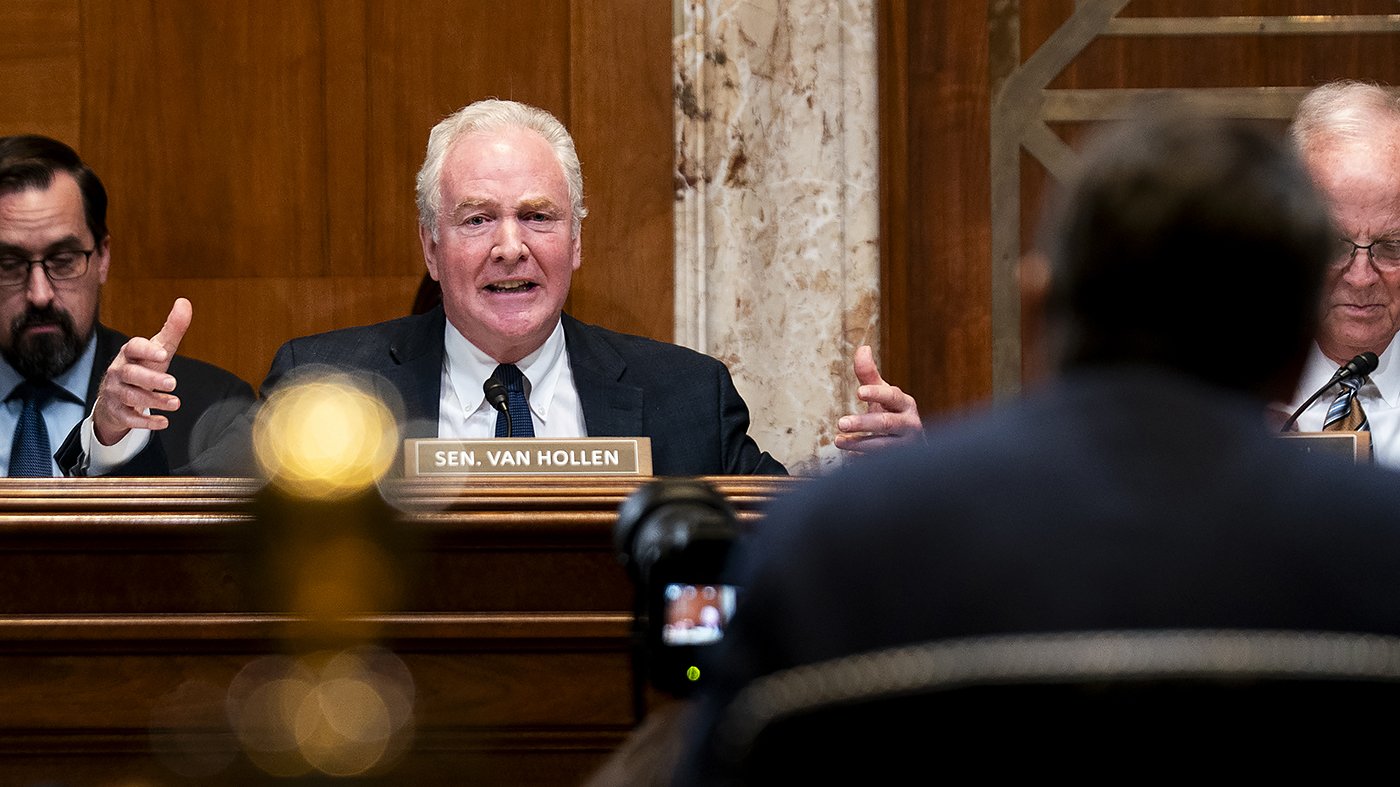
Sen. Chris Van Hollen (D-Md.) threw his support behind Abdul El-Sayed on Thursday, bolstering the progressive candidate in Michigan's Democratic Senate primary. The endorsement from Van Hollen, a senior Democrat on the Senate Budget Committee, aligns him with Sen. Bernie Sanders (I-Vt.), who has also backed El-Sayed in the crowded race to replace retiring Sen. Gary Peters (D-Mich.).
El-Sayed, who previously led the Department of Health, Human and Veterans Services in Wayne County, Mich., is vying for the Democratic nomination against Rep. Haley Stevens (D-Mich.) and state Sen. Mallory McMorrow (D). The primary winner will likely face former Rep. Mike Rogers (R-Mich.), the GOP frontrunner who narrowly lost to Sen. Elissa Slotkin (D-Mich.) in 2024.
In a statement released by El-Sayed's campaign, Van Hollen argued that the Senate needs "fighters" willing to "dismantle a broken status quo that isn’t working for the American people" and confront the Trump administration. "That’s why I’m endorsing Abdul El-Sayed for Senate in the great state of Michigan," the Maryland Democrat said. "Abdul recognizes that our health care system is broken, that costs are too high, and that our economy isn’t working for working Americans."
The endorsement underscores the ongoing ideological struggle within the Democratic Party as progressive candidates gain traction in key primaries. El-Sayed's campaign has centered on Medicare for All, a Green New Deal, and challenging corporate influence in politics—positions that have attracted support from the party's left wing. This dynamic echoes recent primary upsets in New York, where left-wing candidates ousted incumbents, deepening the party's internal rift over strategy.
Van Hollen's backing arrives amid a broader progressive push in Michigan, a state that could determine Senate control. Peters's retirement opens a competitive seat in a battleground where Democrats have struggled to maintain unity. The race has drawn national attention, with groups like the Democratic Socialists of America setting their sights on 2028 after primary upsets, signaling a long-term shift in the party's base.
El-Sayed has also faced attacks from some corners labeling him a "communist," a charge that other progressive candidates have refused to engage with. Despite this, his campaign has emphasized grassroots fundraising and a message of systemic change, arguing that Michigan voters are ready for a break from establishment politics.
Stevens and McMorrow have cast themselves as pragmatic progressives capable of winning in a general election, pointing to their records in Congress and the state legislature. The primary, set for August, is expected to be one of the most closely watched contests of the 2026 cycle, with implications for both the Democratic agenda and the party's electoral prospects.
Van Hollen's endorsement may also signal broader establishment concerns about the direction of the party. While he has often aligned with leadership, his support for El-Sayed suggests a willingness to embrace insurgent candidates in certain races—a move that could reshape alliances ahead of future leadership battles.