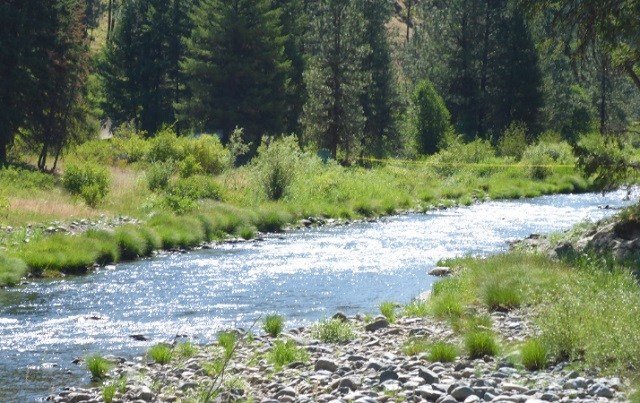
The U.S. Forest Service has publicly released a long-classified report from 1982 detailing an investigation into reported Bigfoot tracks in Oregon's Umatilla National Forest. The document, made available in October, offers a rare official look at how federal land managers handled a legendary creature sighting.
According to the report, dated June 18, 1982, Forest Service biologist Rodney Johnson led an on-site probe of tracks found in the Mill Creek Watershed. Johnson examined three separate locations, designated Site A, Site B, and Site C, with the first two situated along the Low Creek Trail and the third near an unnamed path atop Low Ridge.

At Site A, roughly 1.5 miles above Mill Creek, Johnson documented tracks extending about 25 feet down the trail. He made plaster casts of two prints, noting the others were too faint to replicate. Site B, located about 2.5 miles above Mill Creek near a bog, contained approximately 18 prints over a 40-foot stretch. Investigators never visited Site C because of their conclusions at Site B and time constraints.
Johnson’s report concluded that the tracks were not made by a large, two-legged creature. He cited several inconsistencies: the stride remained a constant four feet regardless of slope, which contradicted natural gait changes; the tracks did not sink into mud as deeply as his own boots did; and the prints appeared isolated, with no connecting trail, unlike the numerous bear trails in the area.
Further scrutiny revealed that at Site B, forest litter like pine needles had been brushed aside before the prints were made, and the toe impressions lacked the distinct pads expected of a Bigfoot. Johnson also noted an absence of heel or toe slippage on steeper terrain, suggesting the prints were created by a foot rocking back and forth on the trail.
Despite these anomalies, Johnson acknowledged the craftsmanship involved. "If the tracks were faked, someone went to a great deal of trouble and detail," he wrote. "The 'print' marks on the foot would have to be very hard to duplicate. They appear very natural. I would almost suspect a case made of an actual foot would have had to be used to make the 'fake' feet."
The report was supplemented by a memo from a U.S. Border Patrol agent in Bellingham, Washington, addressed to Forest Service District Supervisor Wayne Long. The memo dismissed the tracks as a hoax, suggesting they were made using soft plaster or a rubber-coated foot. The agent speculated the perpetrator was someone with local access, a keen interest in Bigfoot lore, and the physical size to operate the device.
The documents were released after the Forest Service received at least three public records requests, a threshold that triggers publication in its National Reading Room. A spokesperson for the U.S. Department of Agriculture, which oversees the Forest Service, acknowledged that Bigfoot reports are "routinely" received, adding that such legends are part of the Pacific Northwest's cultural heritage. The agency neither endorses nor refutes the existence of such creatures, but appreciates public interest in exploring public lands.
This release comes amid broader federal transparency efforts, including recent disclosures of 9/11 records. While the Bigfoot report is unlikely to alter national policy, it offers a glimpse into how federal agencies handle folklore and public curiosity.