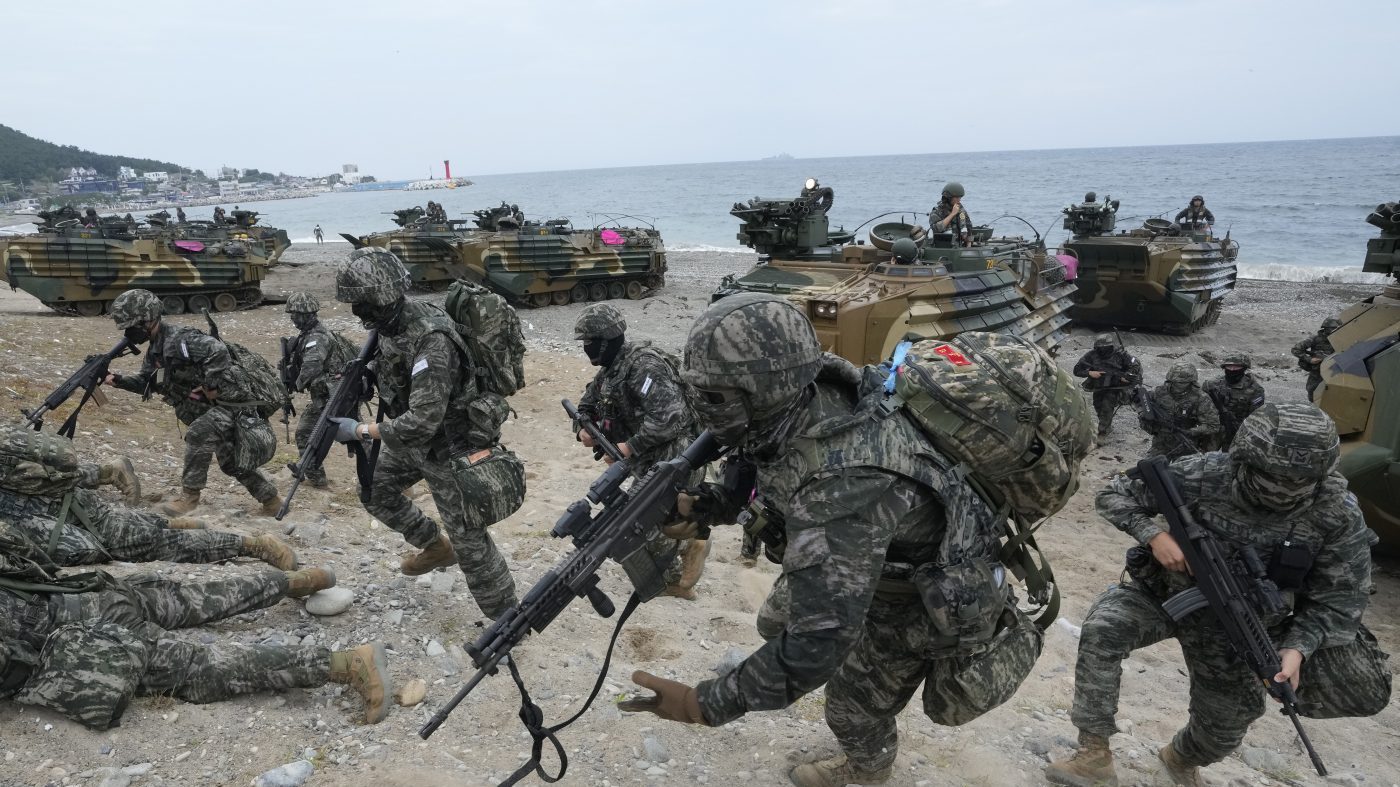
The Pentagon has scrapped a major joint amphibious landing exercise with South Korea scheduled for September, citing the strain of ongoing U.S. operations in the Middle East, Seoul's defense officials confirmed Monday.
A spokesperson for the South Korean marine corps told reporters that the U.S. Marine Corps informed Seoul in June that its ability to participate in this year's Ssangyong exercise would be limited due to the situation in the region. The cancellation underscores how the widening conflict with Iran is stretching American military resources and reshaping long-standing alliances in the Indo-Pacific.
Despite the abrupt halt, both Washington and Seoul are in discussions about eventually reviving the drill, the spokesperson added. The Pentagon deferred questions to the Marine Corps, which had not responded to requests for comment at press time.
Ssangyong, which translates to "Twin Dragons," is a biennial exercise that has run for decades, involving more than 10,000 American and South Korean marines rehearsing amphibious landings with warships, aircraft, and ground forces. Its cancellation follows President Trump's decision last week to truncate a separate joint exercise, Ulchi Freedom Shield, cutting it from 11 days to five. Trump attributed that move to a desire to restart talks with North Korea and to Seoul's refusal to contribute to the U.S. war effort in Iran.
The back-to-back reductions have raised concerns among allies about the reliability of American security commitments in Asia. The earlier cut to Ulchi Freedom Shield already rattled regional partners, and the cancellation of Ssangyong compounds those anxieties, especially as North Korea has dismissed any prospect of renewed diplomacy with Washington.
Pyongyang routinely condemns joint U.S.-South Korean drills as provocative rehearsals for invasion. In recent statements, North Korean officials have said there are no plans for future talks with the Trump administration, further complicating the diplomatic calculus.
The September exercise had previously been canceled during Trump's first term, with the White House at the time citing cost and the need to preserve momentum with North Korean leader Kim Jong Un. It was reinstated in 2023 under the Biden administration as part of a broader effort to reinforce deterrence on the Korean Peninsula.
Now, with the Pentagon's focus increasingly drawn to the Middle East, the reversal marks a significant shift in U.S. force posture. Defense analysts note that the cancellation could embolden North Korea and strain the U.S.-South Korea alliance at a time when regional stability is already fragile.
The move also highlights the broader tension in U.S. strategy between maintaining a robust presence in Asia and responding to simultaneous crises elsewhere. As the Pentagon weighs resource allocations, allies are watching closely to see whether further reductions in joint training follow.