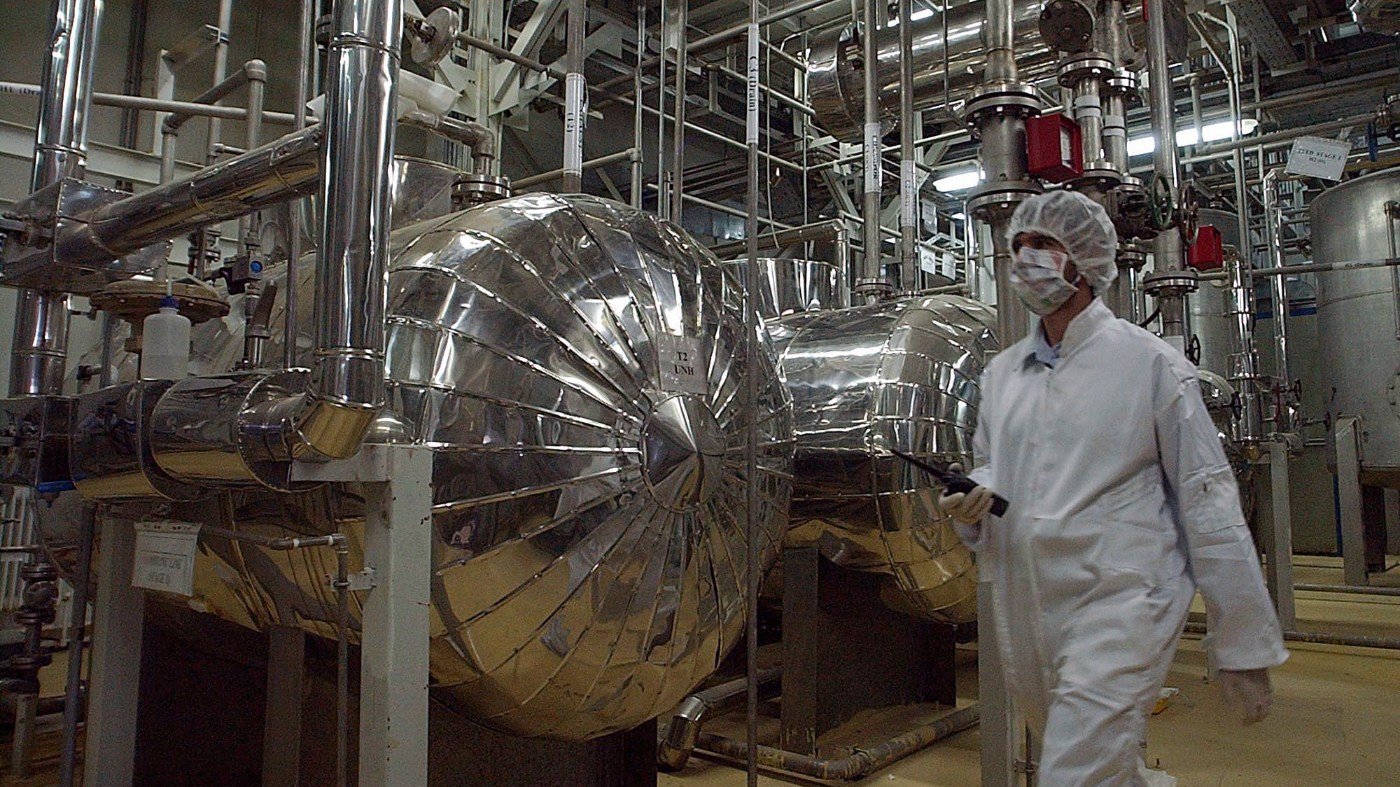
On the same day three leaders with opposing interests confirmed the same fact, Washington declared a diplomatic breakthrough. Pakistan's Prime Minister Shehbaz Sharif said ballistic missiles “were never a subject of discussion.” Iranian President Masoud Pezeshkian insisted the missile file “never will be” part of any agreement. And President Trump, standing at the G7 in Evian, dismissed missiles as weapons that “hurt a little location” but “don’t blow up the planet.”
Three actors who agree on almost nothing acknowledged the same structural omission. That simultaneity is not background noise. It is the story.
The Missing Line
The U.S.–Iran Memorandum of Understanding contains one weapons-related commitment: Iran agrees not to develop nuclear weapons. Ballistic missiles — the delivery system for those weapons, the arsenal Iran has used repeatedly across the region, and the backbone of Tehran’s deterrent doctrine — are not mentioned once.
This omission is not a footnote awaiting later negotiation. It is the price that made the signature possible — and therefore the agreement’s defining structural feature.
Washington has not sequenced the threat. It has surrendered half of it.
By excluding ballistic missiles from a 14-point framework, Washington has done something structurally consequential: it has separated the warhead from the vector, treating them as distinct negotiating tracks when Iran has always treated them as a single, integrated deterrence architecture.
A nuclear program without missiles remains a science project. A missile program without nuclear warheads is an operational military force Iran can — and does — use today.
The October 2024 ballistic salvos saturated Israel’s layered air defenses at scale, exposing the limits of interception even when most missiles are shot down. The MOU now shields that demonstrated capability from further pressure. The omission does not reduce regional threat. It grants the first internationally validated exemption for Iran’s primary conventional strike weapon.
Asymmetry at the Table
Iran came to the table with its missile program intact and operational. Washington came needing a visible agreement more than Tehran needed concessions. That asymmetry shaped the outcome. The administration had already framed missiles as a “second track” before negotiations concluded — Tehran simply held the line Washington had pre-conceded. Including missiles would have required allied consultation with Israel, Saudi Arabia and the UAE, which would have slowed or collapsed the talks. Speed was prioritized over architecture. And Trump’s own public framing made the concession easier to extract: if missiles “don’t blow up the planet,” excluding them becomes a feature, not a flaw.
Iran exploited that logic precisely and deliberately.
Financial and Military Implications
Iran expects access to roughly $10–16 billion in frozen assets during the 60-day window. Sanctions relief without missile constraints does not reward compliance — it subsidizes the production base and component pipelines that multiply Iran’s strike power. Iran’s missile industrial base is domestically rooted and sanctions-resistant at the manufacturing level. What it lacks is access to dual-use components: guidance systems, propellant precursors and advanced electronics. Sanctions relief addresses precisely that gap. Every week of asset unfreezing without missile limits is another week Iran’s production capacity grows under diplomatic cover.
Regional Fallout
Israel, Saudi Arabia, Qatar and the UAE are the primary targets of the missile batteries the MOU leaves untouched. Allies who were never consulted cannot be bound by a framework that leaves those missiles unaddressed. Israel has already begun recalibrating toward unilateral options. Gulf states will accelerate indigenous missile defenses and deepen ties with non-U.S. suppliers. The MOU weakens U.S. extended deterrence by demonstrating that Washington will manage escalation after the fact rather than prevent it. Telling allies to self-insure against a threat Washington just validated is not burden-sharing. It is abandonment with diplomatic language.
For Tehran, the missile program is not a bargaining chip. It is the guarantor of regime survival. The nuclear program deters existential attack; the missile program deters conventional intervention and enables power projection. The omission validates Iran’s doctrine: building and deploying conventional strike power creates leverage rather than inviting punishment. Parliamentary Speaker Mohammad Bagher Ghalibaf said Lebanon fought “104 days on behalf of Islamic Iran” while Iran fought “38 days.” That was not rhetorical excess. It was a public articulation of Iran’s proxy doctrine delivered while Iranian negotiators were securing an agreement that leaves that doctrine’s primary tools untouched.
The Road Ahead
The window does not create space for later missile inclusion. It locks in the baseline that missiles are off-limits before any further rounds begin. Once Iran demonstrates partial nuclear compliance — however defined — the political pressure to preserve the agreement increases exponentially. Adding missiles to the agenda at that point requires either Iranian goodwill or a new pressure campaign. Neither is available on the current trajectory. The omission does not reduce escalation risk. It relocates it. The next confrontation involving Iranian ballistic capability will occur outside any agreed framework, with no de-escalation mechanism in place.
The MOU addresses the weapon Iran might one day assemble while leaving untouched the weapons it launches today.
Unless missiles enter the next negotiating round as a non-negotiable condition rather than a future aspiration, the MOU will be remembered not as the beginning of a new era but as the moment Washington chose to ignore the most immediate threat. As Trump defends Iran's right to keep ballistic missiles in the strait deal, the region watches closely. Meanwhile, Senator Warnock's clash with Vance over weaponizing faith underscores the broader political tensions. And as Raskin forces a showdown over Trump's anti-weaponization fund, the debate over what constitutes a weapon continues.