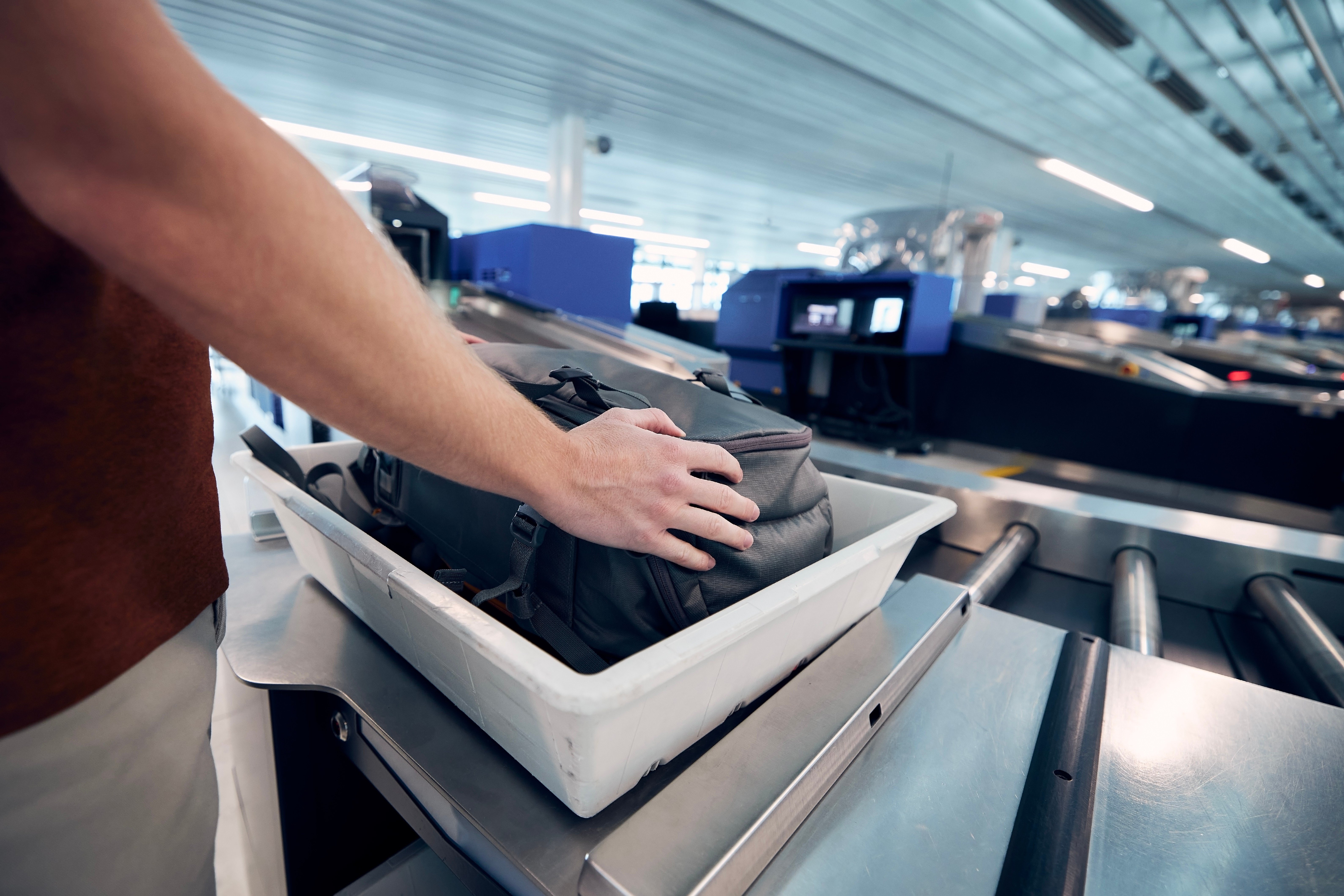
Nearly a quarter-century after the 9/11 attacks, the Transportation Security Administration is charting a new course with its Horizon 25 Strategy, a sweeping plan that promises to reshape airport security. But as the agency moves to streamline passenger screening, a growing chorus of security experts warns that the push for convenience may be outpacing the careful risk management that has kept U.S. skies safe.
Sheldon H. Jacobson, a professor of computer science at the University of Illinois Urbana-Champaign and a veteran researcher in risk-based aviation security, argues that the TSA is navigating a delicate balance. His work provided the technical foundation for the agency's PreCheck program, which allows pre-vetted travelers to enjoy expedited screening. In a detailed analysis, Jacobson contends that while tightening security is straightforward, loosening it—as the TSA has recently proposed—requires rigorous testing and validation to avoid introducing unacceptable vulnerabilities.

Relaxed Shoe Screening: A Premature Move?
One of the most visible changes came in July 2025, when the TSA announced that passengers would no longer need to remove their shoes when passing through millimeter wave scanners. That policy, introduced in response to the 2001 shoe bomb attempt by Richard Reid, has been a staple of airport security for over two decades. However, Jacobson points out that millimeter wave machines have limited capabilities around the foot area, and dedicated shoe scanners are still in development. He notes that no red-team testing or analysis has been published to demonstrate that the relaxation does not create new security gaps.
Jacobson acknowledges that PreCheck passengers are already exempt from shoe removal, but he stresses that those travelers have undergone background vetting, which reduces their risk profile. Extending that exemption to the general public, he argues, is a different matter entirely.
Remote Screening and the PreCheck Question
The TSA's remote screening terminal in Framingham, Massachusetts, launched in June 2026, has already processed more than 10,000 passengers for Delta and JetBlue flights to Boston Logan International Airport. The program screens travelers at a remote location and buses them directly to the sterile side of the airport. While the convenience is undeniable, Jacobson warns that the risks of off-airport screening are well documented. He suggests that limiting participation to PreCheck passengers would have been a safer implementation, especially since the remote terminal uses walk-through metal detectors rather than the more advanced millimeter wave machines.
Gateside and CT Scanners: Steps in the Right Direction?
Not all of the TSA's moves draw criticism. Jacobson praises the Gateside by TSA PreCheck program, now active at 13 airports, which allows PreCheck passengers to pass through security checkpoints even when they are not flying—a return to the pre-2001 norm. He notes that several airports already operated similar programs, and by restricting access to PreCheck members, the TSA has managed the risk appropriately. He adds that requiring facial recognition would further mitigate residual threats.
Similarly, the deployment of computed tomography (CT) machines for carry-on baggage is seen as a positive step. These 3-D scanners make it harder for bad actors to conceal threat items, including liquid explosives. The widespread use of CT scanners is a precursor to relaxing the longstanding 3-ounce liquids rule, a change already implemented at several UK airports. Jacobson advises that when the U.S. inevitably follows suit, the relaxation should be limited to PreCheck passengers, given their lower risk profile.
The Over-Screening Problem
At the heart of Jacobson's critique is a fundamental inefficiency: with roughly 2.5 million passengers screened daily, nearly all are being over-screened. The goal, he argues, should be to identify the few risky individuals among the vast majority of benign travelers. PreCheck is designed to do exactly that, but currently, about two-thirds of screenings still occur in standard security lanes—an unacceptably high number, in his view.
Jacobson proposes a bold solution: make PreCheck free for anyone willing to undergo a background check. If every non-threatening passenger were enrolled, all lanes except one at each airport could be designated PreCheck, with the remaining lane reserved for those who opt out or fail vetting. The upfront cost, he argues, would be recouped through reduced staffing and technology expenses, while maintaining short wait times would keep travelers engaged.
The net effect, he concludes, would be a more convenient experience for nearly every traveler and a more secure aviation system overall. But as the TSA moves forward with Horizon 25, the agency must ensure that its convenience-driven changes are backed by rigorous analysis—not just a desire to speed up the line. The stakes, as always, are the safety of the flying public.