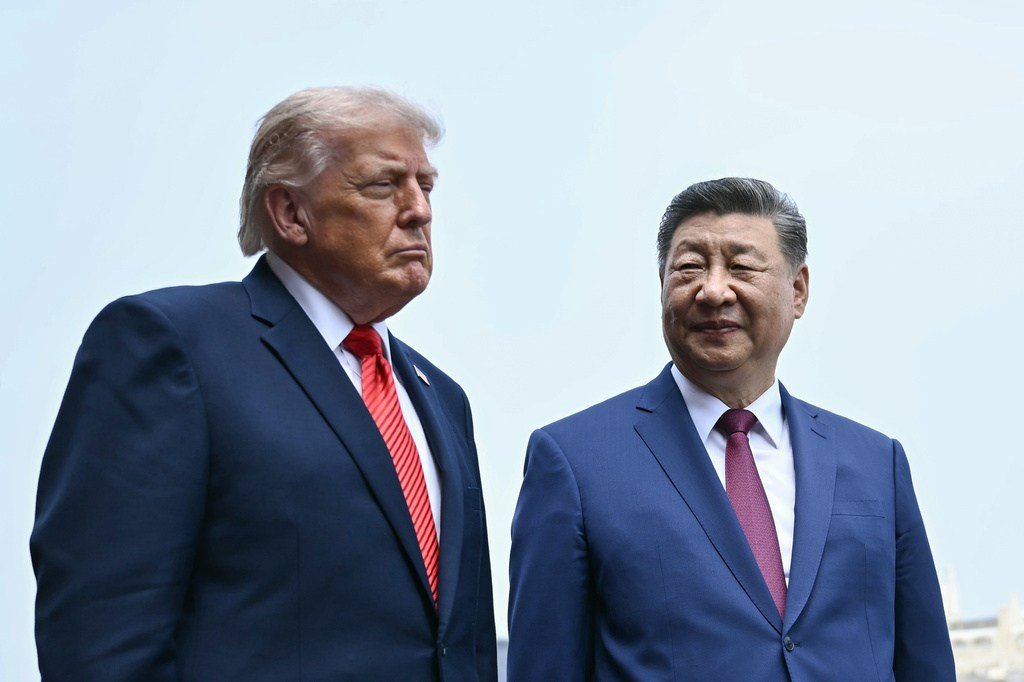
As President Donald Trump prepares to host Chinese President Xi Jinping at the White House, democracy advocates are pressing the president to put human rights and political prisoner cases at the top of the agenda. The push comes during America's 250th anniversary year, when freedom has been a central theme in national celebrations and policy debates.
Experts argue that raising the cases of individuals imprisoned by Beijing is not just a humanitarian gesture but a strategic necessity. "Visible U.S. advocacy for the release of those unjustly imprisoned is an appeal for justice and a strategic imperative to reassert international norms and American global leadership," said Nicole Bibbins Sedaca, a democracy and foreign policy expert and fellow at the George W. Bush Institute.
During the May Trump-Xi summit, the president highlighted the case of Christian Pastor Ezra Jin, arrested in October 2025 along with nearly 30 other clergy and workers. The arrests sparked widespread condemnation, and Jin was released and sent to the U.S. on July 3. Trump was credited for joining the chorus of advocacy that led to Jin's release.
Now, with Xi's visit imminent, four cases are being highlighted for presidential engagement. Jimmy Lai, a British-Hong Kong businessman, has been imprisoned since 2020 and received a harsh sentence in late 2025 for his role in peaceful protests and pro-democracy activities. Trump raised Lai's case in previous meetings, and the State Department called his conviction an "enforcement of Beijing's laws to silence those who seek to protect freedom of speech and other fundamental rights." At 78 and in failing health, Lai should be released immediately, advocates argue.
Joshua Wong, a 29-year-old Hong Kong activist, has been jailed since November 2020 for his peaceful protests and collaboration with foreign democratic activists. He was recently sentenced to an additional six years on a charge of foreign collusion. His case exemplifies Beijing's crackdown on dissent in Hong Kong, and he too deserves release.
Dr. Gulshan Abbas, a retired physician, has been held for nearly eight years in what advocates describe as a retaliatory move for her sister Rushan Abbas's Uyghur activism. Abbas was forcibly disappeared and sentenced to 20 years in prison, and is being held in a reeducation camp without contact with her family.
Additionally, eight individuals arrested with Pastor Jin remain imprisoned on what are described as false charges. Their names include Pastors Gao Yingjia, Wang Lin, Yin Huibin, Lin Shucheng, Liu Zhenbin, Wang Cong, Elder Wang Zhong, and Ms. Wu Qiuyu. They have committed no crimes and are targeted solely for their Christian faith.
The Trump-Xi meeting agenda is likely crowded, but these cases deserve repeated raising, according to experts. Defending freedom of religion and speech is central to American values and core to the strategic competition with China, which is actively working to reshape the global order away from democratic principles. China's alignment with Russia, Iran, and North Korea—all of which suppress dissent—underscores the need for the U.S. to champion these individuals.
Bibbins Sedaca argues that autocrats' shared fear of their own people is a vulnerability the U.S. can leverage. "By supporting these opposition leaders, we not only support democratic allies but also undermine our most ardent adversaries in an area of significant vulnerability."
If Trump fails to raise these cases, Xi may interpret it as a retreat on freedom issues. "These political prisoners are democratic allies in pushing back on the China-Russia-Iran-North Korea club of autocrats. It's now our turn to be their champion for freedom," she concluded.