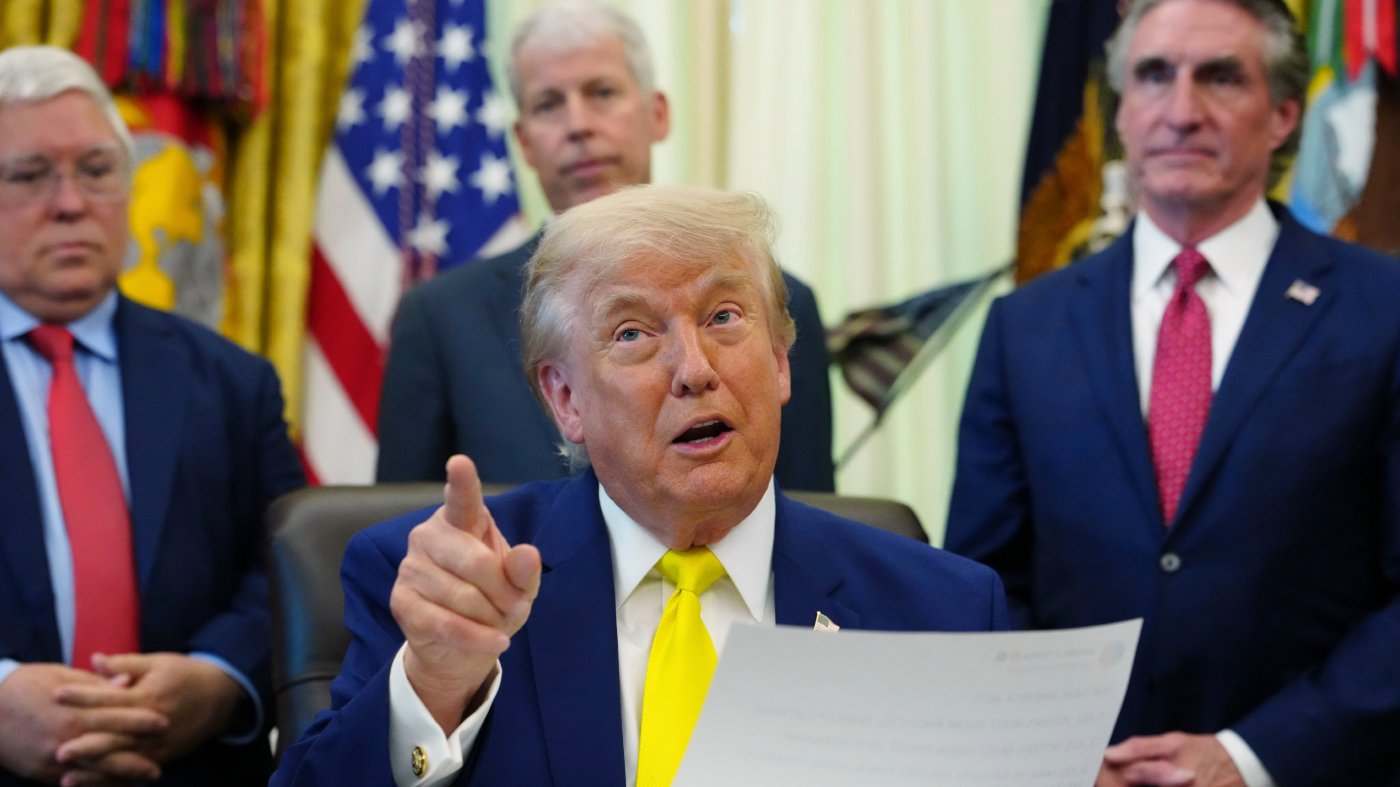
President Trump announced a major new push to revive the coal industry on Thursday, committing nearly $700 million in federal funds to support coal plants, mines, and export infrastructure. Speaking from the Oval Office, Trump framed the investment as a move to lower energy costs and bolster American energy independence, declaring it a “historic action” that would benefit consumers through what he called “clean, beautiful coal.”
The funding package includes $425 million drawn from the Defense Production Act, a Cold War-era law typically reserved for national security emergencies, to upgrade and extend the life of 13 existing coal plants across a swath of states including West Virginia, Kentucky, North Carolina, Indiana, Tennessee, Arkansas, Arizona, Oklahoma, North Dakota, and Wisconsin. Trump also earmarked $75 million for a new coal export terminal in Oakland, California, which the administration says will break ground this summer and become operational by summer 2028.
An additional $185 million in Energy Department grants will finance the construction of two new coal plants in Alaska and West Virginia, as well as the restart of a shuttered plant in Maryland. Trump boasted that the overall investment would “protect 14 coal plants and 42 coal mines” and lead to the creation of two new power stations and a major export hub, calling the numbers “tremendous.”
Coal has been in steep decline in the United States since peaking in 2007, driven by competition from cheaper natural gas and renewables, as well as mounting environmental regulations. The fuel is a major source of carbon emissions and air pollutants, contributing to climate change and public health risks. The Trump administration has consistently pushed back against that narrative, arguing coal provides reliable baseload power and job security in key political battlegrounds.
The use of the Defense Production Act for coal funding drew immediate scrutiny. Critics argue the law is intended for defense-related purposes, not energy subsidies. Danielle Lemmon, a former official in the Energy Department’s Office of Clean Energy Demonstrations under the Biden administration, noted that the grants were originally designed to help coal plants adopt carbon capture technology to curb greenhouse gas emissions. “If a recipient receives the funding and they choose to incorporate carbon capture … then that funding is actually being spent in alignment with the law, but the DOE doesn’t appear to be enforcing that alignment,” Lemmon said.
The announcement comes amid a broader administration push to expand fossil fuel production and roll back environmental regulations. Trump has frequently championed coal as a source of “beautiful” energy, and the new funding is the latest in a series of moves aimed at propping up the sector. The $200 million portion for new plants and the Maryland restart has drawn particular opposition from environmental groups and some lawmakers who see it as a misuse of taxpayer money.
The Oakland export terminal component has also raised local concerns about pollution and rail traffic, though the administration touts it as a gateway for U.S. coal to reach Asian markets. With construction slated to begin this year, the project is expected to face legal and regulatory challenges from California officials and environmental activists.
As Trump prepares for a potential reelection bid, the coal investment aligns with his base in coal-producing states, but it risks alienating moderate voters concerned about climate change. The debate over the proper role of federal energy subsidies is likely to intensify as the 2024 campaign heats up.